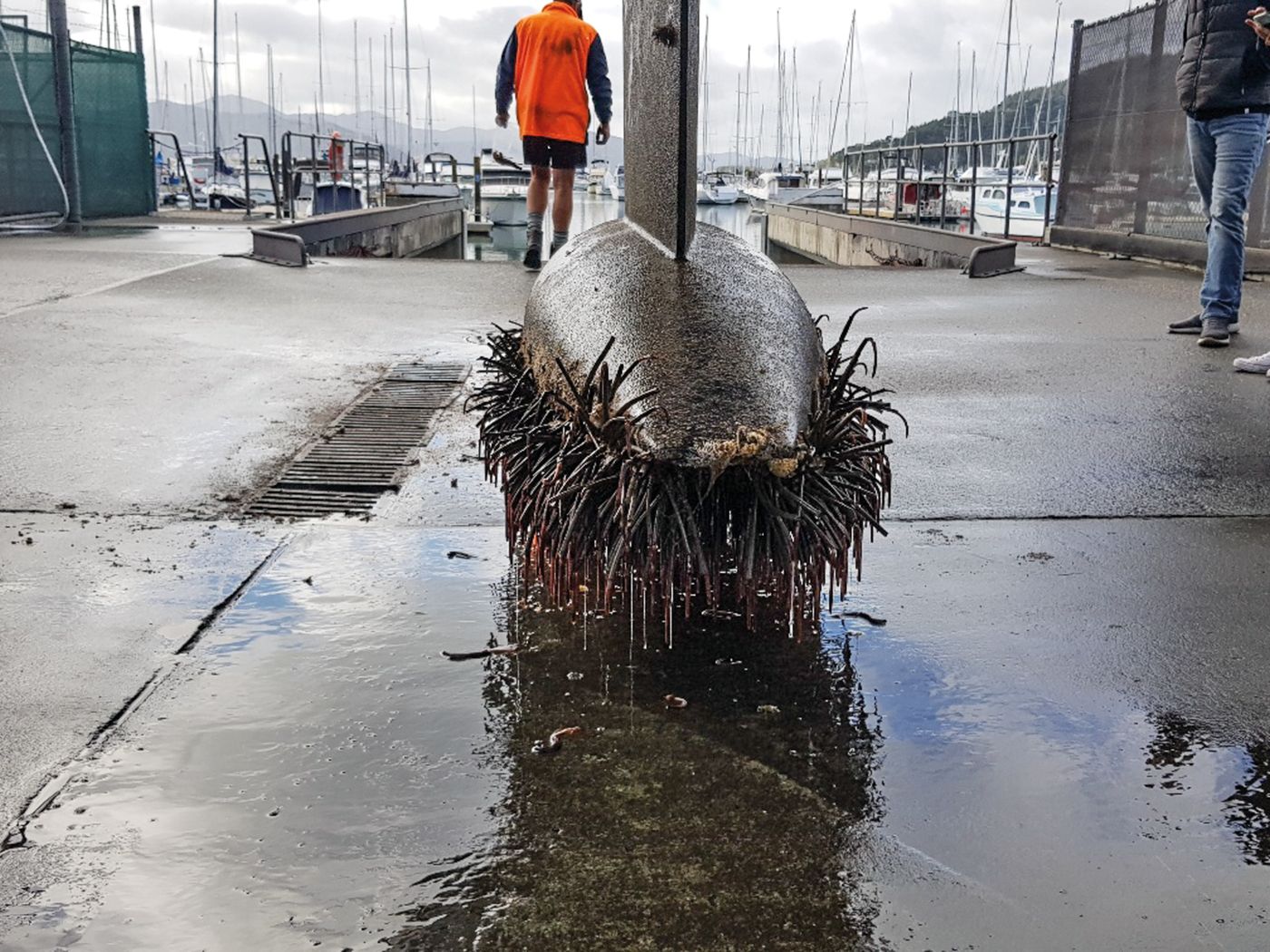
Whangapoua Harbour, on the eastern side of the Coromandel Peninsula, has reached a significant biosecurity milestone. Following five consecutive years of surveillance without a single sighting, the harbour has been officially declared free of Mediterranean fanworm (Sabella spallanzanii), an invasive marine pest capable of smothering native species and fouling boat hulls.
The declaration comes off the back of sustained monitoring by Waikato Regional Council's marine biosecurity team, which carries out regular dive operations at high-risk sites across the Coromandel and Waikato's west coast. Marinas, moorings, wharves, and aquaculture areas all fall within the programme's scope, with particular attention given to known pests including sabella and clubbed tunicate (Styela clava), both of which can spread rapidly via vessel movement.
Sabella was first detected in Whangapoua in August 2018, found attached to a vessel berthed at the wharf. A single fanworm measuring 220 millimetres was subsequently removed from beneath the wharf in June 2020. Annual surveys carried out since then have recorded no further detections. Under national biosecurity guidelines, five consecutive clear years must pass before an area can be formally declared free of the pest, and that threshold has now been met.
Waikato Regional Council Marine Biosecurity Officer Dave Pickering says the result reflects a successful partnership between the council, Biosecurity New Zealand, and the Bay of Plenty Regional Council dive team, who moved quickly to contain the original incursion before it could take hold.
"Sabella poses a significant risk to New Zealand's coastal environment," Pickering explains. "It forms dense colonies that compete with native species such as scallops for food and space, and can foul hulls, wharves and aquaculture gear. Once established, it's extremely difficult to remove."
Pickering is equally clear that the boating community has a part to play in preventing any recurrence.
“Vessel owners are critical partners in coastal biosecurity. Last year we found sabella on five boats in Whangamatā Harbour. Thanks to quick cooperation, those vessels were hauled out and cleaned before the pest could spread further.”
The council's marine biosecurity surveillance programme has been running since 2017, established after sabella was discovered on two Auckland barges in Coromandel Harbour in 2013. That earlier find highlighted how readily the pest can travel between locations on vessel hulls, making clean-hull practices among boaties every bit as important as official monitoring.
With Whangapoua Harbour now confirmed sabella-free, the focus shifts to keeping it that way. Ongoing checks remain in place, and the emphasis on hull hygiene and prompt reporting is as relevant as ever.
"Early detection and quick action make all the difference," says Pickering. "The boating community's vigilance is what keeps our harbours healthy."