Few hull concepts have shifted offshore boating thinking as decisively as the wave-piercer, and New Zealand designers were at the centre of that shift well before the rest of the world caught on.
When Ultimate Lady hit the water in 1998, the dominant thinking in private motor yacht design still favoured fuller, more buoyant bows. Fast-ferry builders were experimenting with wave-piercing profiles, but almost no one had applied a serious, uncompromised version to a private yacht. Her arrival changed that conversation. She showed that very fine bows, carrying almost no forward buoyancy, combined with long slender hulls, could deliver both speed and comfort in open water. Kiwi naval architects were operating well ahead of the mainstream.
*What makes a wave-piercing hull work*
The defining characteristic of a wave-piercer is immediately visible. Where a conventional powerboat hull carries pronounced flare and lift in the bow, a wave-piercer does the opposite. The entry is narrow, fine, and deliberately low in buoyancy. When the bow meets a wave, it doesn't rise to avoid it. It carries on through. Water parts around the hull or washes over it rather than pushing the bow skyward.
The practical result is a big reduction in pitch. The uncomfortable rise-and-fall motion that wears on crew and passengers in a head sea is largely eliminated, and so is the jarring impact when a fuller bow drops off the back of a crest. Long, slim hulls contribute further by cutting wave-making drag, which means the boat holds its target speed without the engine working against constant resistance.
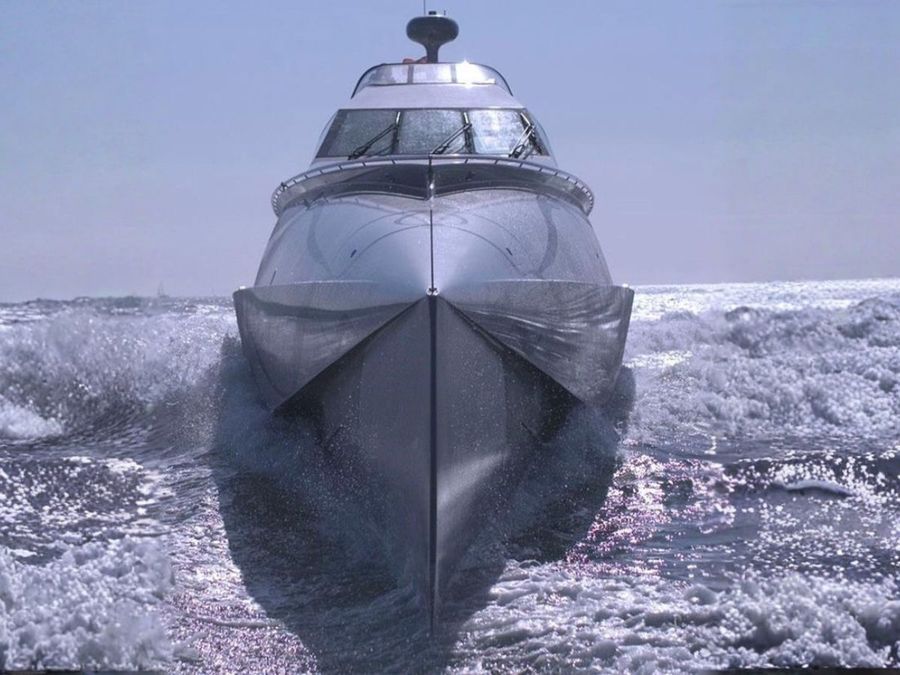
In rough conditions, the difference becomes apparent quickly. Rather than lunging and recovering through each set, a wave-piercer maintains a steady, predictable motion. Fuel consumption stays lower and the structural loads are gentler throughout.
*Shifting the buoyancy and trimming the volume*
To keep the bow light and responsive, wave-piercers concentrate most of their buoyancy aft. This prevents the abrupt deceleration that happens when a fuller bow buries itself in a steep wave face at speed, and it keeps the forward sections free to do their job without interference.
The trade-off is internal volume. Fine bows leave very little usable space forward, which matters considerably on monohulls but is far less of a problem on catamarans and trimarans. Those platforms spread accommodation across multiple hulls and derive their stability from beam rather than hull volume, so the narrow entries cost nothing significant in practical terms.
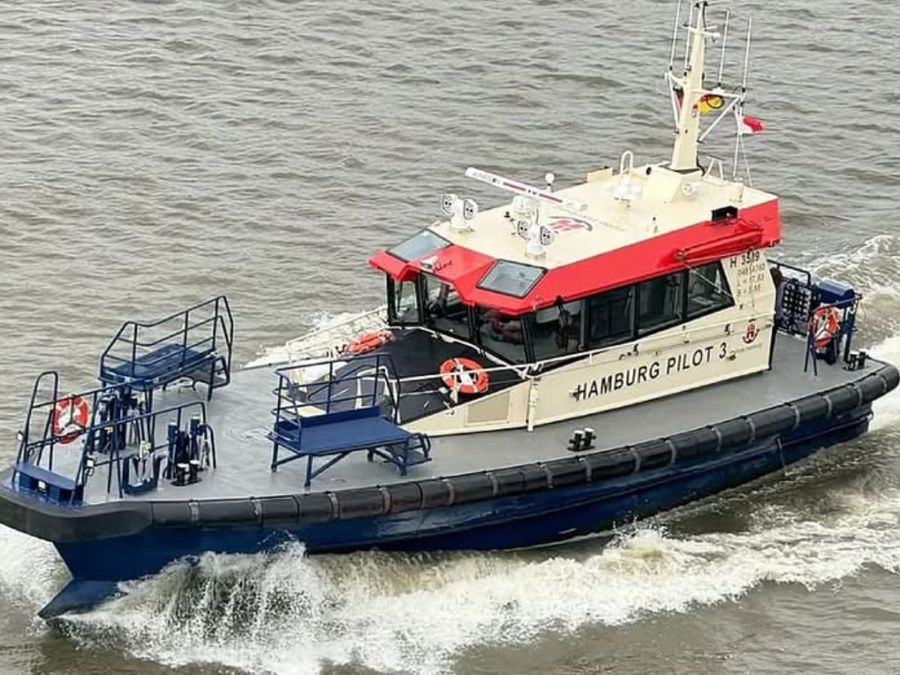
Some builders have developed hybrid interpretations of the concept. Baltic Workboats and Ulstein both use inverted or semi-inverted bow forms that pierce at the waterline while retaining reserve buoyancy above it. These variations offer much of the same sea-keeping benefit with slightly more deck space and drier forward areas.
*Where the design took off*
The fast-ferry industry was first to demonstrate the concept at scale. Tasmanian builder Incat built an extensive fleet of wave-piercing high-speed cats that now operate across Europe, Asia and North America. The 74-metre Catalonia set a transatlantic passenger-ship record in 1998. Vessels including The Cat (Incat 046), Natchan World, KatExpress 2 and Condor 10 proved the layout was capable of moving cars and passengers at pace through some of the most challenging channels anywhere in the world.
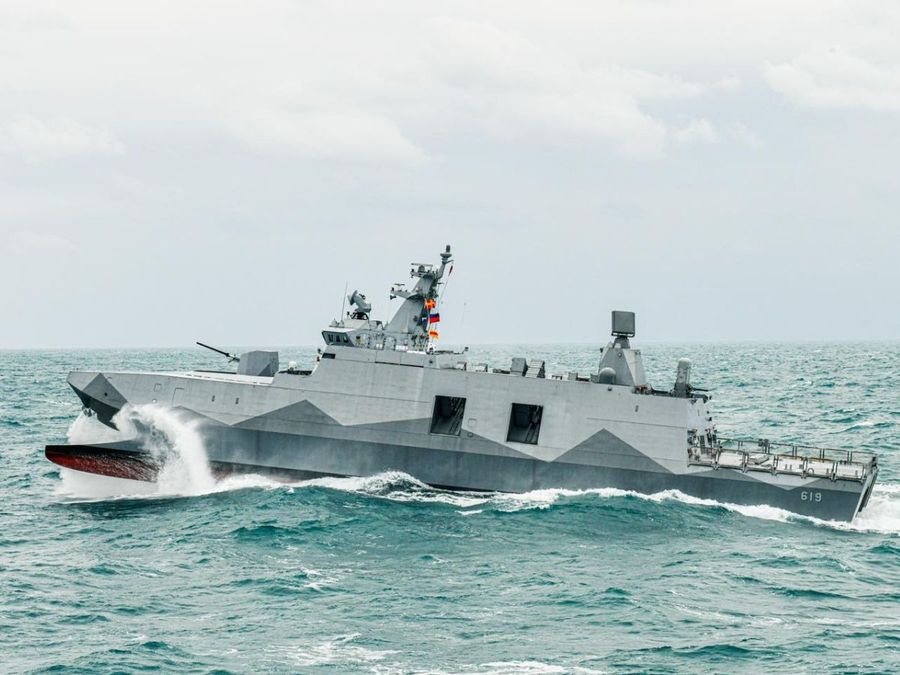
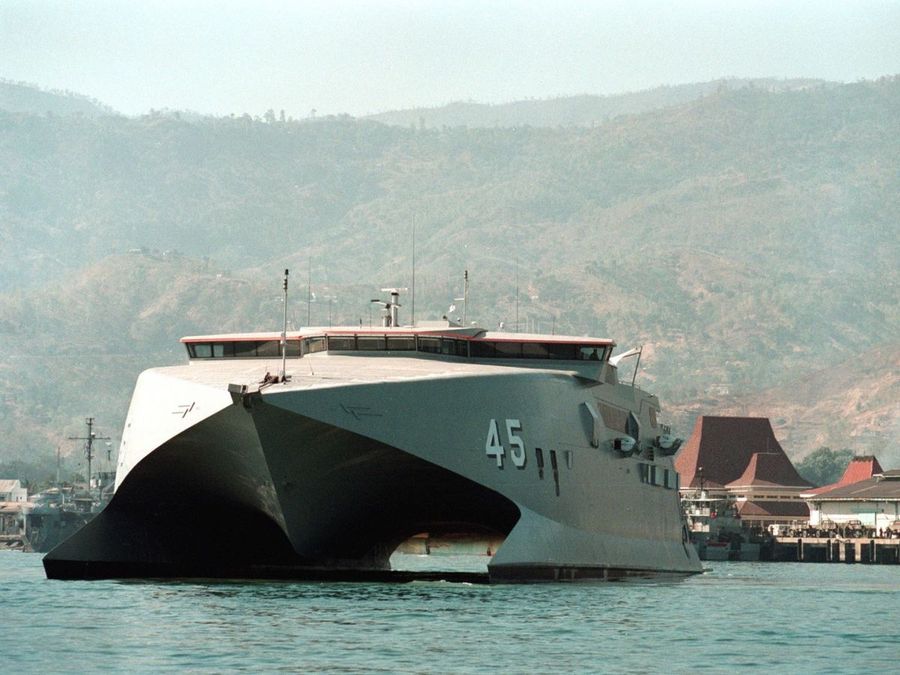
Defence forces were not far behind. The US Navy's Zumwalt destroyers incorporate an inverted bow to manage pitch and reduce radar cross-section. The Independence-class littoral combat ships extend this through a trimaran configuration with closely related characteristics. Taiwan's Tuo Chiang-class corvettes use a wave-piercing high-speed cat hull to achieve speeds of around 45 knots. Australia's HMAS Jervis Bay gave an early demonstration of what a military wave-piercer could achieve as a fast transport.
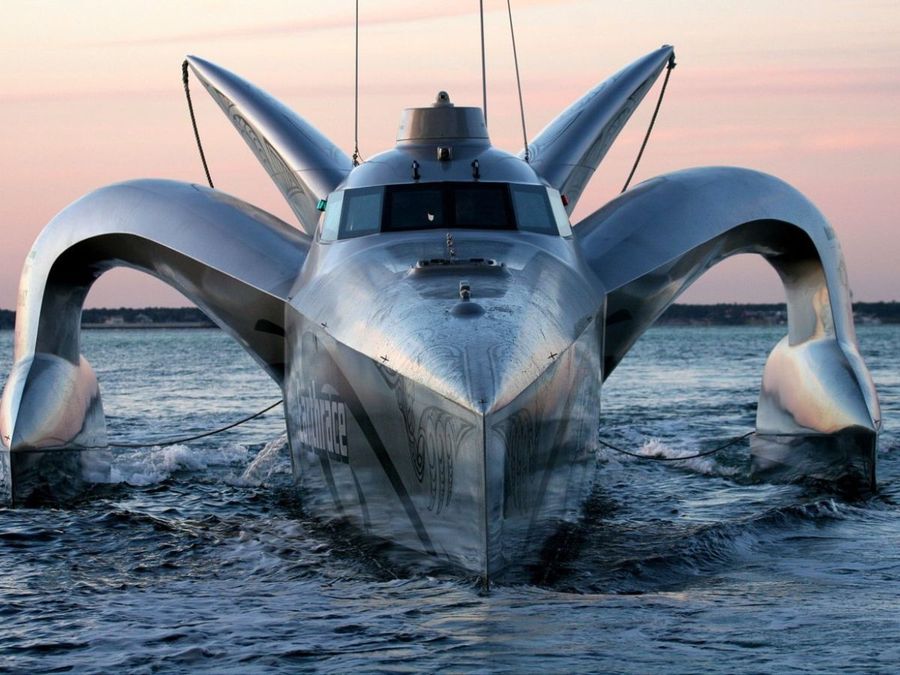
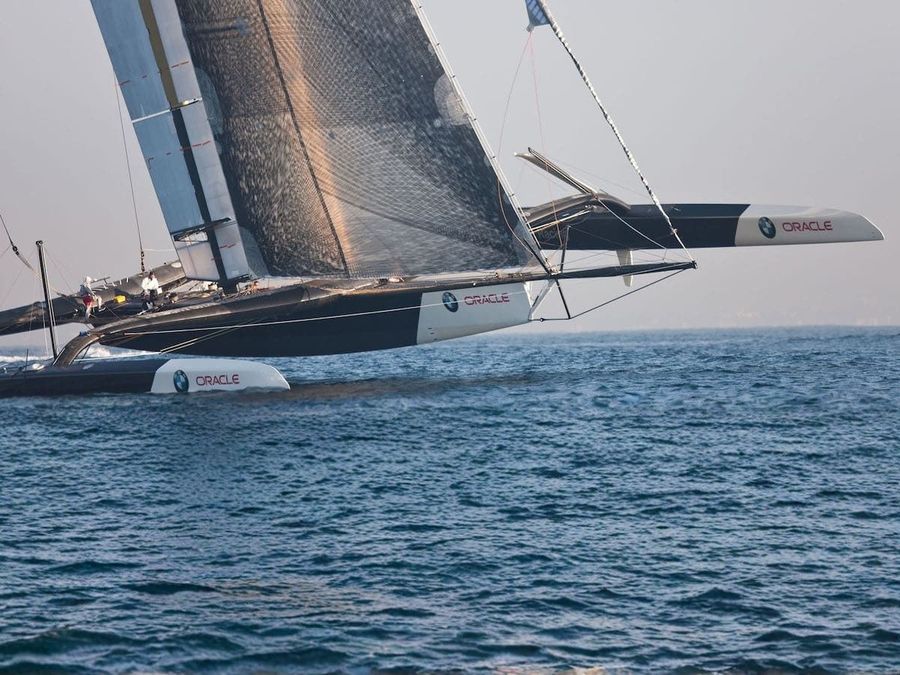
Purpose-built record-attempt vessels pushed the concept further. The New Zealand-designed trimaran Earthrace used a radical wave-piercing form to set a circumnavigation record. The private vessel VSV MarySlim pursued extreme weather passages using similar principles. BMW Oracle's USA 17 claimed the 2010 America's Cup using wave-piercing outriggers.
*New Zealand's role in shaping the field*
New Zealand's contribution to wave-piercing design goes well beyond individual high-profile projects. LOMOcean Marine, formerly known as Craig Loomes Design Group, has driven the concept forward across commercial, government and private applications over many years. Bakewell-White Yacht Design brought its own approach to the power cat space, most notably through New Zealand Yacht's My Spirit.
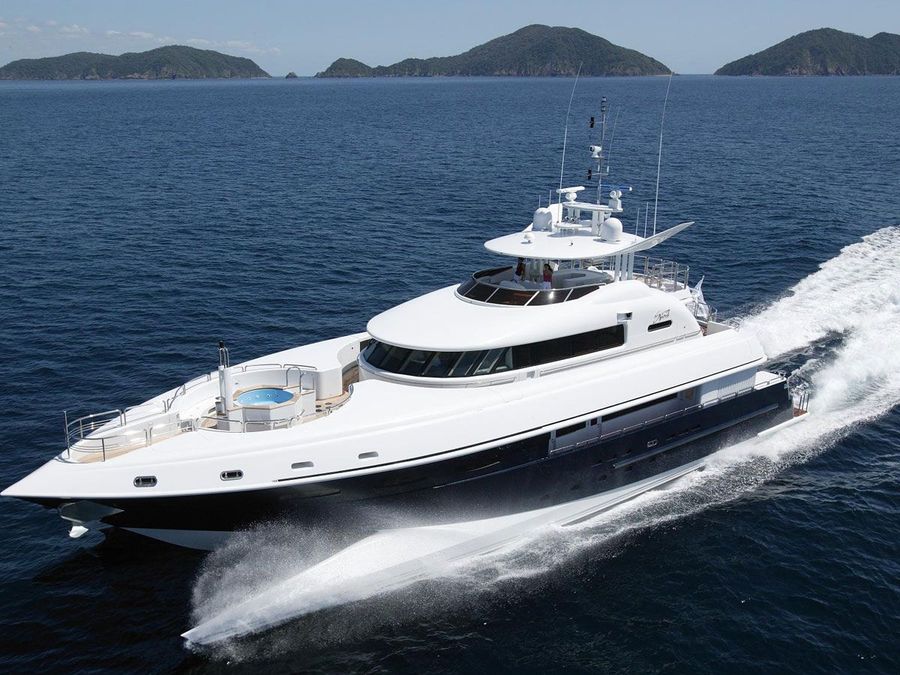
Local yards gave these designs physical form through strong, well-executed builds. Ultimate Lady, Sampitres, My Spirit and Polaris all came out of New Zealand sheds, and collectively they helped establish the country as a centre for slender, efficient multihull construction.
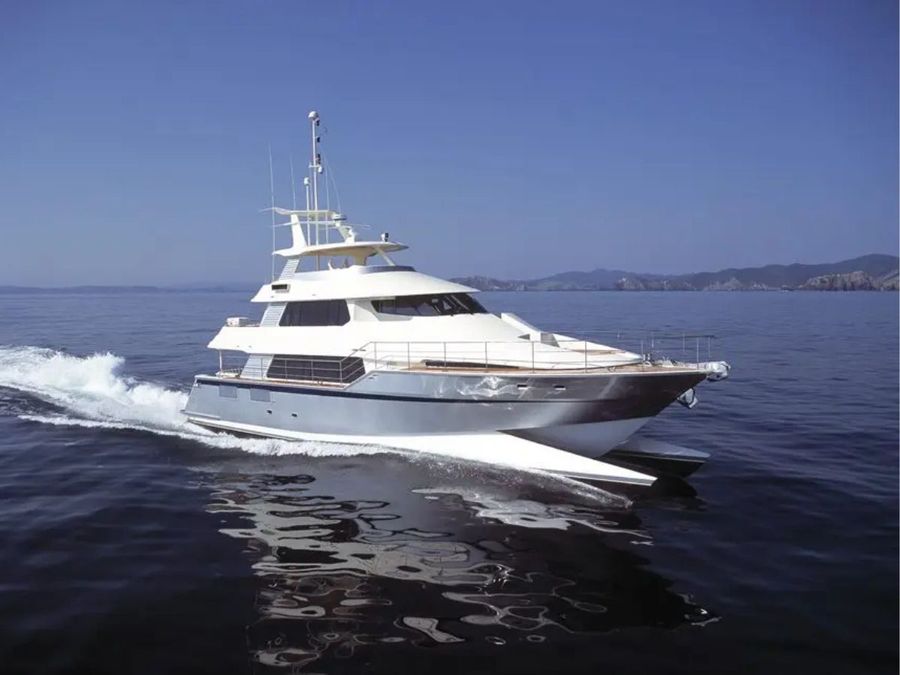
**Ultimate Lady: the practical example**
Of all the wave-piercers to emerge from New Zealand, Ultimate Lady remains one of the most instructive examples of what the hull form delivers offshore. Her GRP-composite hulls run long and narrow, with bows carrying almost no flare and the bulk of the buoyancy positioned well aft. The waterplane area is kept deliberately tight. Every aspect of the hull geometry is oriented towards moving through the sea rather than climbing over it.
She reaches a top speed of around 32 knots and maintains a comfortable cruise near 25 knots. Depending on load, her range sits in the 5,000 to 5,500 nautical mile bracket. That combination is rare in a yacht of her size. Conventional fuller hulls accumulate drag as conditions deteriorate, which tends to mean lower speeds, higher fuel burn and a rougher ride as seas build.
Her 10-metre beam opens up interior space that the fine bows do nothing to restrict. A full-width saloon incorporates a galley, bar, lounge and dining area, with direct flow through to the aft deck. Three ensuite cabins are positioned forward, with a fourth aft adjacent to the saloon. None of this spatial generosity comes at the cost of performance, because the hull's slender entries are not required to carry any of that accommodation volume.
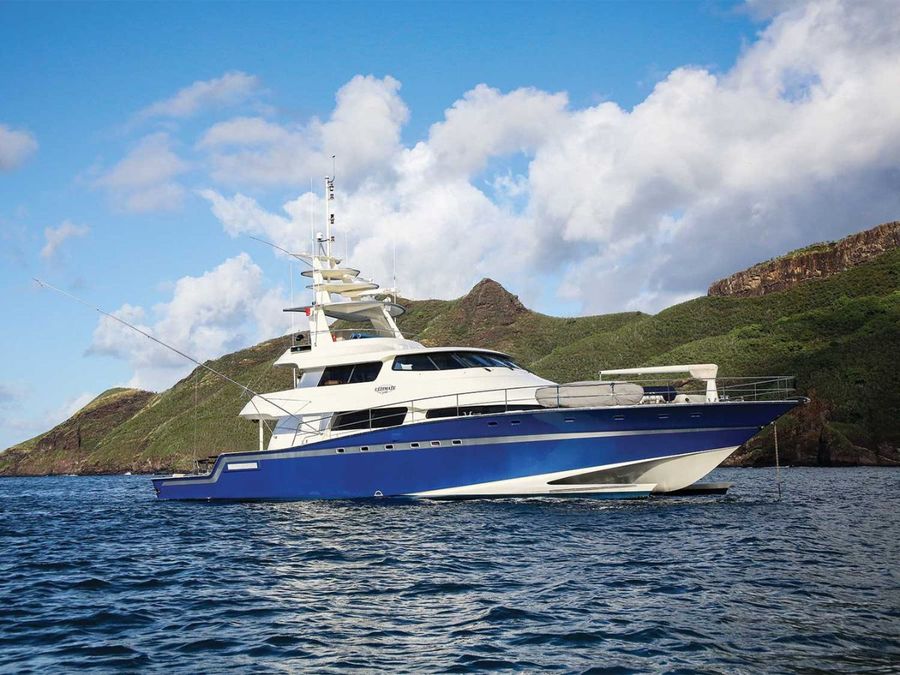
The steadiness of the hull is easy to appreciate on deck. The upper level remains calm even as the swell increases, giving guests the option to sit outside or settle in the lounge without the sharp, unpredictable motion associated with many fast boats. The lower deck transitions between a sun space and a serious sportfishing platform, with the game chair sitting on a stable base and the hull responding predictably during backing-down manoeuvres.
The layout of Ultimate Lady reflects what the hull form allows: offshore speed, a steady motion underway, and comfort that doesn't require a compromise on pace.
*Other Kiwi wave-piercers*
Ultimate Lady sits within a broader family of locally designed wave-piercers, each solving a different set of problems through the same underlying philosophy. Sampitres applies similar thinking but narrows the beam to allow stern-to berthing in Mediterranean marinas. New Zealand Yacht's My Spirit, launched in 2005, scales the concept to 35 metres with a Bakewell-White hull and a generous 10.8-metre beam. Q-West's aluminium interpretation takes a more workmanlike direction, with a layout built to Queensland survey requirements.
The common thread across all of them is the same broad approach to hull form, applied differently according to each owner's priorities.
*Where the idea is heading*
Wave-piercing design continues to evolve. CFD modelling has given designers far more precise control over bow entry geometry and immersion behaviour than was possible in earlier decades. Modern composite construction allows longer, stiffer hulls to be built without the weight penalty that would have limited performance in the past. Many contemporary designs combine fine entries with subtle flare above the waterline, achieving the sea-keeping benefits of the wave-piercer while keeping the forward sections noticeably drier.
The form is now appearing across a wide range of applications, from patrol craft and eco-tourism vessels to long-range expedition cats. The principles at the core of the approach remain consistent: keep the bow fine, minimise forward lift, reduce loading on the bow sections, and allow the boat to run through rather than over the sea.
*Well suited to New Zealand waters*
New Zealand's coastline has always imposed high standards on the boats that work it. Long exposed passages, rapidly changing weather and the need to cover ground efficiently make hull forms that manage pitch well and carry their speed without excess fuel burn genuinely valuable. Wave-piercing hulls answer those demands directly, which may be part of why New Zealand designers were so quick to embrace the concept.
Many of the most significant examples of the form, from circumnavigation record-holders to commercial charter cats, originated on New Zealand drawing boards and were built in New Zealand yards. That foundation continues to inform how the concept develops as it spreads into new sectors and adapts to new propulsion systems.