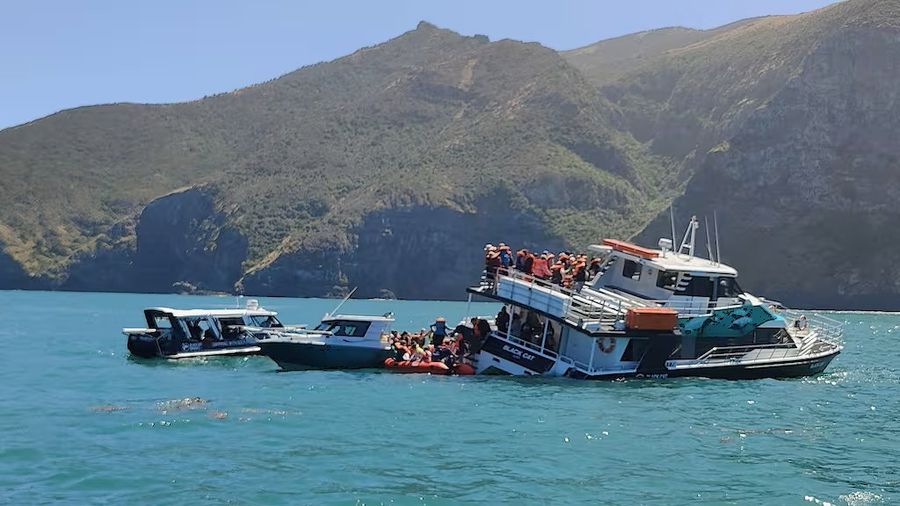
A passenger catamaran operated by Black Cat Cruises grounded near the entrance to Akaroa Harbour on Saturday 31 January 2026, while making its return from a wildlife cruise. The 17-metre commercial ferry was carrying 38 passengers and three crew when it came to grief. Every person on board was evacuated safely to nearby vessels and brought ashore, and no injuries were reported.
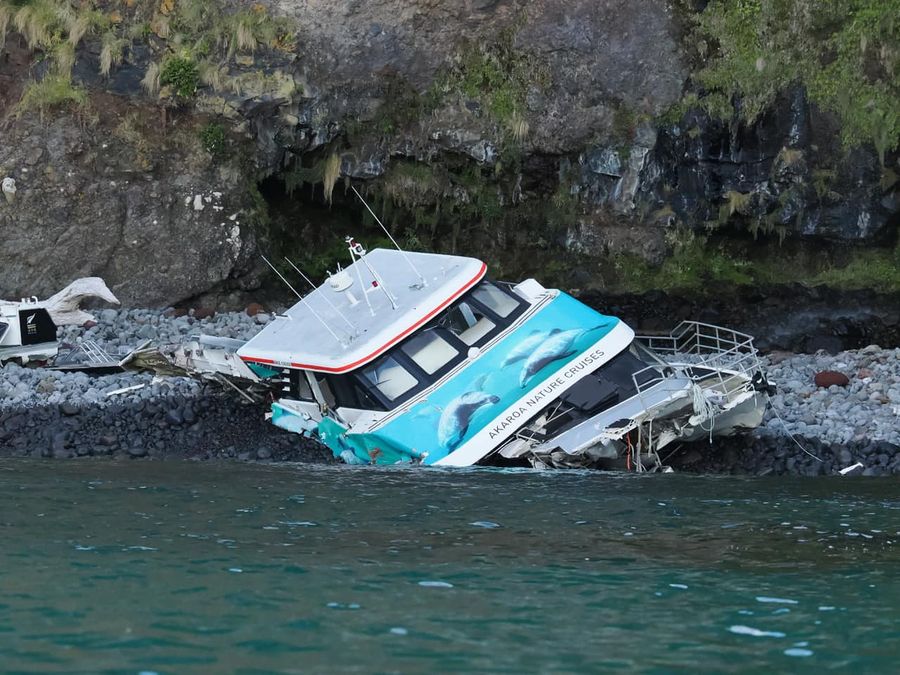
What followed has become a protracted and complex salvage operation. Drone footage captured on Tuesday 3 February revealed the catamaran submerged close to shore in a small rocky bay near Nīkau Palm Valley, inside Akaroa Harbour on Banks Peninsula. The footage made clear that the vessel had settled hard onto rocks, a development that immediately complicated any prospect of a straightforward recovery.
The Transport Accident Investigation Commission has formally opened an inquiry into the incident and assigned a dedicated investigation team to the case. TAIC is calling on anyone who witnessed the grounding, or who photographed or filmed the vessel before, during, or after it came to rest, to come forward. The Commission has stressed that early evidence is critical while details remain fresh. Investigators are focused on gathering time-sensitive material, including witness accounts, electronic data, and recoverable wreckage, as well as examining the vessel's operational history, maintenance records, equipment, and design.
Canterbury Regional Council suspended recovery operations on 3 February, citing unfavourable weather and sea conditions. Earlier attempts to move the catamaran into deeper water had already failed after the hull came to rest on a large rock. Subsequent swell then dislodged the vessel from that position, pushing it further up onto the beach at Nīkau Palm Valley Bay rather than out to sea. Specialist salvage contractors reached the site by helicopter and confirmed that the vessel had separated, with the hulls remaining on the seabed while the deck and superstructure had ended up on the beach above.
The catamaran was carrying approximately 2,240 litres of marine diesel and around 120 litres of other oils at the time of the incident. Residual diesel has remained contained within Cathedral Cave, where it is visibly degrading. Assessments conducted by the National Oiled Wildlife Response Team are ongoing, and to date only small, micron-thin rainbow sheens, generally 20 to 30 centimetres across, have been observed within the immediate wreck area.
On 5 February, response teams spotted a crested penguin displaying signs of illness in the vicinity. Wildlife specialists were not able to safely capture the bird, and monitoring of it is continuing.
An updated recovery plan from the vessel's insurers is still being finalised. Salvage is expected to proceed in two stages, beginning with removal of the superstructure in place, before attention turns to recovering the submerged hulls.
A 200-metre exclusion zone remains in force around the wreck site and will stay in place until the vessel has been lifted and removed. Exactly when that can happen will depend on weather, sea conditions, and operational safety. Authorities are urging all water users to observe the restriction, both for their own safety and that of the response teams working at the site.