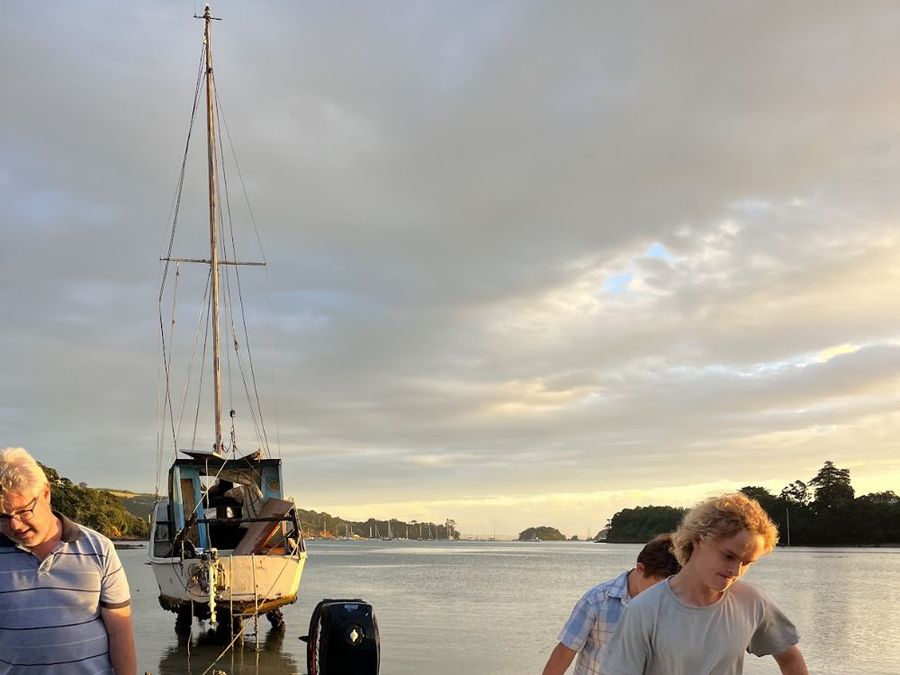
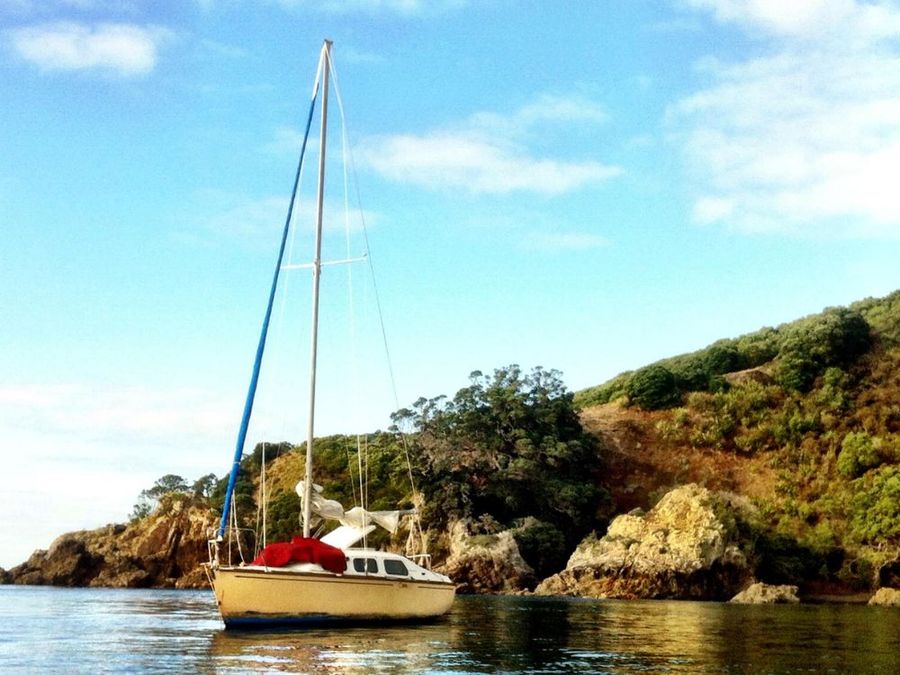
Half a century on from when the first hull slid out of Ray Hart's workshop, you can still find Beachcomber 6.5s resting quietly on their twin keels in tidal bays around New Zealand, a timber plank angled down to the sand, masts catching the evening light. For anyone who has ever wondered what kind of yacht can simply sit down on the seabed and wait for the tide to return, these compact cruisers are a good place to start looking.
The sight that prompted this piece was a familiar one around Putaki Bay on Waiheke Island, which for a couple of years served as our favourite anchorage. Sheltered, calm, and within easy walking distance of the local supermarket, it was an easy place to linger. Each time we rowed ashore we passed a neat row of small yachts standing along the foreshore on what their owners called legs. At low water they rested upright on the sand, connected to the shore by wooden planks doing duty as gangways. Come the flood tide, those same boats lifted clear, the planks half-submerged, sterns swinging gently in the current.
Putaki Bay turned out to be far from the only place. A wrong turn in Auckland brought us to Little Shoal Bay, where a handful of yachts stood in the same quiet, gravity-defying posture. Scattered around the New Zealand coast, these small craft sit squarely on twin fins, patient and level, waiting for the sea to find them again.
They are bilge-keel boats, twin-keeled yachts engineered to do something almost no other sailing vessel can manage with any dignity: go aground on purpose.
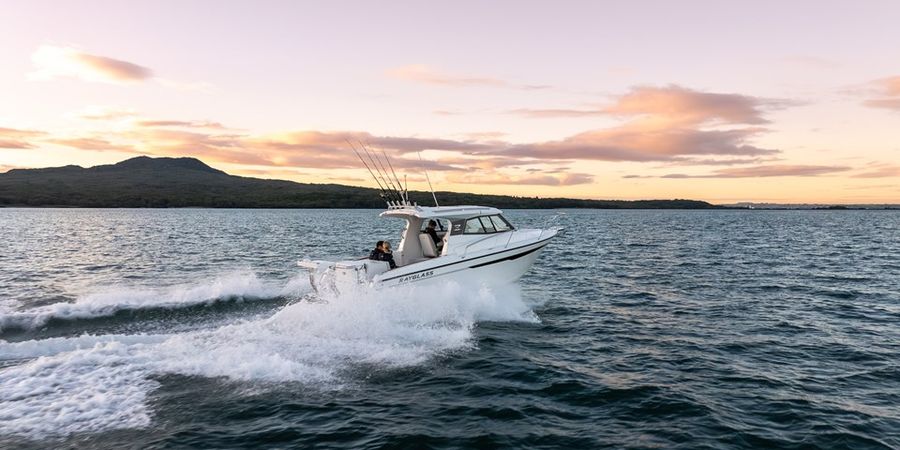
Where a conventional yacht carries a single deep fin running along the centreline, a bilge-keeler mounts two shorter keels symmetrically on either side of the hull. Under sail, those fins act as stabilisers, damping roll and providing lateral resistance. Once the water retreats, they become the boat's own legs, holding her upright without cradles, props, or assistance from anyone.
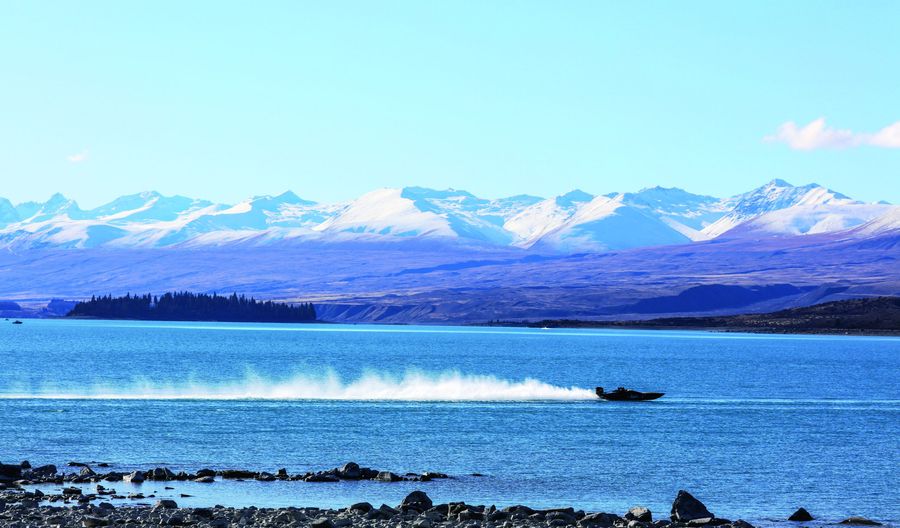
The concept was born in Britain, where tidal ranges of five metres and more made it a matter of practical necessity rather than design fashion. It translates just as naturally to New Zealand, where bays, estuaries, and river mouths drain twice a day and self-reliant sailors have always made the most of what the tide leaves behind.
The twin-keel idea can be traced to the 1920s, when Lord Riversdale and Yachting Monthly editor Maurice Griffiths collaborated on Bluebird of Thorne, a cruiser designed to sit safely on the seabed between tides. Their outward-splayed keels kept the yacht upright when dried out and suitably efficient when sailing. British yards including Westerly and Moody carried the concept through subsequent decades, and by the 1970s it had found a New Zealand champion in Ray Hart, known as R.G. Hart, of Hart Brothers Marine.
The result was the aptly named Beachcomber 6.5, a genuine Kiwi original. A 1972 Beachcomber Bilge Keeler from the early series, listed on Trade A Boat as this article was written, was the thing that sent me down the rabbit hole. Designed by Hart and built locally between 1970 and 1980, the Beachcomber 6.5 was a compact cruising yacht shaped specifically for New Zealand conditions, earning itself a surprisingly thorough Wikipedia entry along the way. Around 89 hulls were launched, the majority carrying the bilge-keel configuration that became the design's defining characteristic.
Encounter one and you find a compact little cruiser measuring 6.5 metres LOA, slightly less on the waterline, with a beam of 2.45 metres. That produces a length-to-beam ratio of roughly 2.65, placing the Beachcomber toward the beamy end of small monohull cruisers. For a bilge-keeler designed to dry out, offer stable living space, and stand level when the tide leaves, that proportion is exactly what you would expect. Draft comes in at 0.6 metres, confirming the design's identity as a shoal-draft coastal cruiser: steady underfoot, at home in shallow anchorages, and willing to trade a little windward performance for a great deal of everyday practicality.
The rig stands 8.53 metres, or 28 feet, carrying approximately 9.6 square metres of mainsail and 8 square metres of jib or genoa. The fibreglass hull uses a 12-millimetre end-grain balsa core, a construction method that delivered genuine strength at modest weight for the era.
Early Beachcombers, including the 1972 models, were fitted with square cast-steel bilge plates bolted to each side of the hull. Straightforward and rugged, those early keels gave the Beachcomber its shallow draft and the ability to settle level on sand or mud, qualities well suited to the drying bays of the Hauraki Gulf.
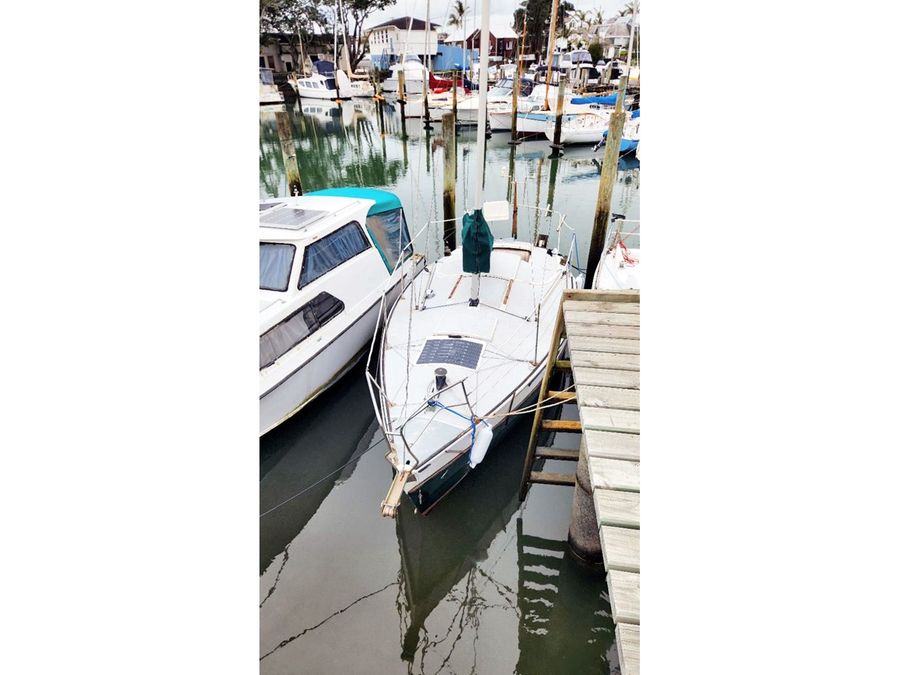
As production continued, Hart refined the arrangement, introducing cast-iron swept fins fitted with slim bulbs that contributed around 340 kilograms of ballast and a degree of additional stiffness under sail. The two generations share the same essential appeal: a sturdy, go-anywhere coastal cruiser built to explore New Zealand's shallows with confidence and comfort.
Bilge-keel placement is a matter of careful calculation rather than a standard formula. Naval architects position the keels at the turn of the bilge, where the hull transitions from bottom to side, and then adjust the spacing according to the specific boat. A wider hull allows the keels to be set further apart; a rounder one brings them closer together. The distance between the outer edges of the keels, combined with the rudder, creates a tripod base that keeps the grounded boat balanced. As the yacht heels under sail, the leeward keel moves toward the vertical, generating lift and reducing leeway. Hart's Beachcomber achieved that balance neatly, positioning its twin fins for both firmness on the bottom and steady performance while moving.
For sailors who value practicality, the bilge-keel arrangement offers genuine advantages. A bilge-keeler can be beached deliberately on firm sand, letting the crew step ashore without ceremony or attend to the hull without booking a travel-lift. In earlier times, antifouling could be applied between tides wearing gumboots and shorts, and a drying mooring cost a fraction of a marina berth. Attitudes toward painting the hull outside permitted hardstand areas have shifted since then, but the option remains part of the bilge-keeler's appeal in principle.
The twin keels act as natural roll dampers, so a bilge-keeler sits more steadily at anchor than a fin-keeler of comparable size. A draft of under a metre opens up estuaries, lagoons, and tidal creeks that deeper-draughted yachts simply cannot reach.
Speed is not the point. Two keels mean more wetted surface and a little additional drag, but at the cruising speeds these boats were designed for, around six knots, the difference is negligible in practice. As one Beachcomber owner put it, "The fin-keel crowd might get to the pub first, but I'll already be sitting upright when they arrive."
In a country where the tide shapes every stretch of coast, the bilge-keel boat remains one of the more sensible designs afloat. Simple, tough, and self-reliant, those are qualities that have always suited New Zealand sailors. And among all the bilge-keelers that have come and gone, the Beachcomber 6.5 endures as a local classic, a small yacht with two legs to stand on.