Two of the world's most prominent logistics companies have formalised an agreement that connects opposite ends of the global freight system, and the implications extend well beyond the routes their cargo travels.
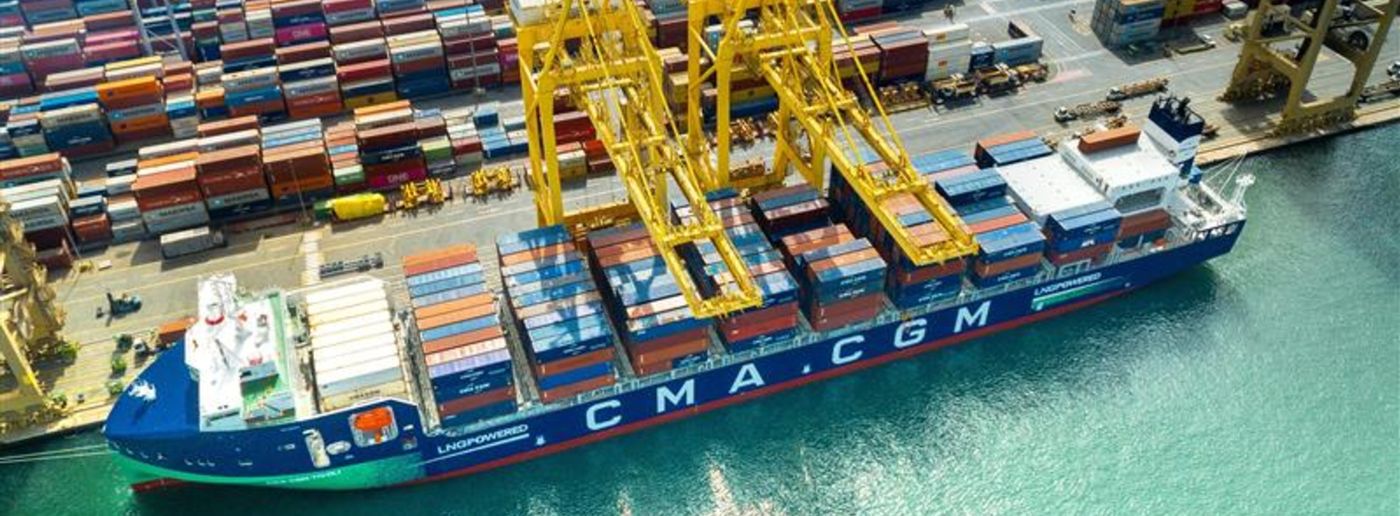
DHL operates as a freight forwarder. Its business is the coordination of goods moving across sea, air, road, and rail, managing schedules, capacity, and handovers on behalf of customers who need to shift cargo internationally. It does not typically own ships. What it controls is demand and customer choice. CMA CGM, by contrast, is a ship operator running one of the largest container fleets on the planet, with scheduled services across every major trade lane. CMA CGM owns the vessels, decides how they are fuelled, and drives the investment choices that determine how many emissions a ship produces over its working life. Bringing those two functions together under a single agreement is what gives this arrangement its significance.
Under the terms of the deal, both companies have committed to the joint use of 8,990 tonnes of second-generation biofuel, supplied in the form of UCOME, across CMA CGM's operating fleet. The fuel is projected to deliver an estimated 25,000 tonnes of CO₂ equivalent emissions reduction, measured on a well-to-wake basis, for ocean freight booked through DHL's lower-carbon services. The biofuel is being bunkered and burned aboard working vessels on commercial routes, not in a controlled pilot or a research trial.
DHL customers gain access to reduced-emissions freight without any change to their routes or delivery schedules. CMA CGM increases the volume of alternative fuel moving through its day-to-day fleet operations. Both outcomes are incremental by design.
The question of why biofuel rather than the fuels most often discussed in long-term shipping strategy comes down to timing. Methanol, ammonia, and hydrogen are all part of serious forward planning within the industry, but production volumes for those fuels remain limited, the infrastructure to support them is unevenly developed across global ports, and their costs are still high. For a container fleet that depends on consistency and reliability at scale, that combination of constraints makes rapid adoption difficult.
Second-generation biofuels sidestep those barriers in a practical way. They are compatible with existing engines, can be blended with conventional bunker fuels, and are supplied through bunkering systems already in place. They begin reducing emissions immediately, without waiting for new ship orders to be delivered or port infrastructure to be constructed. In an industry where operational disruption carries substantial cost, that compatibility with existing systems is not a minor consideration.
Central to how the agreement works is a book and claim framework. CMA CGM burns the biofuel across its fleet, and the emissions reductions that result are allocated to DHL customers who have chosen to pay for lower-carbon transport options, even when their specific container is not aboard the vessel consuming that fuel. Requiring a direct physical match between individual cargo containers and the fuel in a particular ship's tanks would create bottlenecks that slow progress considerably. The book and claim model reflects how global shipping actually operates and allows reductions to be distributed across a complex network without grinding it down.
Through CMA CGM's ACT+ offering and DHL's GoGreen Plus service, customers can select different levels of emissions reduction depending on their preferred fuel mix and service tier. Those reductions are calculated across the full lifecycle of the fuel, not simply at the point of combustion. In shipping, the upstream processes involved in producing fuel can represent a substantial portion of total emissions, so the well-to-wake methodology captures a more complete picture than exhaust-only figures would provide.
CMA CGM has already reduced the carbon intensity of its shipping operations by more than half since 2008, a result of efficiency improvements, fleet renewal, LNG adoption, and growing use of alternative fuels. The current agreement extends that existing trajectory rather than representing a change in direction.
The relevance of an arrangement like this stretches beyond container shipping. Because of its sheer scale, the container sector tends to set the pace at which new fuels, accounting standards, and operational frameworks become established across the broader marine industry. What proves workable for global freight today tends to shape what becomes available to ferries, workboats, offshore operators, and in time, smaller commercial and recreational vessels as well. The connection to the wider boating world is less about the cargo itself and more about the direction and pace of a transition that will eventually reach every part of the sector.
No single agreement will resolve shipping's emissions challenge. What this partnership shows is that large operators are using the tools already available to reduce their impact while the next generation of fuels continues to develop toward viability. Shipping rarely transforms quickly. It moves deliberately, incrementally, one voyage at a time. Measured against that reality, this is a step taken through systems that exist right now, without waiting for conditions that do not yet.