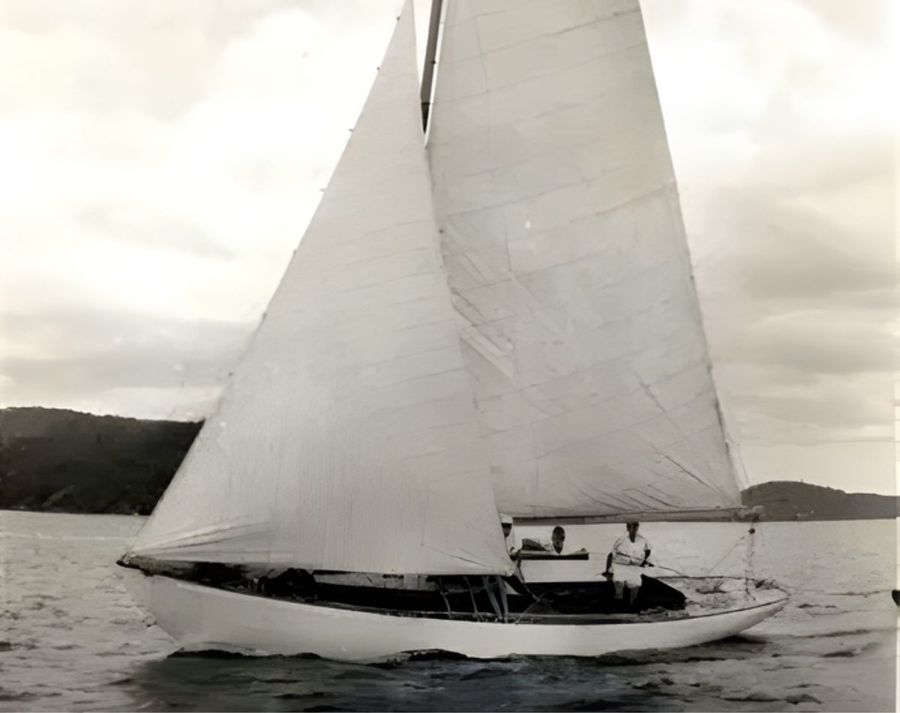
Drawn up in 1949 by Arnold "Bill" Couldrey, a man who had learned his craft as an apprentice to Arch Logan, Turakina bears the hallmarks of the Logan school in every line. She is thirty feet overall, eight feet in the beam and draws five feet six inches. Those are the unadorned dimensions of a yacht bred for racing rather than glamour, conceived for club competition in a time when timber, seamanship and a good read of the tide mattered far more than any rating formula.
Her construction began with a single kauri tree felled in Titirangi and milled by Henderson & Pollard. New Zealand from the 1940s through to the 1970s produced a generation of yachts built not in formal boatyards but beneath family homes, in garages and backyard sheds, and Turakina belongs squarely to that tradition. Shortly after Couldrey completed the plans, a 19-year-old Leo Clark began building her under his mother's house at 26 Kingsview Road, Mt Eden. Working in double-skin kauri with limited funds and considerable resolve, he walked each evening to the public phone box on Kingsview Road to call Couldrey and ask what to tackle next. A persistent rumour holds that the two tons of lead needed for her keel came from surplus flashings stripped from neighbouring Mt Eden villas. Whether literally true or not, it fits the spirit of the era perfectly. Two years after Clark started, she was finished.
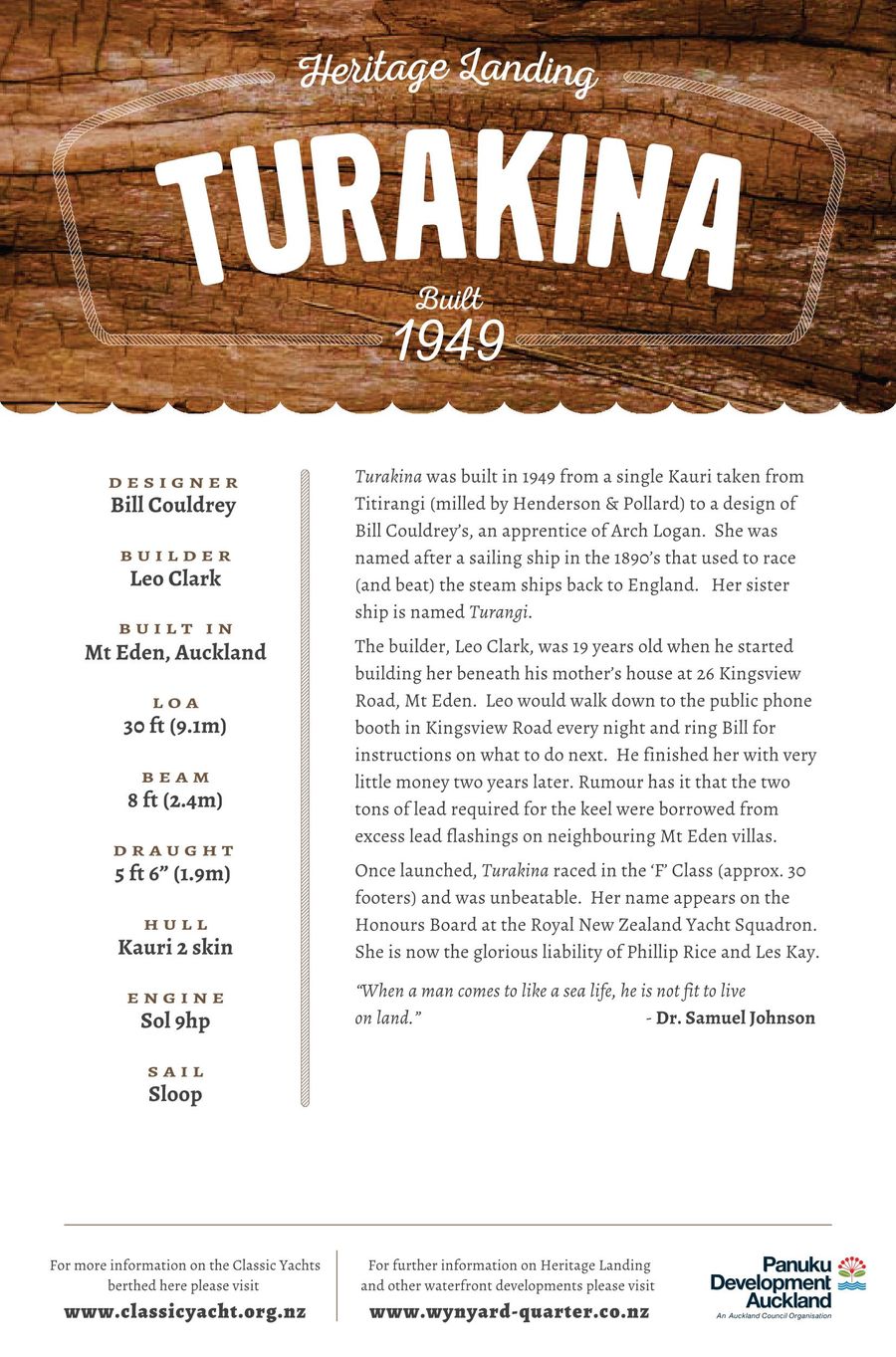
Turakina entered Auckland's racing scene in the F Class, the division for yachts of around thirty feet, and quickly made her presence felt. Her name sits on the Honours Board at the Royal New Zealand Yacht Squadron.
Her story might easily have faded there. WaitemataWoodys® recounts how, a little over twenty-one years ago, Turakina appeared on Trade Me in tired condition, the hull weary and her prospects far from certain. Family memory intervened at the right moment. Danvers, a nephew of Leo Clark, came across the listing and wasted no time alerting his stepfather Les and their friend Phil Rice. The three moved quickly and secured her.
Peter Brookes was brought in to carry out a full restoration, a process that took two and a half years and spared nothing. The cabin was removed, the keel lifted and every element given proper attention, with no shortcuts taken. What emerged was not a reinterpretation or reinvention but a faithful revival, every decision guided by respect for the original lines and structure Couldrey had set down.
At the Auckland Wooden Boat Festival this March, Turakina takes her place among many distinguished vessels. For those with an eye for Logan lineage, F Class Auckland racing history and the quiet significance of a kauri hull shaped by hand beneath a family home, she carries something that goes well beyond the sum of her dimensions.