
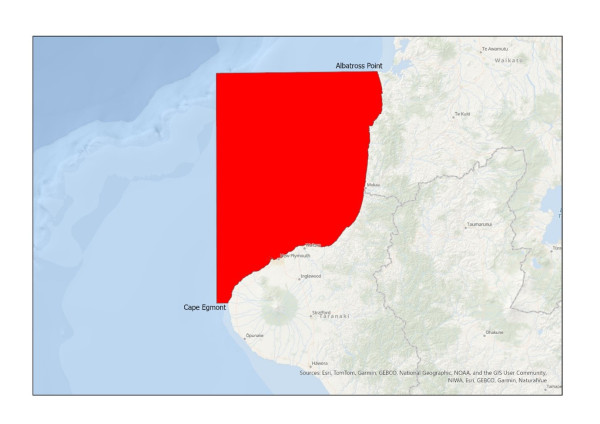
Routine testing by New Zealand Food Safety has detected paralytic shellfish toxins (PSP) in shellfish samples collected from Pukearuhe, on the north Taranaki coast, at concentrations above the safe limit of 0.8 mg/kg.
The affected coastline runs from Cape Egmont northward to Albatross Point near Kawhia. Testing will continue on a regular basis, and the public will be notified once it is safe to collect shellfish again.
PSP develops when shellfish feed on certain microscopic algae that produce saxitoxins, which accumulate in the flesh of the animal. These toxins act on the human nervous system and cannot be neutralised by heat, meaning cooking offers no protection.
Even a small quantity of contaminated shellfish can cause serious harm. Symptoms typically begin anywhere between ten minutes and three hours after eating and can include tingling or numbness around the mouth, lips, hands, and feet, along with dizziness, headache, nausea, vomiting, and diarrhoea. More severe reactions may involve difficulty swallowing or breathing, and in the worst cases, paralysis and respiratory failure.
Anyone who becomes unwell after eating shellfish should call Healthline on 0800 61 11 16 or seek medical attention straight away. Hold on to any remaining shellfish, as authorities may need to test it.
Bivalve shellfish, including mussels, oysters, tuatua, and scallops, are particularly susceptible to toxin accumulation because they filter hundreds of litres of seawater every day as they feed on phytoplankton. When that phytoplankton includes toxic species, particularly Alexandrium pacificum, Alexandrium minutum, and Gymnodinium catenatum, saxitoxins build up in the shellfish tissue. Anyone consuming those shellfish can then become ill.
Species such as pāua, crab, and crayfish present a different risk. Because toxins tend to concentrate in the gut and digestive tissue, these animals are only considered safe to eat if the gut is completely removed before cooking.
The current warning does not apply to commercially sold shellfish. Products available through shops, supermarkets, and restaurants remain safe to eat. Commercial operators work under rigorous monitoring programmes covering both water quality and flesh testing, and harvesting areas are closed without delay should toxin levels be found to be elevated.