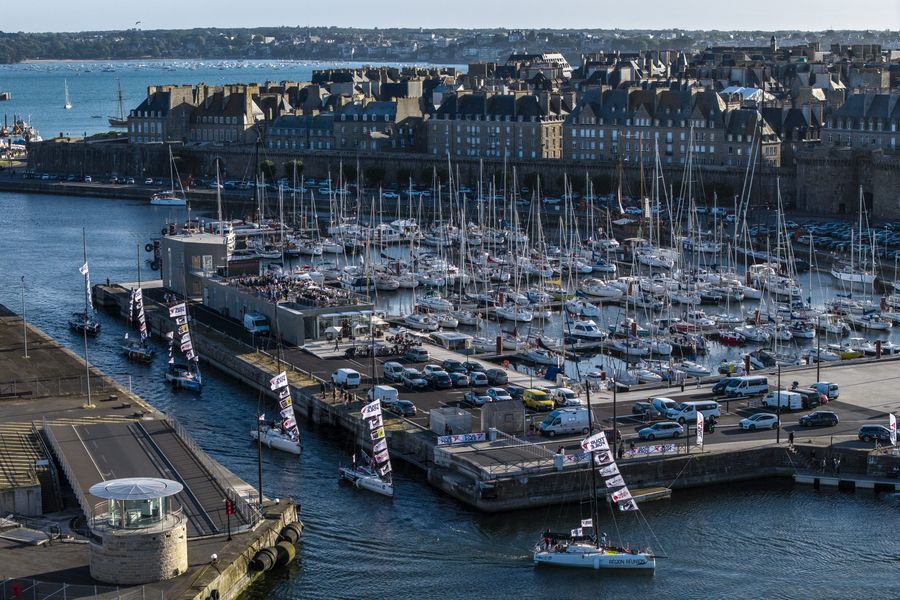
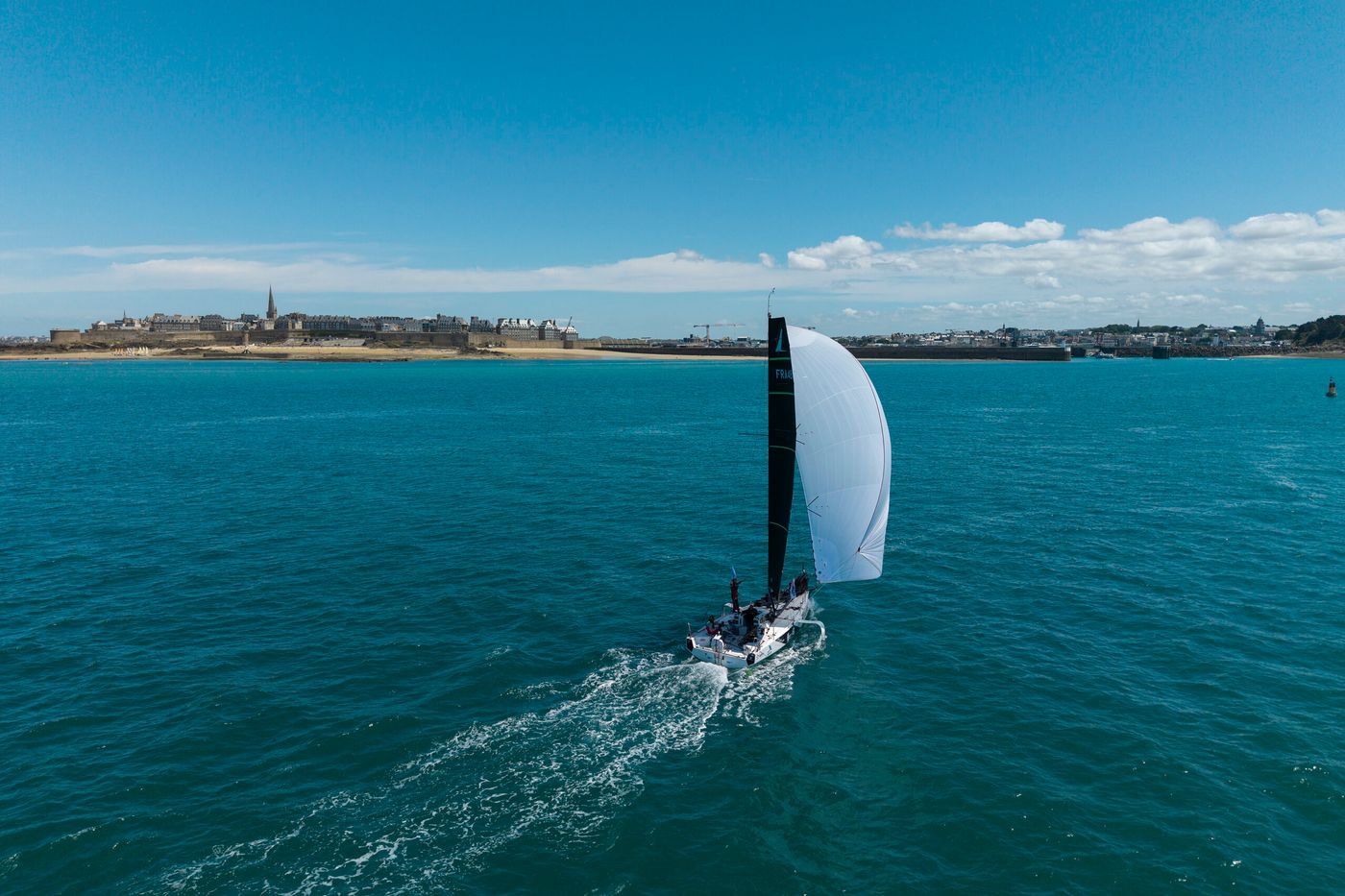
For nine Figaro Beneteau 3 crews, the stopover in Saint-Malo offered little in the way of rest. Lines were barely made fast after the opening rally from Cherbourg-en-Cotentin before the fleet received its next start time, dropping straight into competition for the Bretagne Plaisance Grand Prix at the 47th Tour Voile. The relentless scheduling is no accident. The event is built on a philosophy of progressive attrition, piling on racing hours and offshore miles until the accumulated weight of fatigue becomes a competitive factor in its own right. A single long day asks crews to complete three constructed geometric courses before transitioning to a coastal leg, each segment requiring a different tactical mindset and a fresh set of hands.
The racing window runs from 9h16 through to 20h01, keeping the fleet on the water for just over ten hours. Buoy racing fills the morning and into the afternoon, with the coastal leg to follow as conditions allow. That final section covers roughly 22 miles, threading through waters around La Saint-Servantine, Vieux Banc Est, the Basse du Boujaron, and Fort La Latte. Moving between tight geometric courses and open coastal navigation demands constant recalibration, with no sustained rhythm to settle into and no opportunity to bank one mode of racing and concentrate entirely on the next.
Wind conditions are expected to begin light in the morning, sitting between 6 and 8 knots. Breezes that gentle have a way of laying bare every small lapse in trim or loss of focus at the helm. A build through the afternoon to 10 to 12 knots should gradually reward more aggressive tactics, though by then the fleet will have already spent hours chasing small shifts and working out current set in unfamiliar waters.
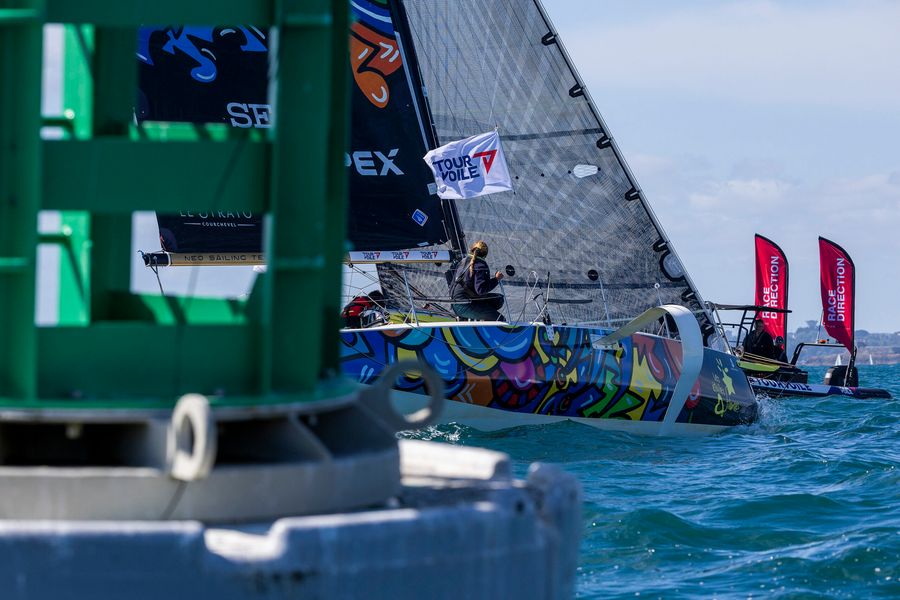
The deeper challenge of a day structured like this reaches well beyond physical fitness. Crews arriving at the start already carry the residue of the rally leg: gear that never properly dried, hands roughened by salt-stiffened lines, a boat that demands constant small corrections just to hold its course. Each of these things is trivial in isolation. Together, and measured against a ten-hour racing day, they compound. A helmsman who begins the morning with full concentration starts losing that edge long before the afternoon breeze arrives. Trimmers' hands begin to ache. Communication between crew members grows clipped, signals get missed, and errors that would normally cost nothing start accumulating across the fleet.
Tour Voile makes no provision for recovery between legs. Exhaustion is not treated as something to manage around; it is baked into the structure of the competition as a condition every crew must race through. Raw boatspeed and tactical reading both remain relevant, but neither delivers results reliably when a crew can no longer maintain its standards under genuine fatigue. The boats that tend to accumulate points over the course of the event are rarely those that posted the fastest single-leg times. More often, they are the crews who held their discipline and sharpness together long after the rest of the fleet had started to fray.
For these nine teams, the Bretagne Plaisance Grand Prix distils what the 47th Tour Voile is fundamentally about: racing without pause, without concession to tired bodies, and wholly indifferent to how little sleep anyone managed before the gun went off again.