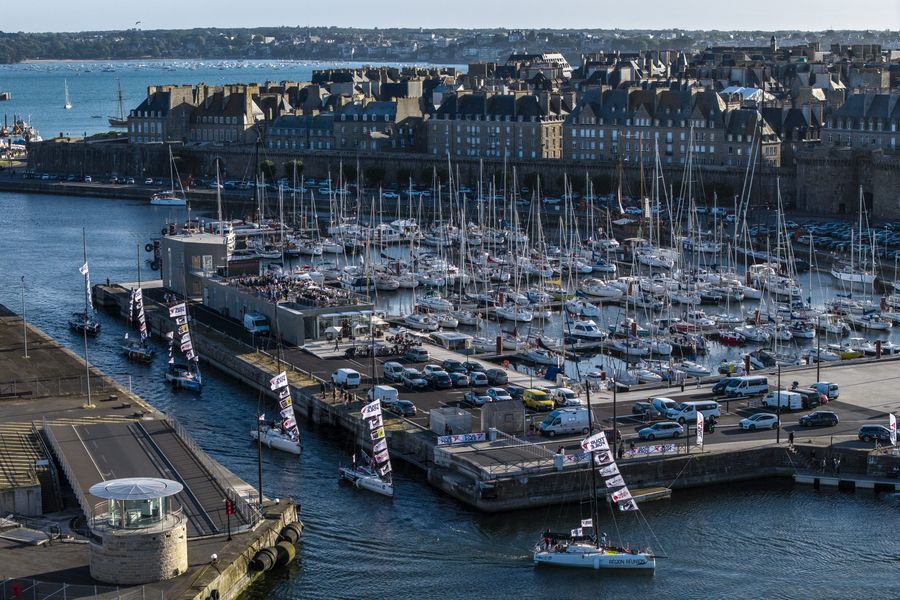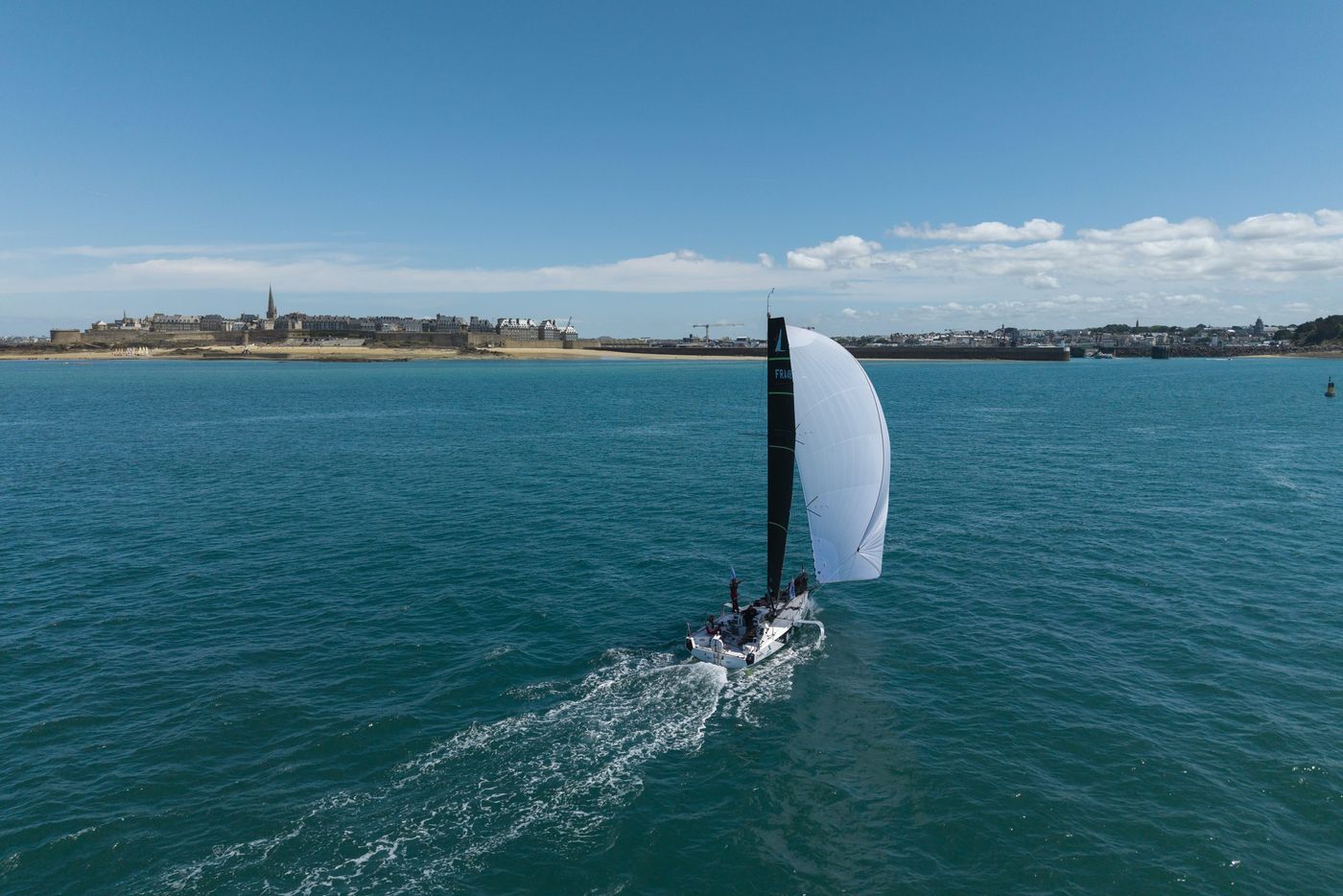
Halfway through the Tour Voile offshore racing series, nine Figaro Beneteau 3 crews will line up in Saint-Malo on Wednesday for the second rally leg. The 180-nautical-mile passage to Plérin carries genuine consequence for the overall standings, with the opening stage having failed to produce any standout performer.
The route heads east of Sark before passing offshore of Granville, then curves around to Le Taureau on the northwest side of Bréhat Island and into the port of Légué. Race organisers expect finishers to arrive between 16:00 and 17:00, following roughly a full day at sea. Winds of 12 to 15 knots are forecast for the harbour courses, with conditions freshening slightly once the fleet pushes into open water.
Race director Yann Château regards the leg as a thorough test of both boat handling and tactical decision-making. Crews will begin close-hauled, work through reaching and running phases, and then face a prolonged beat to windward as the decisive section of the course approaches.
"It's a very complete course," Château explained. "Crews will start close-hauled, then transition through reaching and running. They'll then find a long beat to windward toward Le Taureau. That's probably where things can open up the most, with multiple ways to manage currents and positioning between the coast and the open sea."
The approach to Le Taureau is shaping up as the race's central battleground. How crews manage current exploitation, layline timing, and the choice between working the coastline or pushing seaward will sort the fleet before a final spinnaker run into Plérin. No crew has yet stamped their authority on the series, so the decisions made through that sector could shift the standings considerably.
William Hill's APCC Centre de Formation crew arrive at Wednesday's start already carrying fatigue and damage. A long Tuesday of structured courses and coastal racing kept the team out until late in the evening, and when they returned to the dock, a torn mainsail was waiting for them. The repair required a collective effort and the cooperation of local sail lofts prepared to work after hours. Hill made no attempt to downplay the grind: "The Tour Voile really gives no respite. We've got to remobilise very quickly."
Thomas Lepère's CER – Ville de Genève squad is addressing that same fatigue challenge through deliberate crew rotation. The sailors taking the helm on Wednesday were stood down on Tuesday, arriving at the start line fresher than many of their rivals. Lepère describes the leg as both technically and physically demanding, pointing to heavy currents, narrow rocky passages, and a constant premium on precise navigation. He has singled out the sector between Videcoq and Le Taureau as the stretch where positioning and strategic judgement will matter more than raw boat speed. After a disappointing first offshore stage, his crew heads into Wednesday determined to claw back lost ground.
Joss Creswell of digiLab x RORC spent Tuesday ashore while his crew raced, taking in a visit to Mont-Saint-Michel, though stepping back into competition after time away from the helm brings complications of its own. He plans to lean on tactician Ella Boxall, who he already knows from solo offshore campaigns where she has served as his weather router. That existing familiarity with his thinking and decision-making should prove an asset on a leg demanding energy conservation and precision in rocky waters. Creswell also views the day as a chance for the younger crew members to observe how an experienced professional prepares when the racing really matters.
{{TABLE_1}}