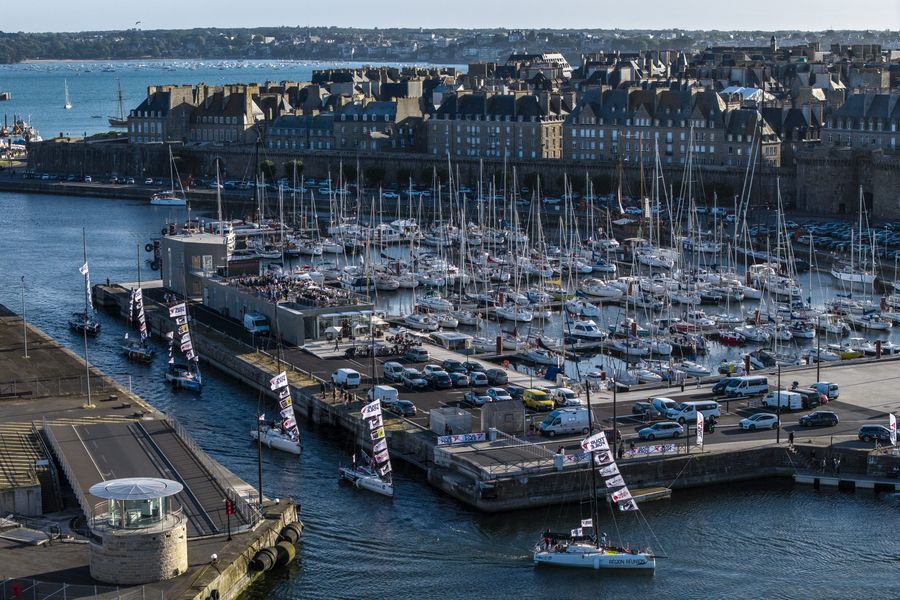
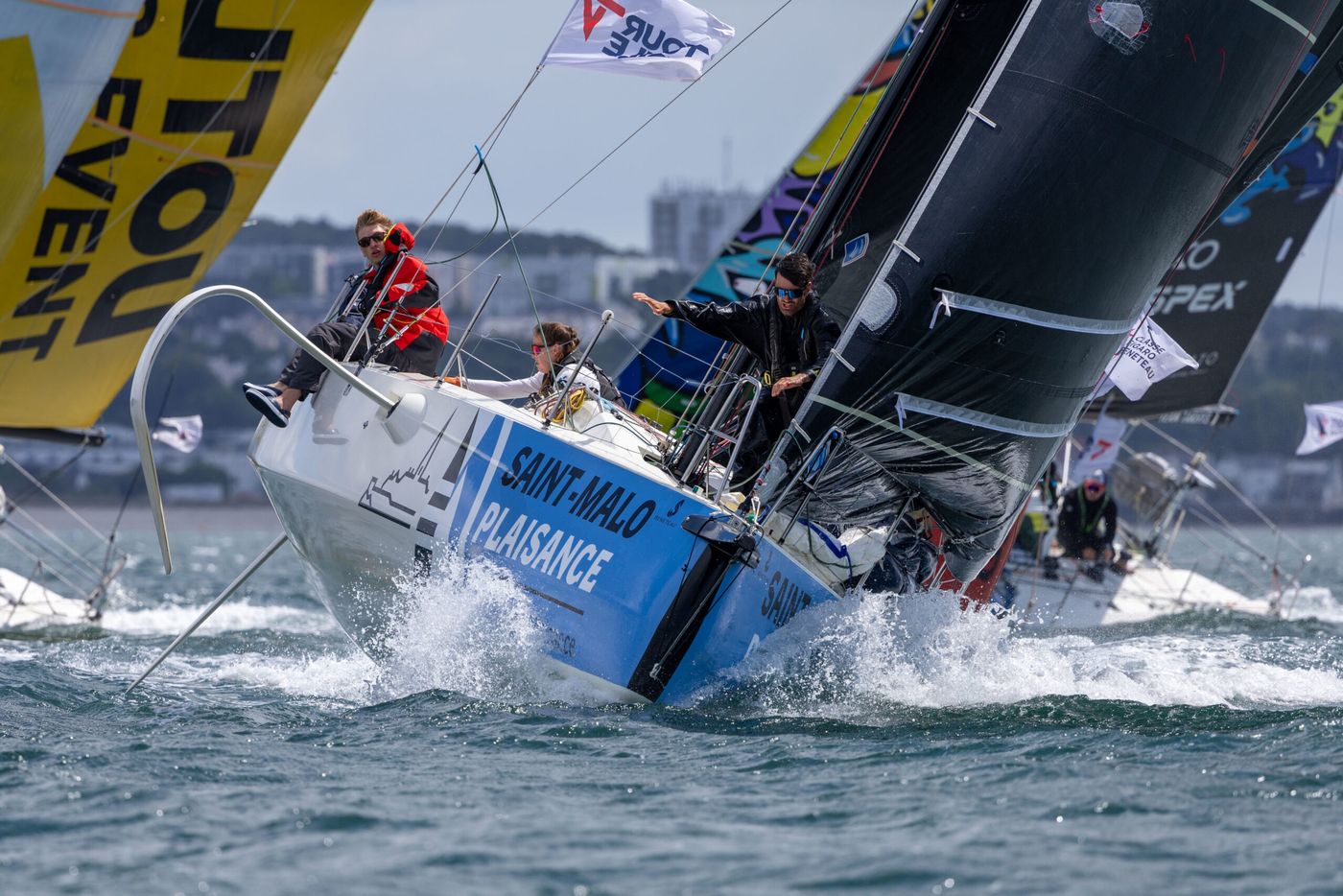
The 47th Tour Voile runs from 24 June to 12 July this northern summer, linking Cherbourg-en-Cotentin, Saint-Malo, Plérin, and Camaret-sur-Mer before the fleet finishes at Larmor-Plage. Nine crews and around 90 sailors will contest the racing, though the competition has never told the complete story. Over decades, this event has done something no points tally can fully capture: it converts promising offshore sailors into accomplished ones.
Few regattas can claim the same standing as a developmental engine. Compressed passages day and night, tactical decisions made under pressure, meteorological awareness, and the constant demands of crew communication give participants an accelerated education that ordinary offshore experience might take months to deliver. That tradition is clearly alive in the 2026 entry list, where a significant proportion of registered competitors are under 26 and venturing into extended offshore racing for the first time.
Experience Meets Ambition
The event's format builds mentorship into the rules rather than leaving it to chance. Each four-person crew must include at least one woman and at least two sailors under 26, conditions that ensure experienced hands are always racing beside those still developing their craft. Pierre Leboucher, co-holder of the Jules Verne Trophy with Thomas Coville, will share a boat with relative newcomers. Charlotte Yven, the reigning French Elite Offshore Racing champion, races alongside Jules Ducelier, who arrives carrying fresh momentum from winning the Normandy Channel Race in Class40. A large contingent transitions directly from the Solitaire du Figaro Paprec, including Paul Loiseau, Lola Billy, Tiphaine Ragueneau, Joss Creswell, Pierrick Letouzé, Paul Cousin, Arthur Meurisse, Arno Biston, Tom Goron, and Paul Morvan. Moving from solo racing on the Figaro Beneteau 3 to coordinated crewing demands a fundamentally different discipline, and that shift tends to sharpen sailors in ways no amount of single-handed miles can replicate.
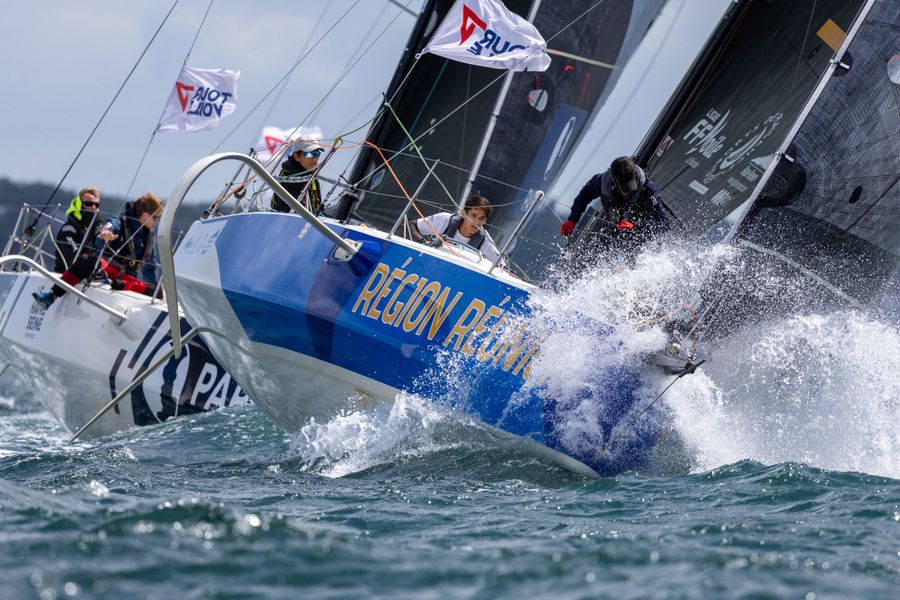
After a 12-year absence, Filière d'excellence Région Bretagne – CMB returns to the Tour Voile with a squad built around precisely this philosophy. Skipper Victor Le Pape has deliberately paired navigators with deep offshore experience alongside younger sailors still accumulating theirs. He is candid about both the competitive and developmental ambitions his project carries: "We know the competition will be fierce and there will be very strong crews at the start. But I believe we have a collective built to win, and I'm very satisfied with the team we've assembled. There's also a strong transmission aspect to this project. We have experienced skippers alongside younger profiles."
Inclusion and Women in Leadership
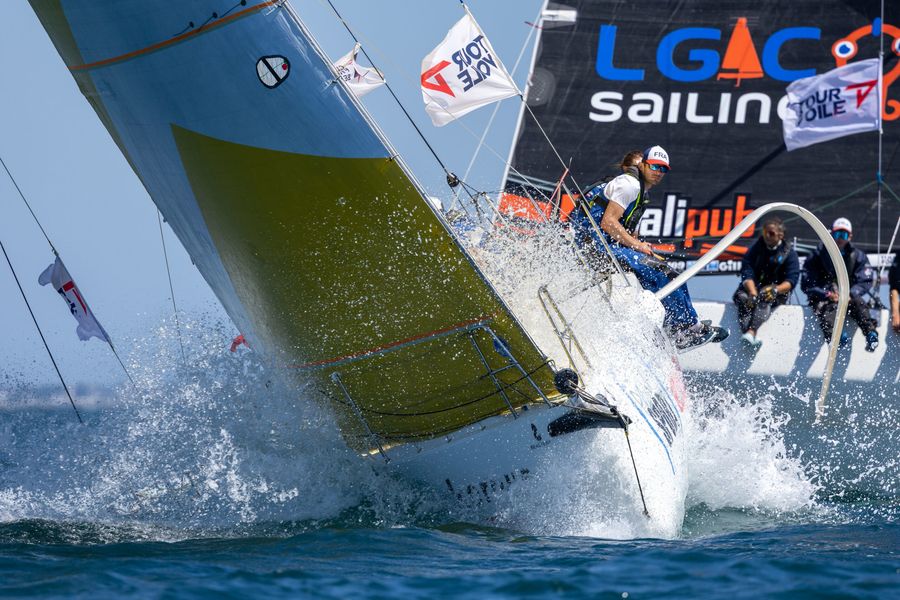
The 2026 edition reflects shifts that have been reshaping competitive sailing more broadly. Women now hold leadership and decision-making roles across this fleet as a matter of course, with two skippers directing their own campaigns: Tiphaine Ragueneau at the helm of APCC Centre de Formation, and Marie-Adélaïde Le Gué heading LGC Sailing – Bretagne Plaisance.
Perhaps the most significant change introduced for this edition concerns access to the sport itself. For the first time, race officials are permitting a fifth crew member with a disability to compete on coastal races and technical courses. LGC Sailing – Bretagne Plaisance has embraced that provision through 17-year-old Breton sailor Noah Guichoux, who has used a wheelchair ashore since suffering a stroke at age 14. Last year he became the first disabled sailor to race the Tour Voile aboard a Figaro Beneteau 3, completing the challenge without any modifications to the boat, a choice he made himself. His presence demonstrated that inclusion within a discipline frequently regarded as physically uncompromising is not only achievable but entirely unremarkable in practice.
Le Gué gives voice to what Noah's participation means beyond any finishing position: "We advocate for people with disabilities in sailing, often seen as elitist and very demanding. Noah navigates the boat without special arrangements. He wants to show he can sail under the same conditions as everyone else. His participation last year went very well, and it inspired the Figaro Beneteau class to bring other disabled sailors aboard."
When the fleet crosses the finish line at Larmor-Plage on 12 July, whatever the standings show will tell only part of the story. Over nearly three weeks of racing, these sailors will have learned, progressed, challenged one another, and grown collectively in ways no scoreboard can reflect. Some will be discovering what offshore sailing asks of them for the very first time; others will be confirming a potential they have long suspected but never had the opportunity to prove. The Tour Voile has built that reputation across decades of competition, and nothing about the 2026 field suggests it is about to change.