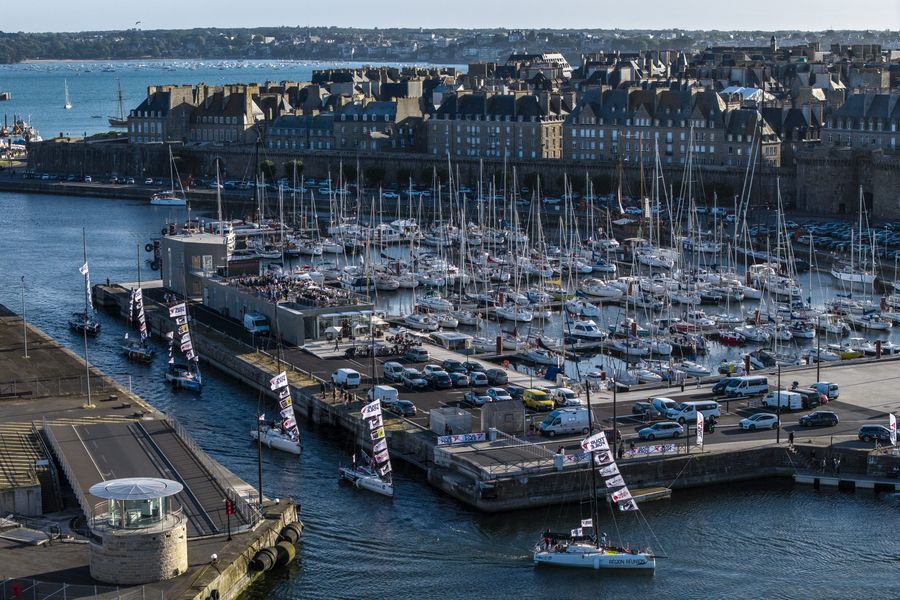
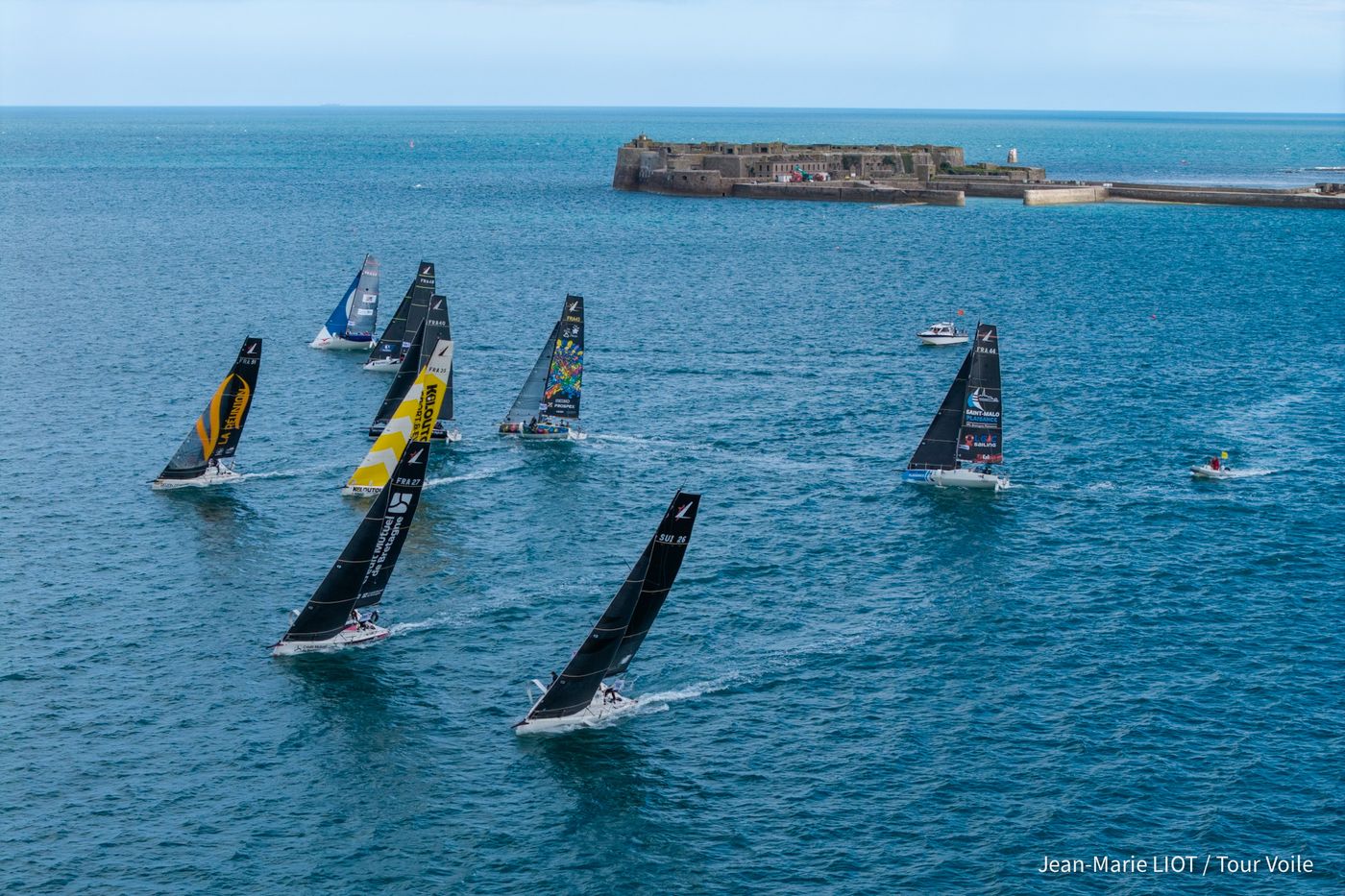
Nearly 90 sailors departed Cherbourg-en-Cotentin this week as Tour Voile 2026 got underway, with the Norman port providing the backdrop for the opening stage of the Figaro Beneteau 3 offshore racing series. Nine crews from France, England, and Switzerland made up the starting fleet, facing an opening programme crafted to challenge both boat-handling precision and tactical decision-making as the season begins its progression along the French coastline.
The opening stage brought two contrasting forms of competition. Inshore courses in the Baie du Becquet demanded tight crew coordination and careful tactical choices within confined waters, while longer coastal passages pushed competitors out along the rugged shores of the Cotentin Peninsula. The stretch off Cap Lévi proved a particularly demanding arena, its powerful tidal streams and shifting winds giving crews an early confrontation with the kind of unforgiving conditions that can shape an entire Tour Voile campaign.
Within French offshore sailing, Tour Voile holds a distinct and enduring role as a development pathway. The series has long served as a proving ground for the country's next generation of elite offshore racers, with both male and female competitors regularly going on to tackle France's most prestigious deep-water events after completing the season. For those assembled in Cherbourg, the opening stage carried meaning that extended well beyond any individual race result.
The selection of the Cotentin as a starting location was deliberate. Technically demanding waters combined with striking coastal scenery gave the fleet an authentic early test of how their skills and judgement would measure up under genuine competitive pressure.
Christèle Castelein, President of the Cotentin Urban Agglomeration, spoke to what hosting the opening stage meant for the region. She noted that the event offered sailors an opportunity to discover the area's natural assets and nautical infrastructure before heading off on weeks of racing across some of France's finest waters.
Philippe Augeard, the municipal councillor responsible for ports and maritime affairs, drew attention to Cherbourg's wider commitment to competitive sailing. For the city, nautical sport functions as both an economic driver and a meaningful route for developing emerging talent. That outlook was visible in the starting fleet itself, with several locally based sailors competing in this year's edition, particularly among the Norman crews, reflecting a conscious effort to cultivate offshore racing ability close to home.
The Yacht Club de Cherbourg managed the technical and organisational demands of the stage throughout, maintaining the standards Tour Voile has built across its history.
With the nine crews now dispersed into the season proper, Cherbourg-en-Cotentin returns to its role as a working maritime centre, one that has found in Tour Voile both a celebration of its seafaring traditions and a genuine stake in the future of French offshore racing.