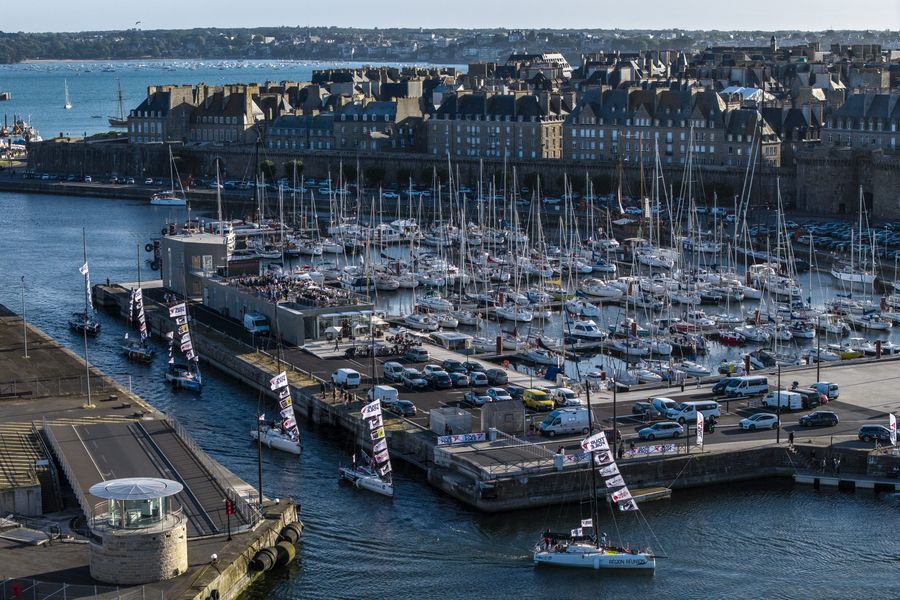
For sailors accustomed to the traditional rhythm of post-race protests, the Tour Voile Figaro Beneteau 3 series is offering something markedly different. Rather than waiting for crews to reconvene ashore and argue their cases before a jury, the event is trialling a system called semi-direct arbitrage, placing two qualified judges directly on the water to make binding calls while racing is still under way.
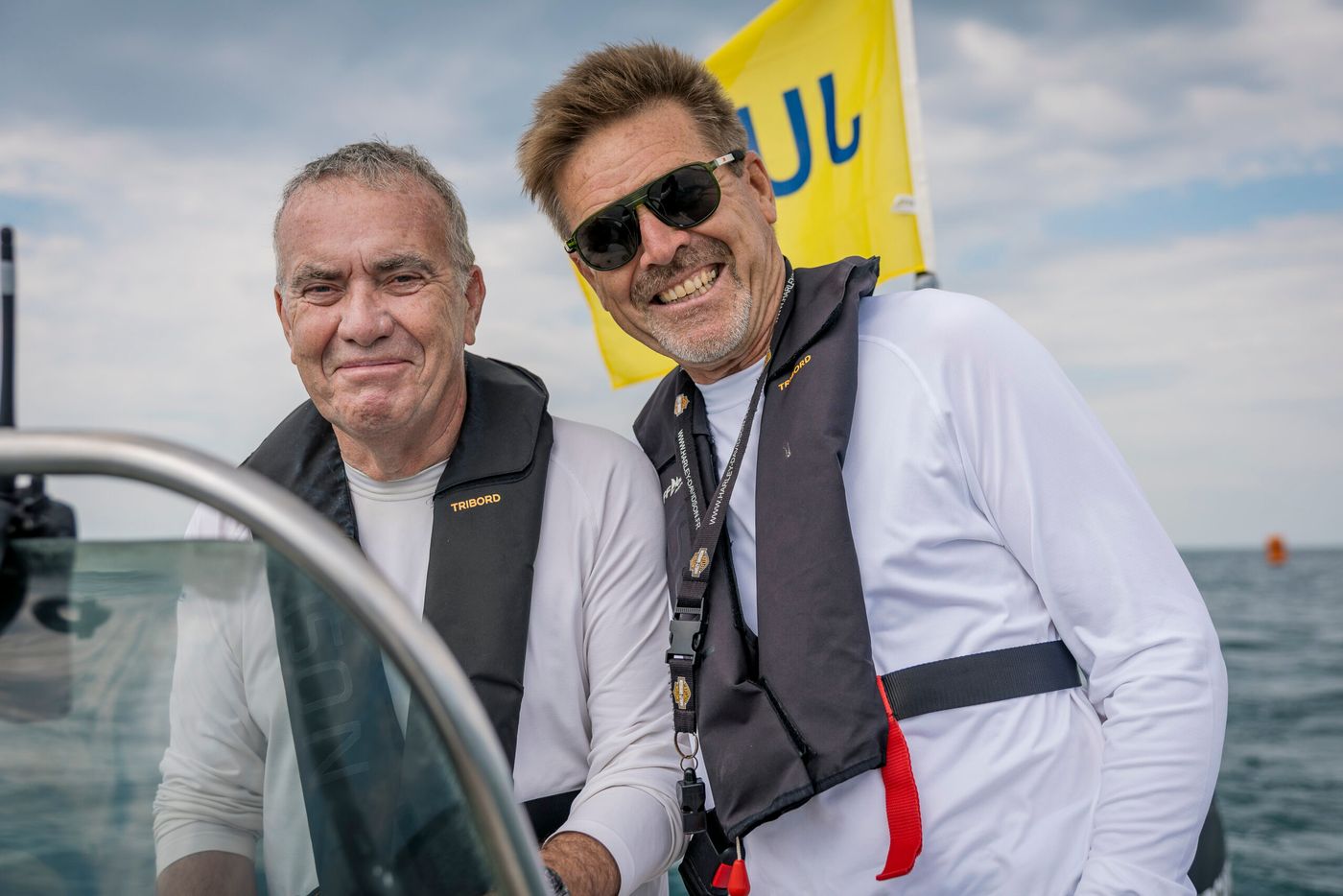
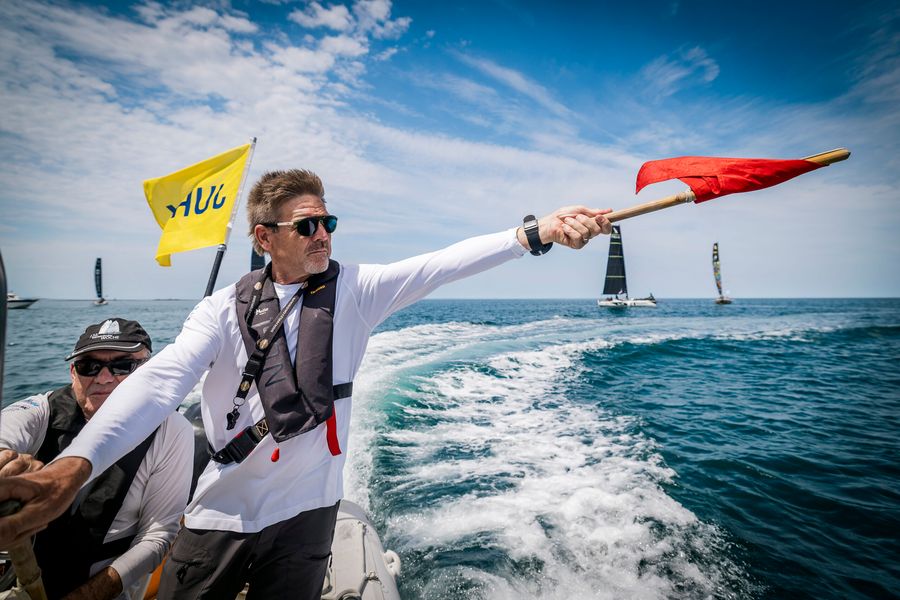
The officials carrying out this role are international judge Georges Priol and national judge and international umpire Thierry Poirey. The pair follow the fleet aboard a rigid inflatable, ready to act on any incident falling under Chapter 2 of the racing rules, the section governing how boats conduct themselves in relation to one another. When a crew believes an infringement has taken place, they signal with a red flag. The judges assess the incident in real time and respond immediately: a red flag from the umpires confirms a breach and requires the offending boat to complete a 360-degree penalty turn, while a green-and-white flag means no infraction has been found. Anything outside the system's defined scope, or involving a different category of complaint, is referred to the standard shore-based protest process.
The origins of this approach stretch back to the Maxi yacht racing scene of the 1990s, where it emerged as a practical middle path. Full direct arbitrage, as used in match racing and team racing, handles every incident on the water as a matter of routine. Conventional arbitrage, at the other extreme, sends everything to the protest room. Semi-direct arbitrage sits between them, reserving on-water intervention for clearly defined situations. "It's a good balance," Poirey explains. "In direct arbitrage, every case is treated on the water. Here, we only intervene in well-defined situations."
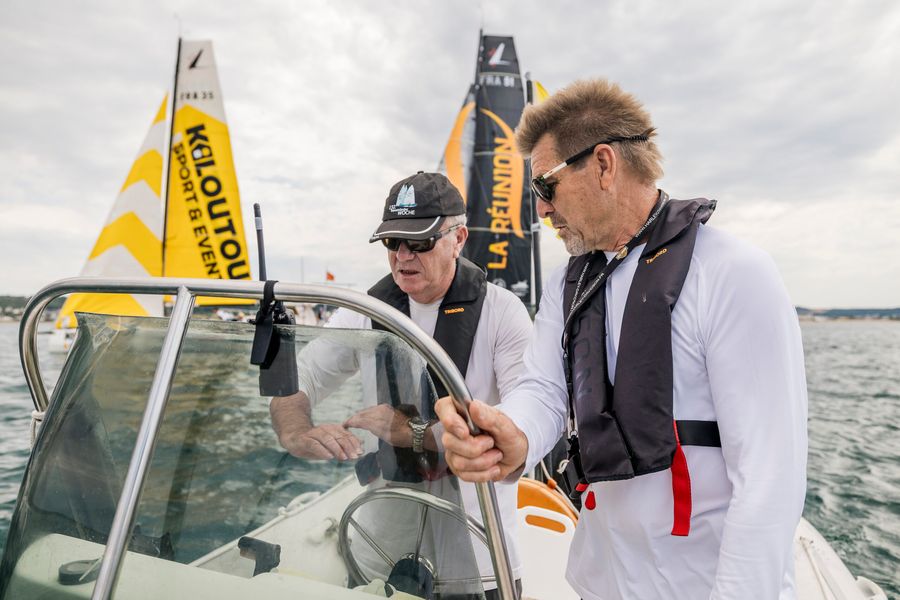
Executing the role well demands constant repositioning and a sharp ability to read the race ahead of time. Priol and Poirey must anticipate where tension between boats is likely to arise and place themselves accordingly before situations develop. "You need to be in the right spot to observe situations, much like a football referee hunting for the best angle," Poirey notes. "What's exciting is being completely immersed in the action." The proximity that comes with riding alongside the fleet also enriches post-race debriefs with competitors, giving sailors a more detailed and immediate understanding of how the rules apply and helping them sharpen both their knowledge and their instincts as helmsmen and tacticians.
The practical advantages for race management are considerable. With a large share of incidents resolved before the boats reach the dock, the jury's evening workload shrinks substantially. "It's a huge time saver," Priol says. "If previously ten protests arrived in the evening, more than half are now resolved directly on the water. It streamlines the jury's work enormously." Competitors benefit just as directly. "They know immediately where they stand. They get a decision without waiting hours, which brings real clarity to the racing."
The size of the fleet in this edition makes the system particularly well suited to the task, giving the umpires a genuine chance of being present when it counts. "On a larger fleet, obviously you can't be everywhere at once," Priol acknowledges. "But in this format, it's particularly efficient." From the shore the change may be invisible, but within the racing itself it marks a genuine shift, moving the resolution of disputes away from the protest room and back onto the water where those disputes first arose.