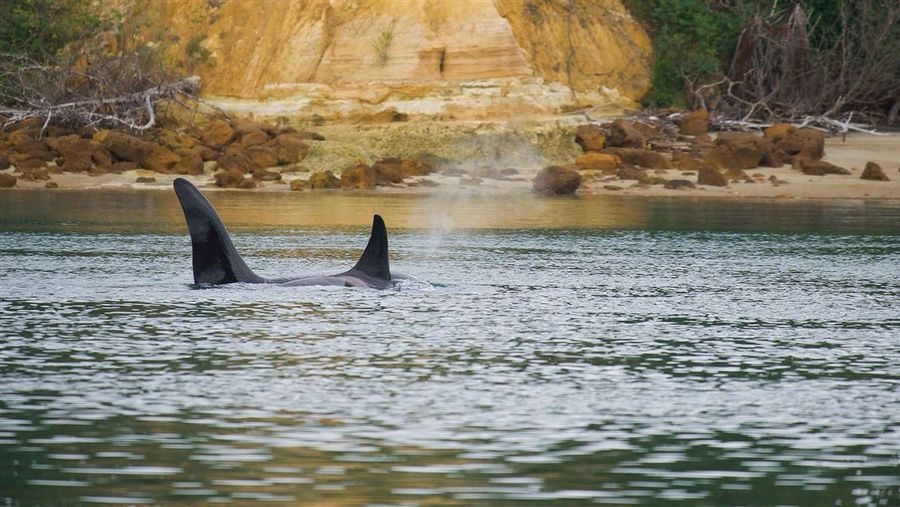
Two incidents in which recreational vessels came too close to orca in Raglan Harbour have led the Department of Conservation to appeal for witnesses. The more recent took place on 23 March, when a pod of orca feeding in the harbour was approached by a number of boats, among them at least one small runabout. A separate incident at the same location occurred a few weeks earlier, and DOC has confirmed both are under investigation.
DOC's Waikato Operations Manager Niwha Jones says the inquiry into the 23 March event is continuing. Anyone present in the harbour that day who saw what happened is asked to get in touch via the DOC hotline, 0800 DOC HOT, quoting case number CLE-11562. Eyewitness accounts are welcome, as is any video footage or photographic material. Information can be supplied anonymously, and details that might help identify the vessels involved or the people operating them are especially valuable to investigators.
"Orca are amazing animals to encounter if you’re out on the water," Jones says, "but they’re a powerful apex predator and deliberately getting close to them is very risky. We urge all boaties to let the orca interact with humans and vessels on their terms, not ours."
Orca are regular visitors to Raglan Harbour, which they use as a feeding ground. For anyone on the water or watching from shore, the sight of fins cutting the surface is something that stays with you, and the instinct to move closer is entirely human. It is also a criminal offence.
Every orca in New Zealand waters is protected without exception under the Marine Mammals Protection Act 1978. The regulations that flow from that Act set out exactly how vessels must conduct themselves in the vicinity of orca, and those rules apply to every craft on the water equally, from a large cruiser to a single kayak.
The closest any vessel may legally approach orca is 50 metres. That distance is the legal minimum, not a suggested comfortable viewing range. Where a pod is feeding or has calves in tow, giving considerably more space is the right course of action. No vessel is permitted to place itself in the path of orca, and cutting across the route of a moving pod is treated as a disturbance even if the 50-metre threshold has technically been observed. At any one time, no more than three vessels may be within 300 metres of the same pod. Kayaks paddled together as a raft count as a single vessel, but individual kayaks are each counted separately.
Getting into the water with orca is prohibited outright. If a person is already swimming when orca appear nearby, the correct response is to exit the water quietly, without splashing or sudden movement.
The penalties for breaching these rules reflect how seriously the law treats marine mammal protection. Under the Marine Mammals Protection Act, harassing, disturbing, injuring, or killing a marine mammal is a criminal offence carrying a maximum penalty of two years in prison or a fine of up to $250,000. DOC can also issue infringement notices for less serious contraventions, but prosecutions have been pursued. Being found within the exclusion zone around a pod is not the kind of matter that tends to be settled with an informal conversation. People have been brought before the courts for exactly this sort of behaviour.
Most recreational boaters have no wish to disturb wildlife. Even so, edging closer out of excitement, or simply misjudging where 50 metres actually sits on open water, carries the same legal consequences as a deliberate act of interference. Worth keeping in mind the moment fins appear off the bow.
Anyone who witnessed the 23 March incident in Raglan Harbour is asked to call 0800 DOC HOT and quote case number CLE-11562.