As Quorning Boats turns 60 in 2027, the Danish yard's history runs through three Quornings – and a boat that took years to find its market.
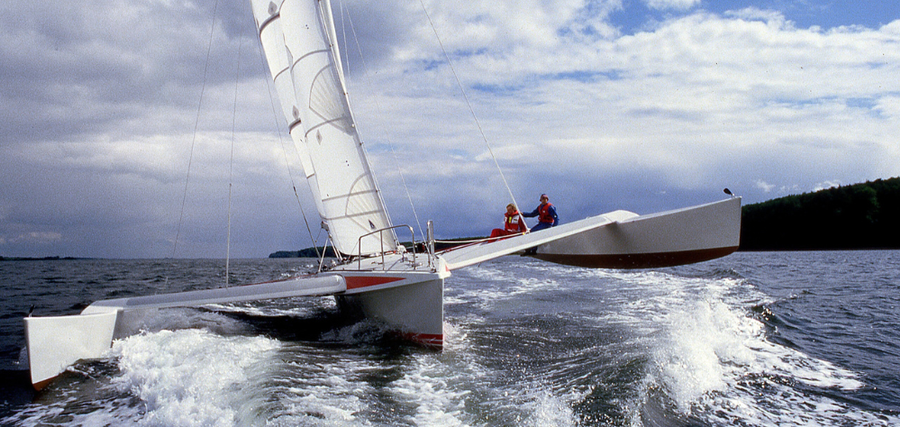
In 1972, in the Danish fishing village of Skærbæk, Børge Quorning built a 16-foot trimaran out of plywood and foam for his two young sons, Eric and Jens. The hulls and crossbeams were held together with thin rope instead of bolts. It got a nickname – "Den Lille Gule", the Yellow One. It was the first boat ever built under a name that would outlive it: Dragonfly.
Quorning Boats turns 60 in 2027, marked with an anniversary edition of its owners' gathering, Dragonfly Days, running 26–28 August. The company has stayed in the same family for the whole six decades – and Peter Quorning, third generation, now works alongside his father Jens as Vice President.
Why the first Dragonfly nearly didn't happen
Rewinding to 1966, Børge Quorning came home to Denmark after working as a boatbuilder in Canada, convinced Europeans should be sailing trimarans. In August 1967 he and his younger brother Bent bought a plot in Skærbæk and began building a yard dedicated to trimarans. The first boat out of the yard was the Trident 28. One sold, but no more orders followed. Buyers weren’t yet ready for trimarans. So the brothers built something safer: the double-ended Luna 19, then the larger Luna 26 in 1971, conventional fishing and leisure monohulls that kept the business afloat through the 1970s. In 1974 Bent left to start his own yard in Middelfart, later playing a key role in Sweden's Nimbus powerboat range.
How Børge kept the trimaran dream alive
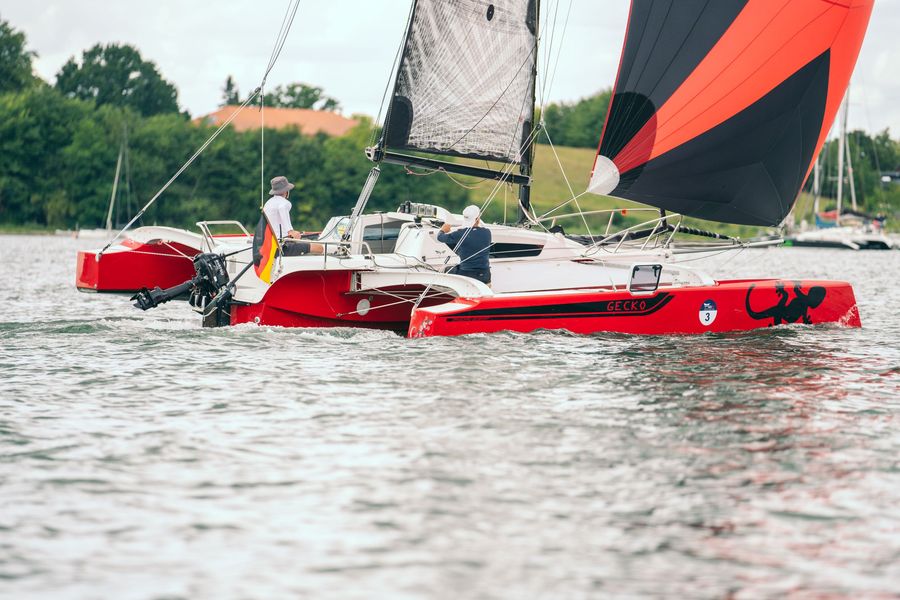
Børge stayed and didn't let the trimaran idea drop. The same year Bent left, and two years after building the Yellow One for his sons, he launched the Trident 27, Quorning's first production trimaran series and the first real step toward the Dragonfly range as it exists today. Then in 1978, he built a 28-footer called Quick Step – and he and his two teenage sons, Eric and Jens, 18 and 16, won the Round Zealand Race in it, crewing alongside family friend Gunner Dalgaard. That same year, Jens started his apprenticeship at the yard.
By 1980, with the company in real financial difficulty, Børge made the call that would define it: the Dragonfly 25 MK I went into production, and trimarans became the yard's focus from then on. Five years later, Eric and Jens each entered the gruelling two-handed Round Britain & Ireland Race in their own boats – Eric in a self-modified Dragonfly 25, the smallest in the fleet, winning the Boxhaul Trophy on handicap; Jens finishing second overall aboard a rebuilt Quick Step III. Dragonfly itself calls 1985 the company's international breakthrough.
The Swing Wing system that made Dragonfly's name
The technical leap that made Dragonfly's name came in August 1989, when Børge and Jens introduced the Swing Wing folding system on the Dragonfly 800 – a way to fold a trimaran's outer hulls in against the centre hull, from the cockpit, in under a minute per side, without tools. It remains the mechanical signature of every Dragonfly built since.
Jens became financially involved in the business in 1991 and took over ownership from his parents in 1995. Under him, Dragonfly went on to win the European Yacht of the Year award four times, most recently for the Dragonfly 40 in 2021. Today, the yard offers five models: the 25, 28, 33, 36 and 40. Its roughly 50 staff build more than 40 custom trimarans each year.
Peter Quorning and the next generation at Dragonfly
Peter Quorning began his own apprenticeship at the yard in August 2021, 43 years after his father did the same as a teenager. Børge Quorning died in March 2022, aged 90, not long after the yard completed its 1000th trimaran, a moment he was reportedly proud to see. In late 2024, Peter was appointed Vice President.
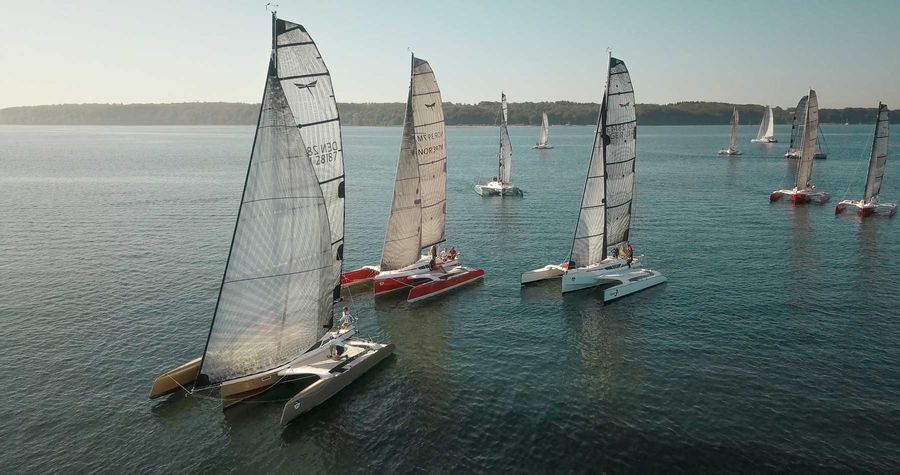
Dragonfly Days 2027 will bring owners and crews together to mark 60 years since Børge and Bent began building their yard in Skærbæk. Peter, who started there as an apprentice like his father, now works alongside Jens as Vice President.
For more of this fascinating story read more at Dragonfly Trimarans where you can also learn more about its 60th anniversary celebrations – the 2027 Dragonfly Days.