There is a particular tension mid-race, when the shells are still well short of the line and nobody in the crowd can quite tell who is moving. In that suspended moment, the voice coming through the speakers does something essential. At Lake Karapiro and regattas around the country, it is the commentator who translates the blur of blades and bodies into something thousands of spectators can actually follow, yet the people filling that role rarely receive much recognition for doing it.
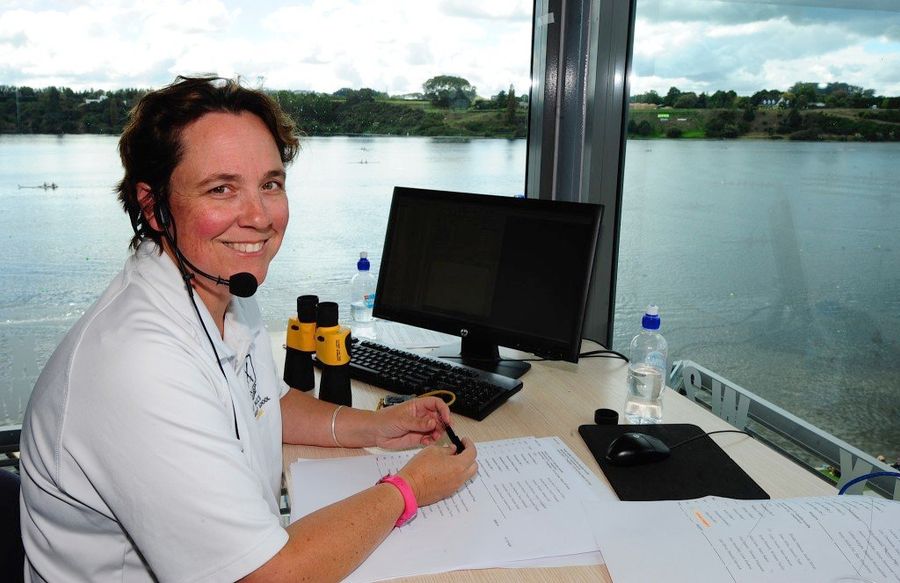
Kirsty Dunhill arrived at the commentary box through a combination of casual bravado and the prospect of a free meal. She had spent close to four decades in rowing, first as a coxswain, and it was after the 2009 National Championships in Twizel that she found herself in conversation with experienced commentator John Howard. She remarked, without much thought behind it, that commentary looked "fun and easy" and, as a bonus, appeared to come with a complimentary meal. Howard filed the comment away. The following season at Lake Karapiro he called her bluff, and Dunhill found herself in the control tower at her first regatta, quickly and uncomfortably aware that several hundred sets of eyes were trained on her.
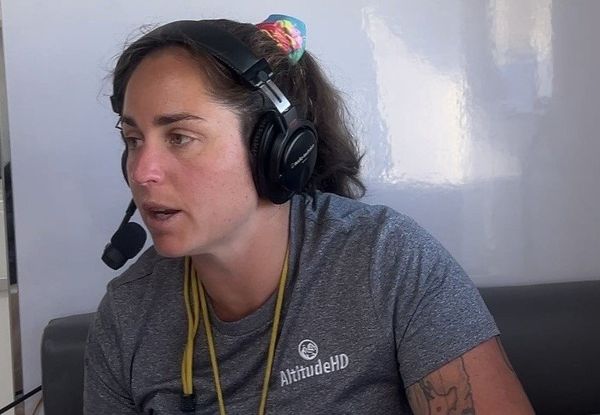
What had begun as an offhand boast turned into a calling she couldn't walk away from. "I enjoyed the thrill of seeing races come to their conclusion and it was a nice distraction from focusing on my own squad," says Dunhill, who now serves as Head of Rowing at St Cuthbert's College in Auckland. "I found it all very natural, just like chatting to the bank." More than 15 years later she is still behind the microphone, and within the rowing community she is recognised for the careful preparation she puts in as major regattas approach and their storylines begin to take shape. She makes a deliberate point of stepping aside whenever St Cuthbert's races come up, and of all the events in a regatta programme, it is the novice eight final she values most. Bringing first-time rowers and the people cheering for them genuinely into the occasion, she believes, carries a significance that reaches well beyond simply reading the positions down the course.
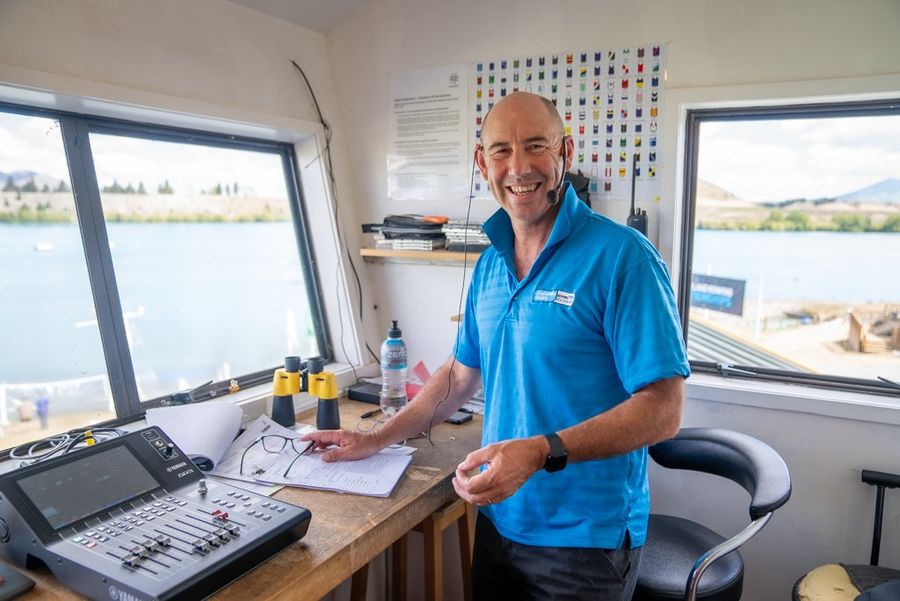
Ian Cartwright came to the work from an entirely different starting point. A Cantabrian whose son rowed for Shirley Boys' High School, he brought a pace and intensity to the microphone that drew comparisons to horse-racing announcing, yet he had no commentary experience whatsoever when he began. It was his wife who recognised something in the way he communicated and encouraged him to give it a go. A conversation with Peter Midgley opened the door, and Cartwright made his debut at the 2019 Canterbury Championships. "I found it quite exhilarating and quickly got over the fear of saying something wrong," he recalls. He subsequently worked with Britain's Dr Treharne-Jones to sharpen his technique further.
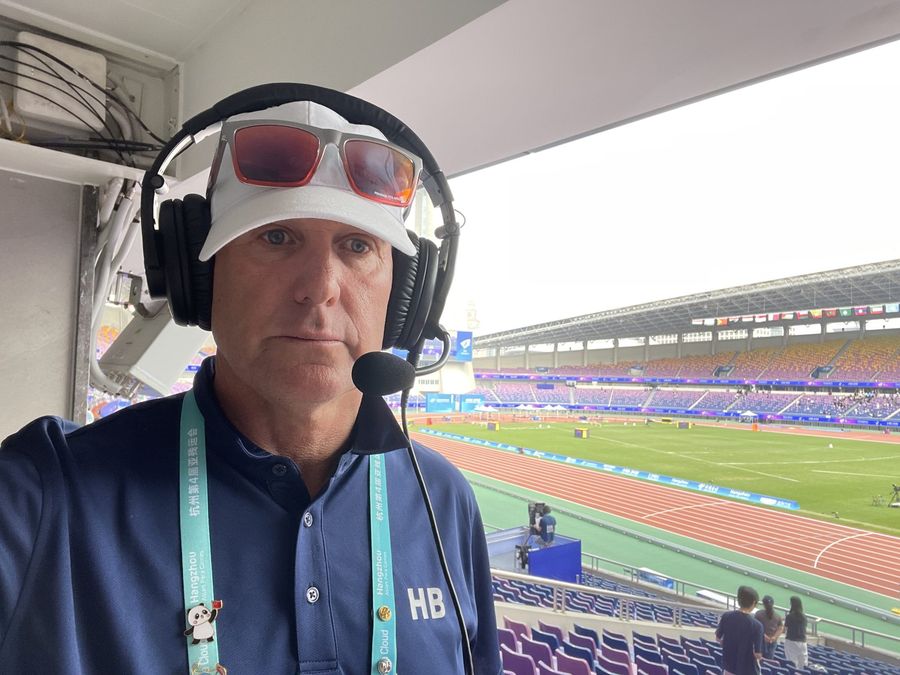
Cartwright frames his role around three responsibilities: inform, engage, entertain. Underpinning all three is a conviction that every crew on the water deserves attention, not only the one holding the lead. "If a parent has a child sitting seventh, they still deserve to know where their son or daughter is in the race," he explains. The call he remembers most vividly came at the 2023 Maadi Cup, when St Bede's and Hamilton Boys' crossed the finish line separated by just 0.06 seconds. Even so, he keeps his own contribution firmly in perspective. "The commentary is just a very small cog in a big engine that helps deliver a regatta," he says. "My hope is that I can play some small part in enhancing their enjoyment of the occasion."
On the question of what it takes to do the job well, Dunhill and Cartwright arrive at much the same advice. Resist the instinct to follow only the leaders and let the rest of the field disappear. Learn the names before the crews hit the water. Build skill through repetition rather than expecting to arrive polished from the start. Take feedback seriously when it is offered, and avoid the trap of borrowing someone else's style and wearing it as your own. Crowds are quick to notice when a commentator is leaning on tired phrases or simply going through the motions. What they respond to is someone who is genuinely present, genuinely interested, and genuinely committed to making the day feel like something worth remembering.