When Cantiere del Pardo launched the original Pardo 43 in 2017, it made an immediate impression. The reverse bow, high topsides and uncluttered walkaround decks gave the feel of a Mediterranean beach club that had somehow found its way onto the water. Over the following seven years, more than 300 hulls were delivered, a result that suggested the Italian builder had read its buyers accurately.
Which raises an obvious question: if something is working that well, why rebuild from the ground up? And perhaps more to the point for buyers in this part of the world, does that kind of wholesale redesign actually deliver anything useful to owners who care most about range, reliability and straightforward maintenance?
The answer, it turns out, is yes, though not at the expense of the style that made the boat popular in the first place. Cantiere del Pardo has used the second generation to resolve compromises that crept into the first, add volume where it genuinely matters, and incorporate technology that simply did not exist when the original design was drawn up.
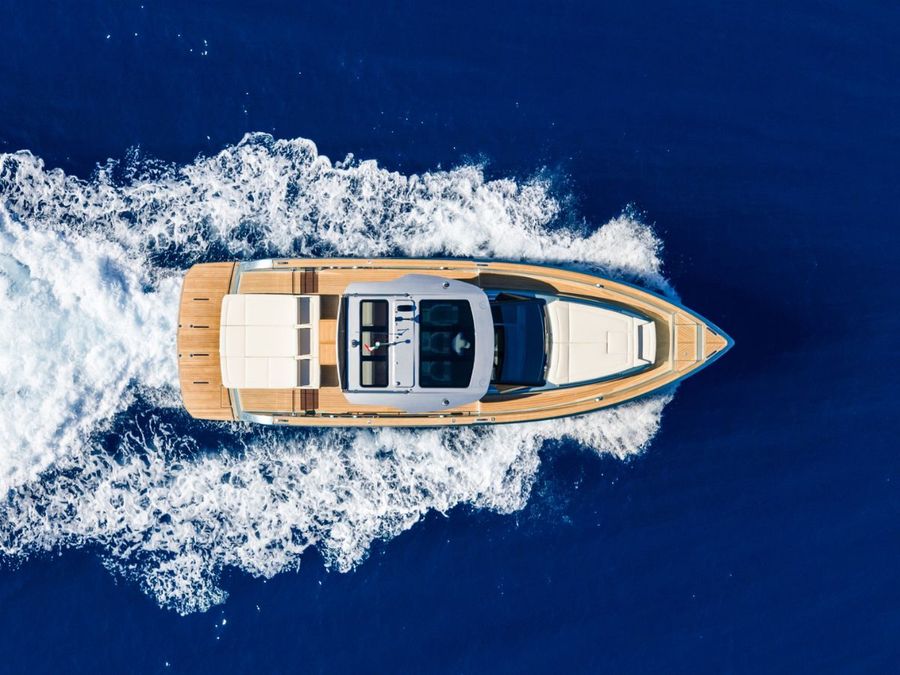
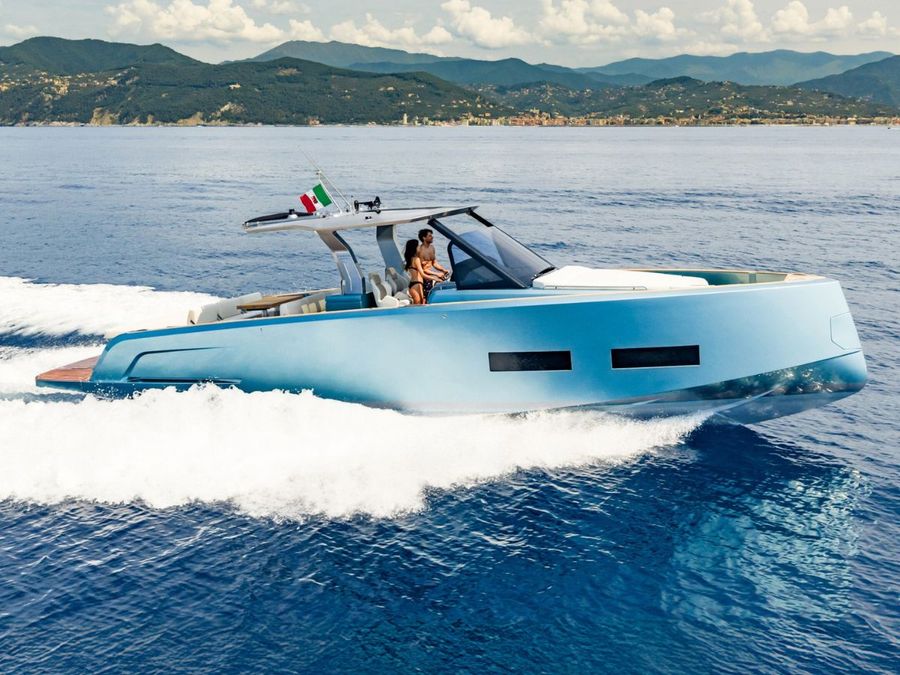
Viewed from the side, the new Pardo 43 reads as leaner and more purposeful than its predecessor. The sheerline sits lower and cleaner, the reverse bow is retained, and a new feature line the builder calls a "swoosh" sweeps aft to meet the engine air intakes, which are now positioned outside the hull structure. Those intakes are functional rather than decorative. Routing intake air away from the cockpit reduces the engine noise that reaches passengers underway, making the whole experience noticeably quieter.
At the stern, the hydraulic swim platform has been redesigned for improved drainage and now features an electric bathing ladder. The platform sits flush with the tender garage opening, which might sound like a minor refinement until you are trying to deploy a dinghy in leftover chop. A separate daily hatch allows access to fenders and lines without disturbing guests settled on the sunbed, the kind of detail that tends to come from owners actually living with a boat rather than from a styling exercise.
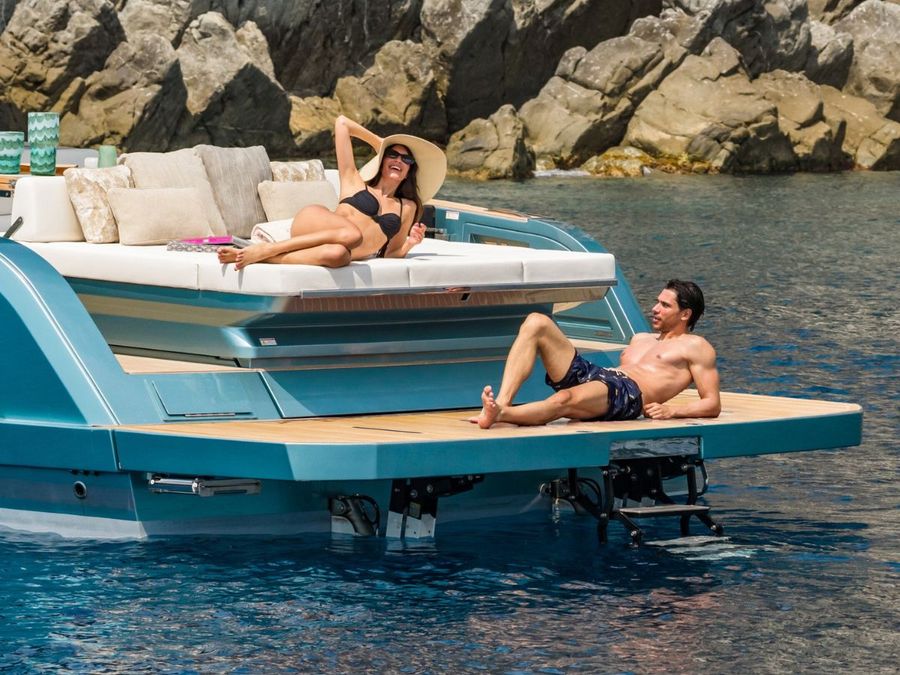
The cockpit is perhaps where the generational shift is most apparent. The central dining table drops hydraulically to create a king-sized sunbed, while the sofas can slide and tilt to provide forward-facing seating for passages. An electric bimini works in combination with a carbon T-Top that is roughly 30 percent larger than the original, yet the walkaround side decks have not been sacrificed and remain wide enough to move along comfortably.
The outdoor galley has grown considerably. Additional bench space, expanded cold storage, a proper sink and the option of an induction cooktop, a barbecue, or both, make provisioning for real time on the water practical rather than aspirational. Drawer fridges beneath the seating can be converted to freezers, a detail that resonates in New Zealand, where a weekend trip has a habit of stretching into a week whenever the conditions cooperate.
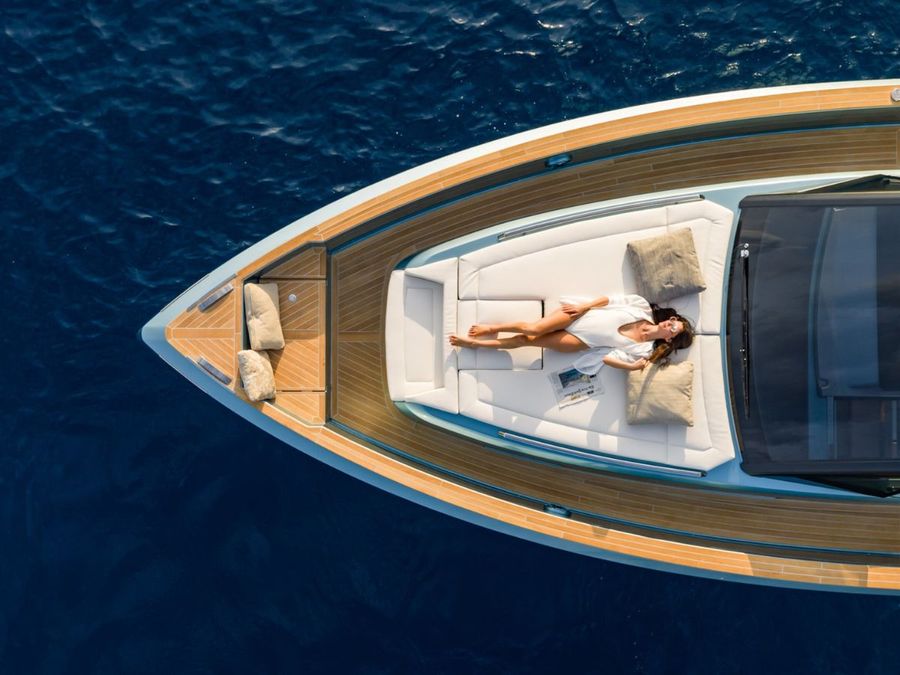
Forward, the redesigned bow lounge brings together a wide sunpad and a proper forward-facing bench seat. The bulwarks have been slimmed down but retain enough height to feel secure, and folding sidesteps built into the topsides let people move between the cockpit and the water without clambering over anything.
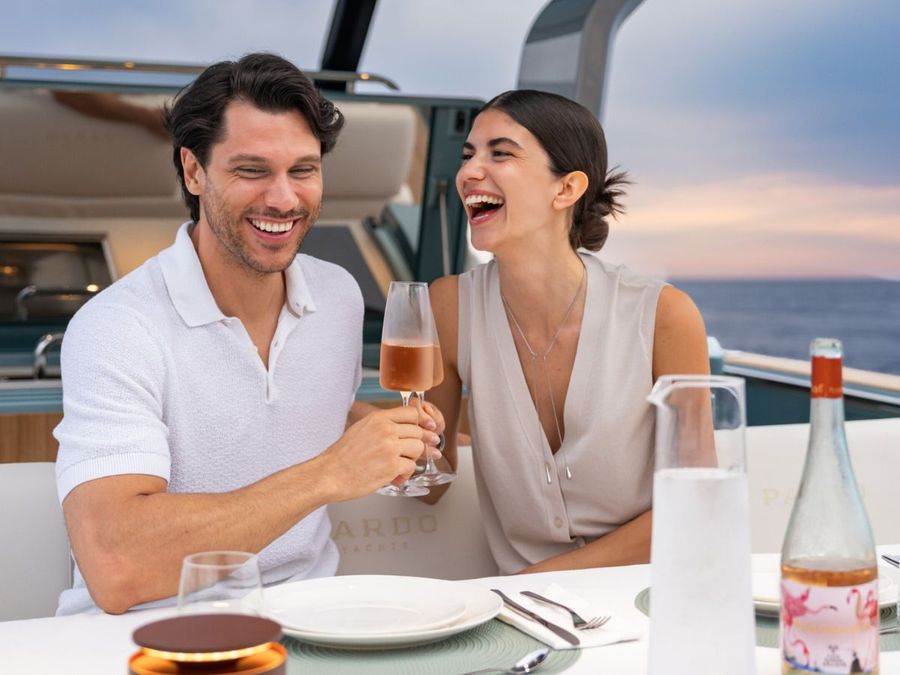
Three Volvo Glass Cockpit screens dominate the helm station, driven by a Garmin-based interface that consolidates charts, engine data, onboard systems and lighting control into a single display. The change from the original boat is substantial. Triple helm seats, proper footrests and a wraparound glass screen create something closer to a small wheelhouse than an open console. Air conditioning at the helm is included as part of the wider climate system, a welcome feature whether the boat is anchored in the Hauraki Gulf, working through the Bay of Islands or sitting in the Marlborough Sounds on a still summer afternoon.
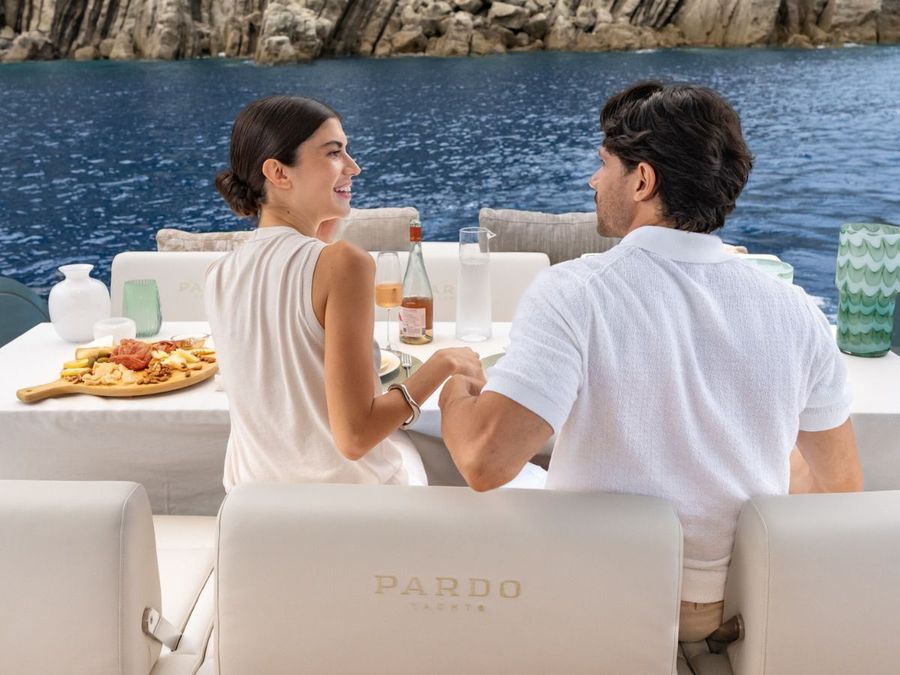
Ambient lighting throughout the boat can be adjusted from the helm screens, including preset scenes that manage interior, exterior and underwater fittings together. It is easy to dismiss that kind of feature as showroom theatre, but it carries more practical value when you consider how much New Zealand boating happens at anchor after dark, with guests aboard and children still in the water well past sunset.
Joystick control for the IPS drives makes low-speed manoeuvring straightforward, even in confined marinas. That is not a replacement for solid boat-handling ability, and it should not be treated as one, but it does take the edge off the anxiety that can come with bringing a sizeable vessel into a tight berth.
Step below and the first thing that registers is the light. Larger hull windows combined with pale interior finishes draw the feel of the water into the cabin, making the space feel more open and relaxed than the previous generation.
Nauta Design has produced two layout options. The first centres on a fixed forward double berth, while the second replaces this with a C-shaped dinette featuring a table that raises and lowers to convert into a double berth overnight. Both arrangements offer somewhere to sit, read, work or simply take a break from the activity on deck.
Aft, the second cabin provides two single berths with more headroom than one might reasonably expect in a 43-foot hull. The bathroom has been enlarged, incorporating a separate shower with a seat and its own air conditioning outlet. Many owners will push the boat well beyond a simple day-trip brief, and the fitout reflects that.
The material choices are understated rather than showy. Soft linings absorb sound, timber finishes add warmth, and most surfaces give the impression they could handle bare feet, damp towels and a sandy bag dragged aboard without suffering for it.
The engine room beneath the cockpit sole is neatly arranged and easy to work in. The inboard Pardo 43 is offered with twin Volvo IPS 500, 600 or 650 units, delivering top speeds in the region of 37 knots and a comfortable cruise close to 30 knots. Fuel capacity runs to approximately 1300 litres, with 400 litres of fresh water carried on board, making extended coastal passages and long weekends well within reach.
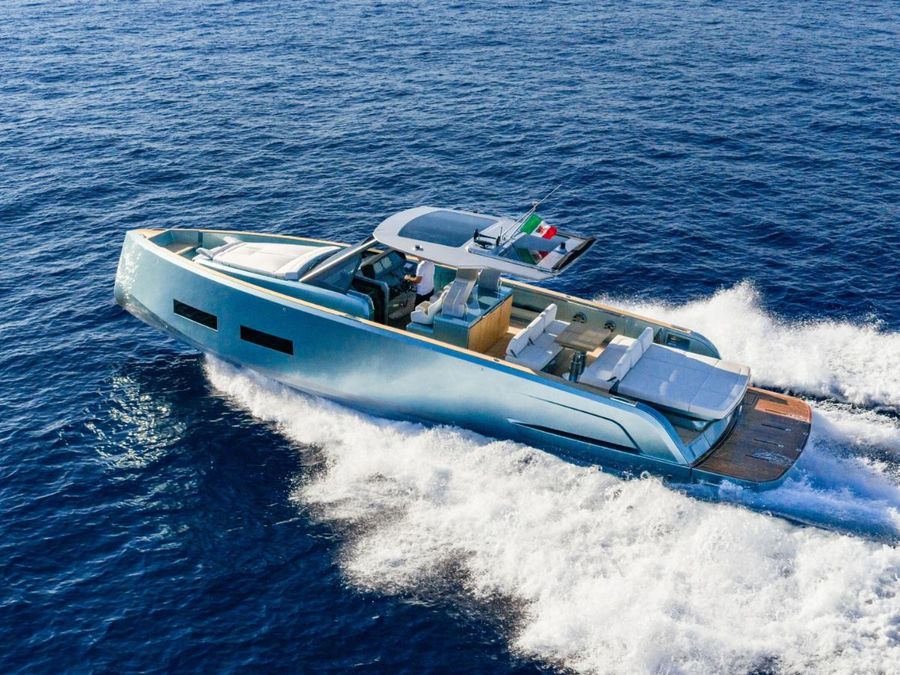
Owners who prioritise pace over passage-making have the Pardo 43R as an alternative. This outboard variant is built around a different hull, configured for triple Mercury V10 or V12 engines and capable of speeds beyond 50 knots. A petrol capacity of 2600 litres, supplemented by a separate diesel tank for the generator, places the Pardo 43R in a category of its own, part luxury weekender and part Italian muscle car.
The case for a Mediterranean-style walkaround in New Zealand has historically required some persuasion, given the cooler water temperatures and the longer fetches that come with this coastline. The revised Pardo 43 makes that argument more convincingly than the boat it replaces.
The walkaround format suits family use naturally, the enlarged T-Top and bimini bring meaningful shade, and the expanded galley and storage genuinely support treating the boat as a floating bach rather than simply a platform for swimming. The hydraulic platform, the dedicated tender garage and the more practical anchoring arrangement together transform the stern into a functional water sports hub rather than just a stylish swim step.
The Pardo 43 remains a piece of aspirational Italian design, and it makes no attempt to disguise that. Beneath the finish, though, there is now more evidence of real thought about how owners actually spend their time on the water. For New Zealanders after a fast, open boat that can also hold its own when a promising forecast tempts you to stay out another few days, the new Pardo 43 feels less like a statement of intent and more like a genuine way to live that idea.