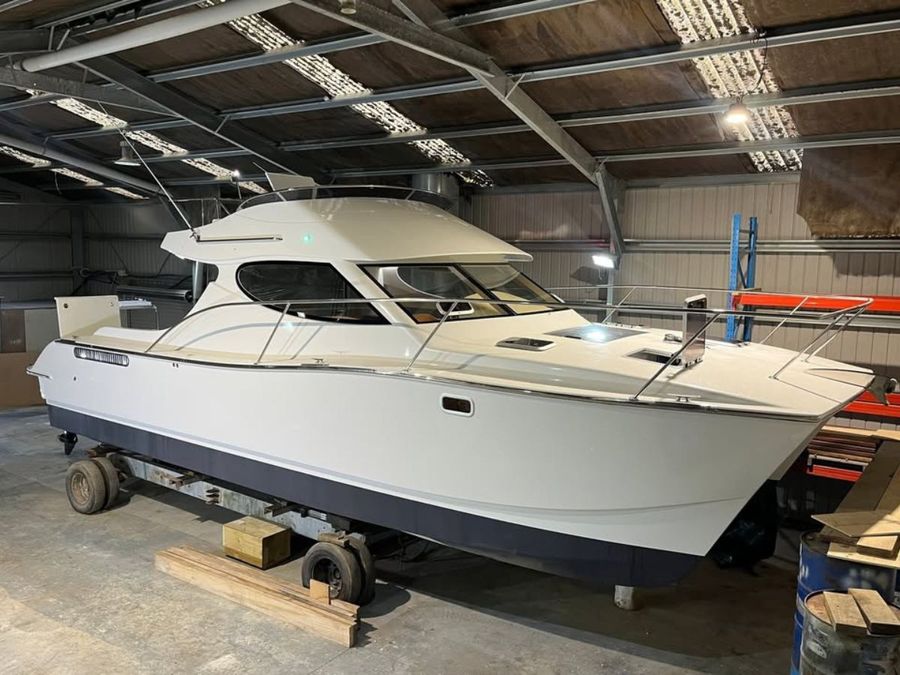
Deep in the Waikato countryside, on the road connecting Thames and Paeroa, a shed in Pipiroa gives nothing away from the outside. Walk through the door, however, and what greets you stops you in your tracks. An 11.5-metre catamaran fills the workshop floor, its lines at once purposeful and graceful. Aaron Beattie built this boat for himself. "The ultimate owner's version," he says, his hand trailing across the American cherry dash. After 35 years in the trade, every choice on this vessel reflects hard-won knowledge and an uncompromising eye for detail. The twist is that it's now listed for sale, Aaron's plans having shifted when a write-off Formula turned up and sparked ideas for an entirely new project.
Aaron's path through the boat-building industry takes in some of New Zealand's finest yards. He began with an apprenticeship under Terry Bailey, then moved through McMullin and Wing, Alloy Yachts, and Formula Cruisers, where he eventually ran the interior wood shop. From that foundation he launched his own business, Lifestyle Yachts, operating out of his Pipiroa property. The range of work he's completed from this rural workshop is broad: Ron Given cats, a Dick Newick trimaran, a 16-metre Roger Hill design, and now a tenth completed vessel. "This is boat number ten out of here," Aaron says. "It was meant to be the last one." Throughout his career he has kept faith with plywood and cedar strip construction, valuing its combination of low weight, structural strength, and affordability, with no costly moulds required. "It's just nicer stuff to work with," he explains.
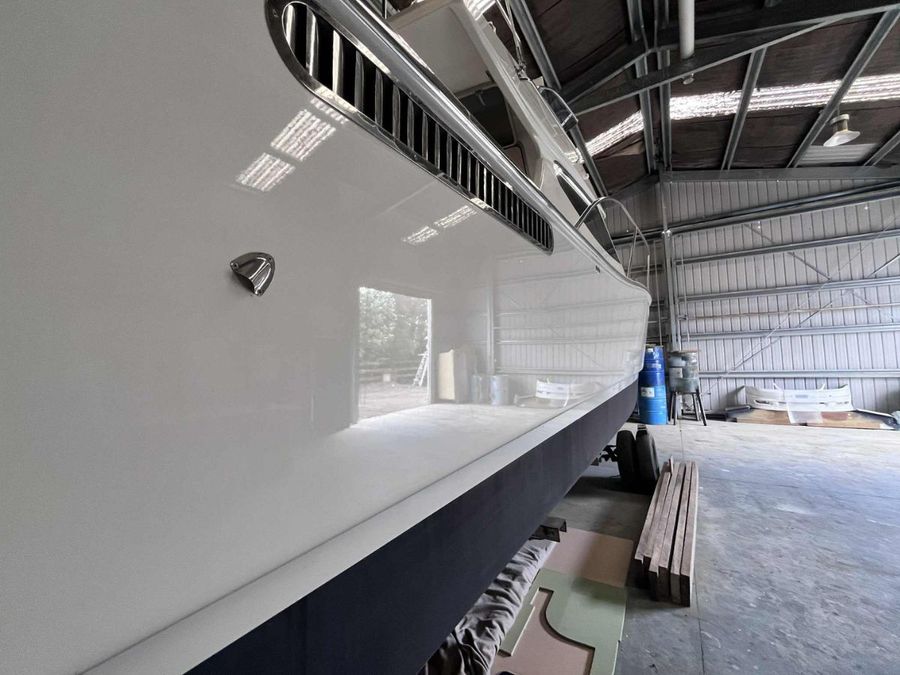
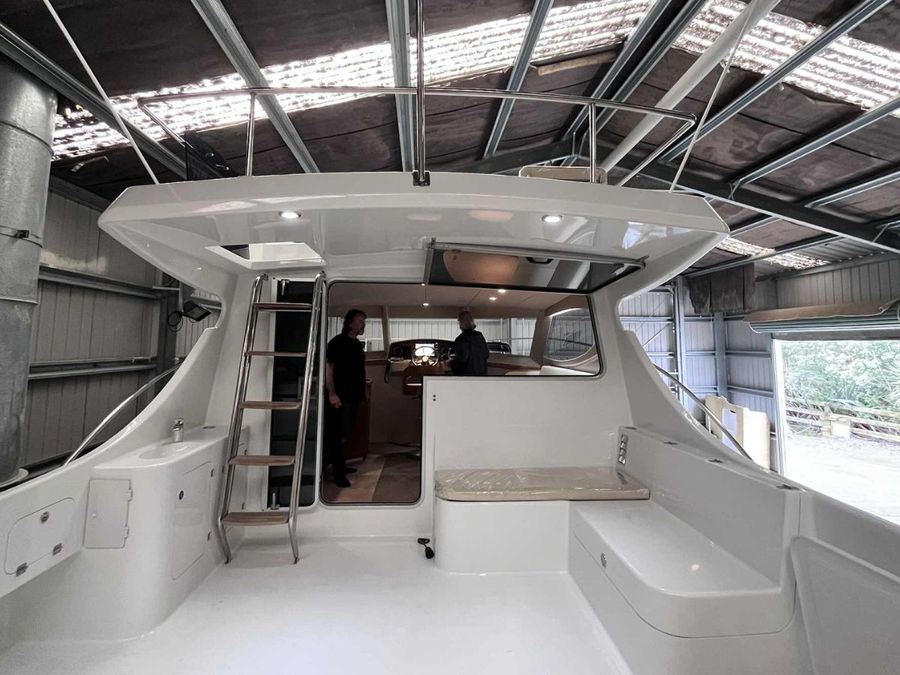
The catamaran started out as a Ron Given T9 design, originally around 9.7 metres. Aaron repositioned bulkheads and extended the transom by roughly a metre to open up both the cockpit and the saloon. The finished vessel measures 11.5 metres with a four-metre beam and a shallow 750mm draft, well suited to the coastal and estuary cruising Aaron had in mind. Twin Steyr diesels, each producing 230hp and built in Austria, drive the boat. Lightweight and proven in military applications, they are engines Aaron values highly. "It's the sort of package that would cost over $200,000 alone today," he notes. Everywhere you look there's evidence of an owner who refused to cut corners: 10mm by 50mm solid stainless belting runs around the hulls, custom grills and fittings are finished to a high standard, and the helm blends traditional timber warmth with contemporary function. The flybridge helm above folds away cleanly, with autopilot and throttles standing in for a conventional wheel.
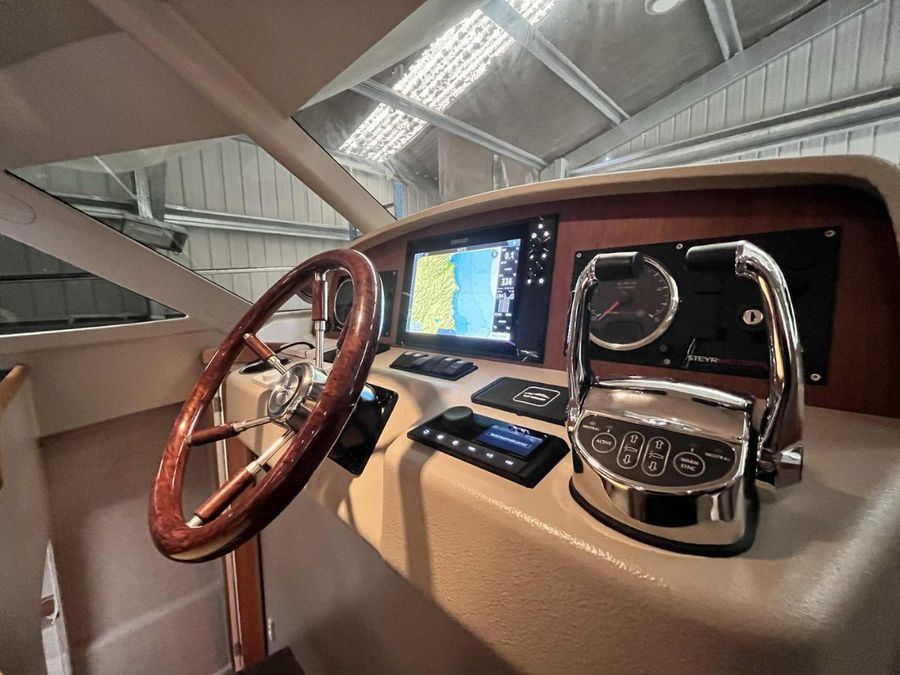
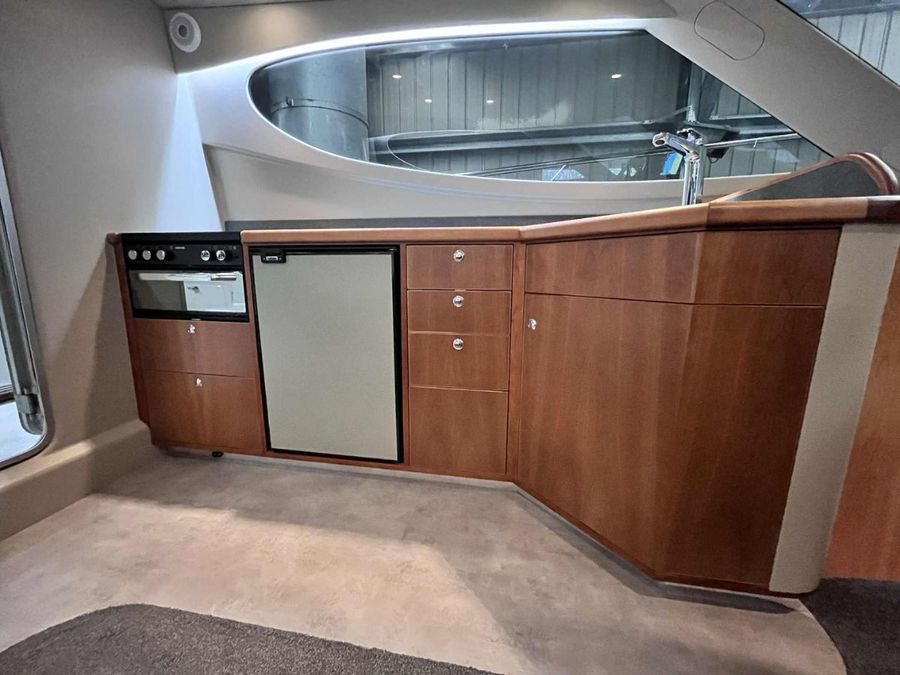
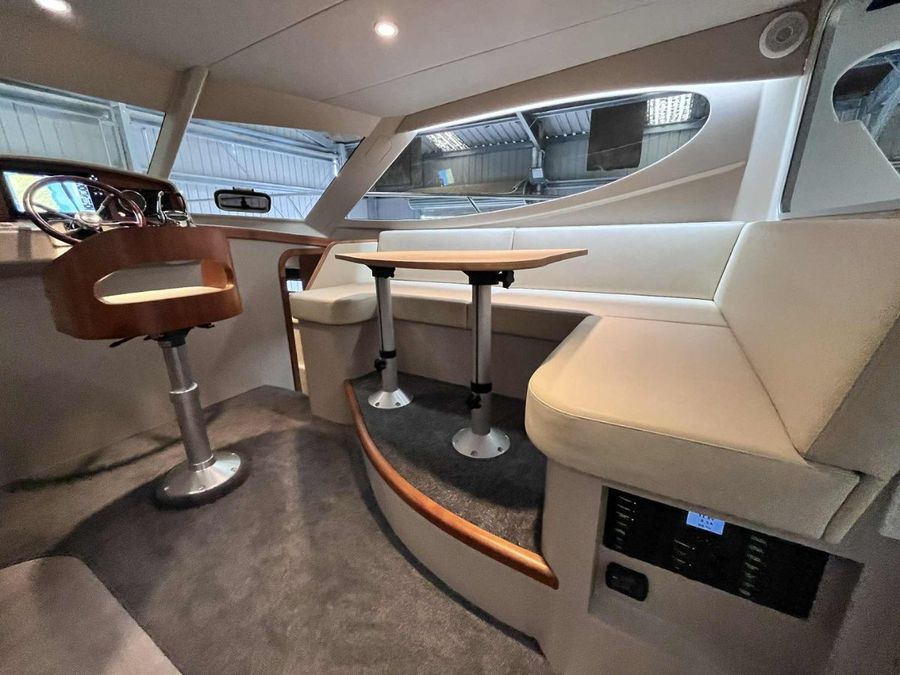
Fishing was always part of the brief. Rod holders, a bait board, and provision for game poles are all present. Yet Aaron was equally focused on the liveaboard side of things. Below, the full galley is equipped with a fridge, freezer, and gas cooking. A saloon table adjusts to drop down into a berth, and a back-opening window dissolves the boundary between cockpit and saloon, drawing the outdoors in.
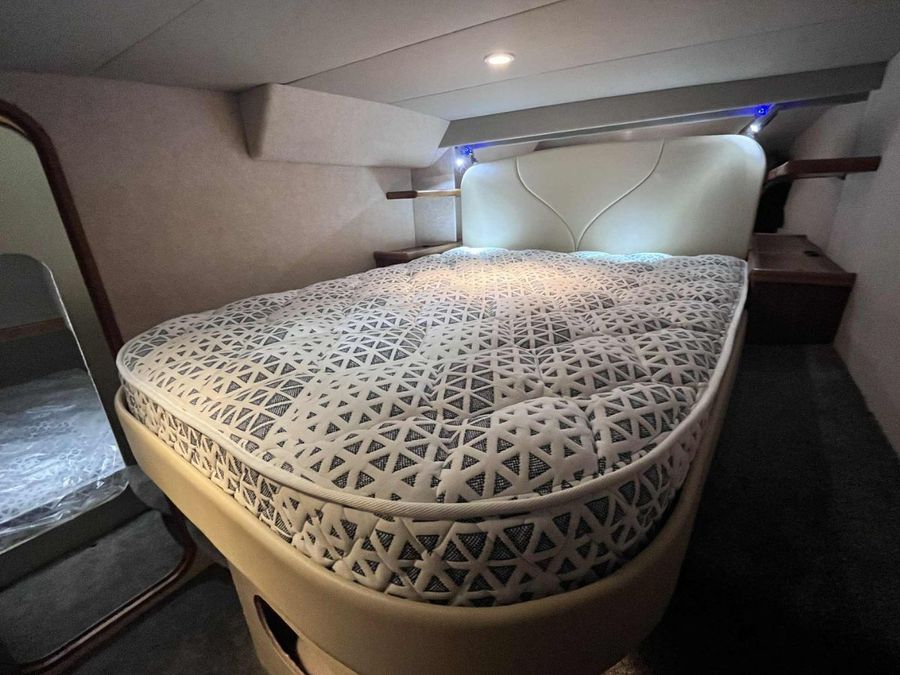
The sleeping arrangements include a spacious island double cabin forward and two single berths aft, with toilet and shower completing the facilities. "It's built for me and the wife to go away for weeks on end," Aaron says. "Plenty of storage, all the comforts, and a finish I can be proud of."
American cherry timber runs throughout the interior, bringing a warmth that fibreglass alone simply cannot replicate. Aaron spent years in superyacht yards and carries those standards with him. "If it's not finished to that standard, I'm not happy," he says.
The detail work rewards close inspection. A 150-watt walkable solar panel on the foredeck supplements alternator charging to keep the gel batteries topped up. Beaching keels and tilt-up stern legs allow the cat to go bow-first onto a beach without fuss. Simrad electronics handle navigation duties, and Aaron notes that while radar is always an option, "most people these days would go for a FLIR camera."
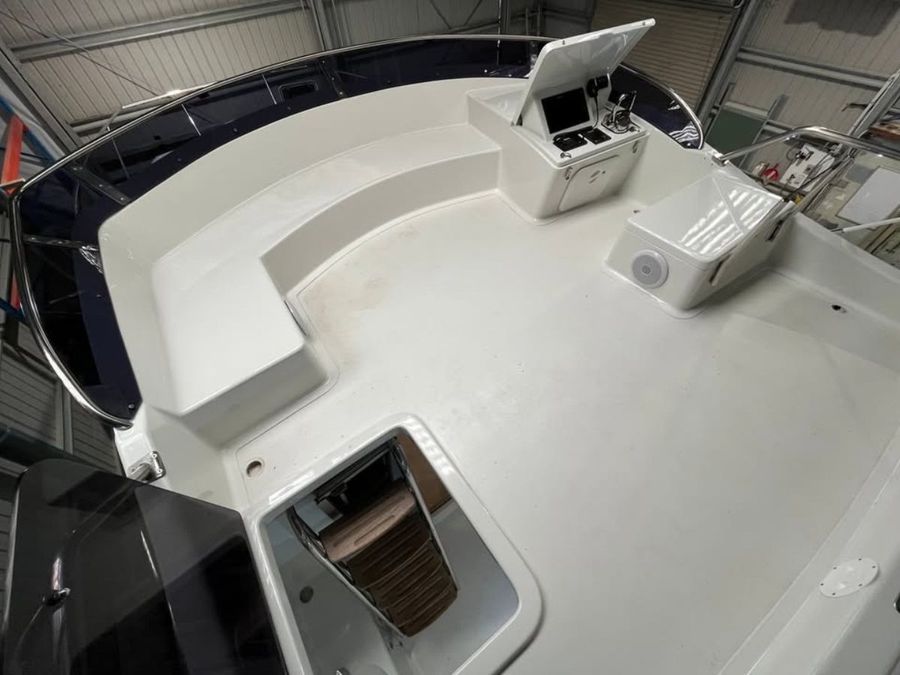
Standard tankage gives a range of around 180 nautical miles, though bladder tanks can be added for longer passages. Aaron is confident that in suitable conditions the boat could reach New Caledonia with that added capacity. Cruising speed sits between 18 and 20 knots, with close to 30 knots available at the top end. LED lighting throughout keeps the electrical load manageable.
[video width="1920" height="1080" mp4="
The asking price is $635,000. Commissioning a comparable build from scratch would come in closer to $900,000, making this sharp value given the specification. "We went overboard with the gear because it was for us," Aaron says. "That's why it really is an owner's version." Selling wasn't a simple decision, but Aaron is philosophical. "Someone's going to enjoy it," he says. The plan is to launch in the Waihou River in November, spend a little time on the water, and if the boat remains unsold, bring it to the Auckland on Water Boat Show the following year.
When pressed on whether this truly is his last build, Aaron laughs and admits otherwise. "There's never really a last one," he says. The Formula write-off parked outside the shed is already making demands on his attention, and his hands are clearly itching to get started. The catamaran in the Pipiroa workshop, meanwhile, sits as evidence of what sustained skill and personal investment can produce: timber, stainless and paintwork all shaped by someone who built it as though he would never let it go.