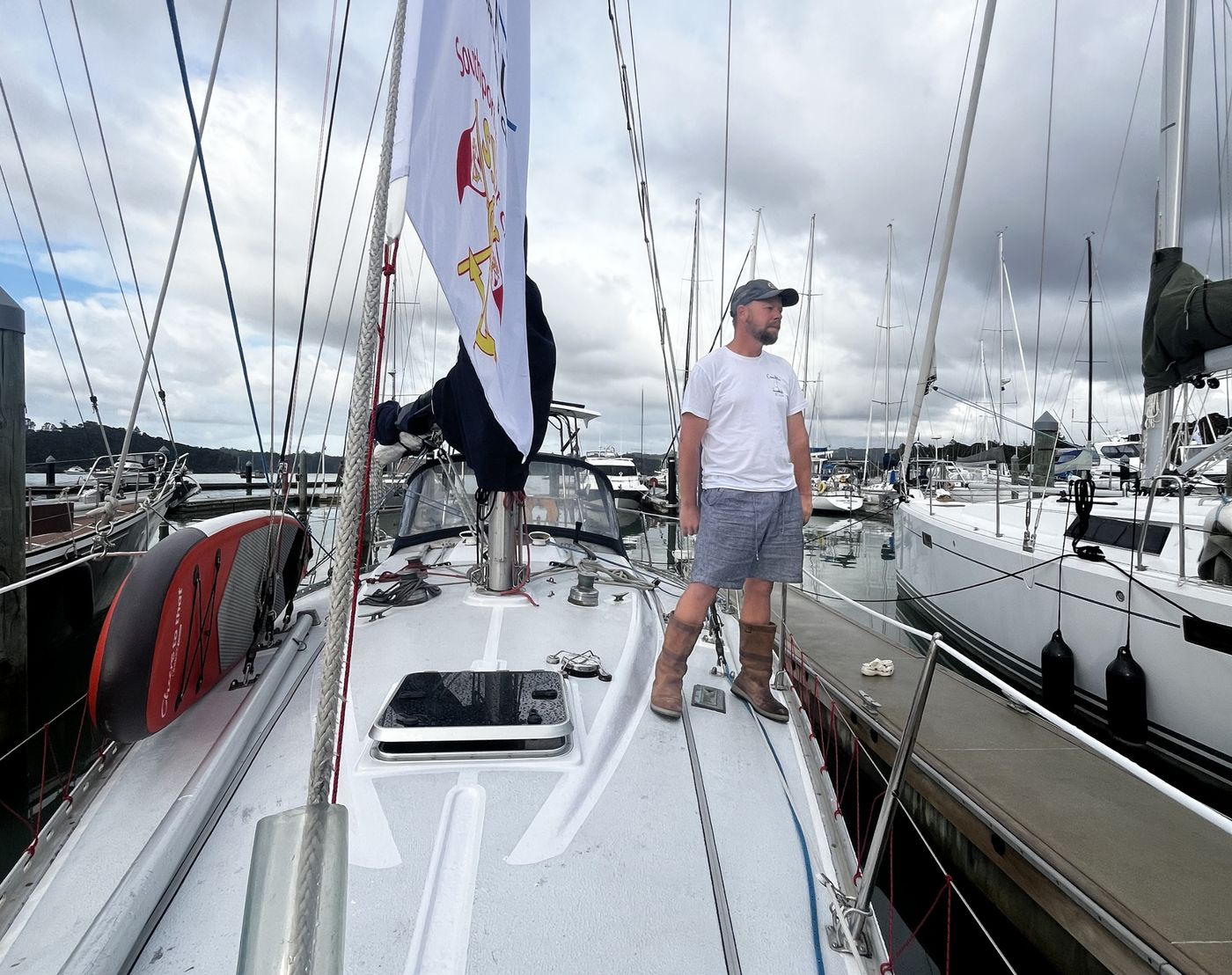
Ben Ball had been carrying a particular dream since he was 14 years old, one planted by a book about survival and shipwreck on the Tasman Sea. On 8 June 2026, at 14:45 NZST, that dream became reality when his 1976 Cavalier 36 Camellia crossed the finish line at Southport, thirty-six years after the idea first took hold.
The voyage covered 1,281 nautical miles, with Ball's elapsed time for the 2026 Solo Trans-Tasman Yacht Challenge recorded at 9 days 2 hours 37 minutes and 36 seconds. On PHRF corrected time, Camellia's result of 6 days 10 hours 21 minutes and 2 seconds placed Ball second in the monohull fleet, behind Malcolm Dickson's Sarau, with final results still pending at the time of writing.
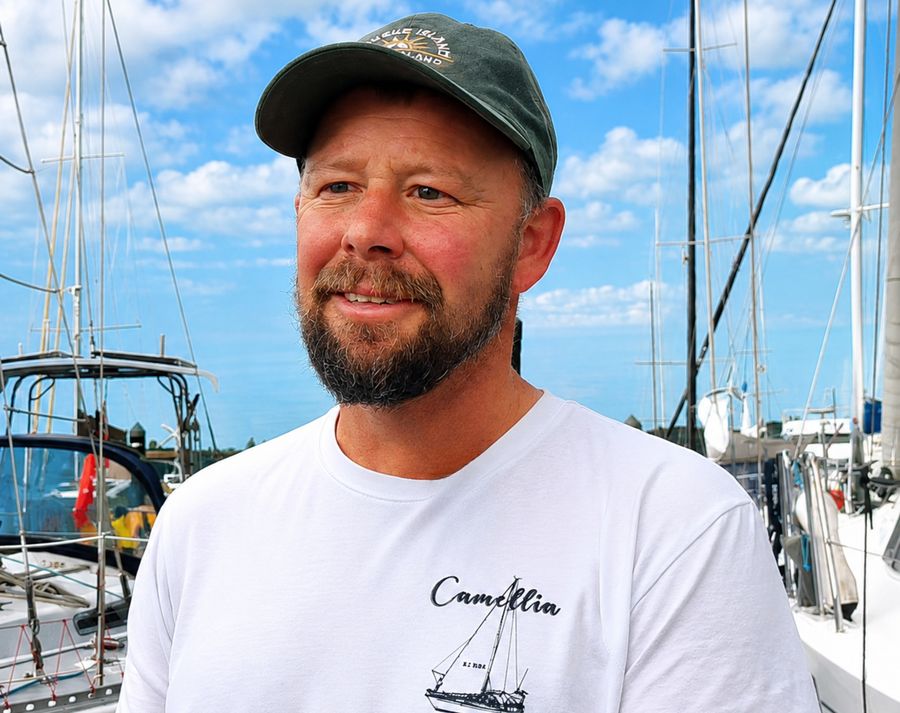
The story begins in 1990, when a 14-year-old Ball read Bill Belcher's Shipwreck on Middleton Reef: The Story of a Tasman Survivor. The Solo Trans-Tasman Yacht Challenge lodged itself in his mind from that point forward, and three and a half decades passed before he finally ran out of reasons to keep putting it off. This was his first solo attempt at the crossing.
Camellia carries a certain symmetry with her skipper. A Doug Peterson design with the deck by Laurie Davidson (a correction made on 11 June), she was launched in 1976 and turns 50 this year, the same age as Ball. He had waited more than half his lifetime to make this passage aboard her.
The Tasman wasted no time in asserting itself. From the outset the fleet was worked over hard, boats and sailors thrown about by demanding conditions. Ball committed to his line and pointed Camellia straight for Southport, refusing to be drawn off course.
Day three brought trouble when the anchor locker overflowed into the cabin, putting a significant amount of water below decks. It took him two hours to bail out. "My own f----p," he said, with characteristic directness. The morning that followed was a different matter entirely. He was making 7 knots, the sea behaving itself, and two faster boats he had no business keeping pace with were sitting just behind him. After that, he kept his head down and sailed.
The Tasman delivered its full range of conditions. There were long stretches when the wind made it impossible to hold anything close to his intended course, and waves running to 5 metres. One night was marked by lightning closing in from all directions, described as "pretty wild," while another earned the unvarnished assessment of "shit fight," with the particulars left to the imagination. On a more welcome note, there were a couple of Drambuies when the 300-mile mark ticked over.
Through it all, Camellia and her 0.706 handicap kept accumulating quiet, steady gains.
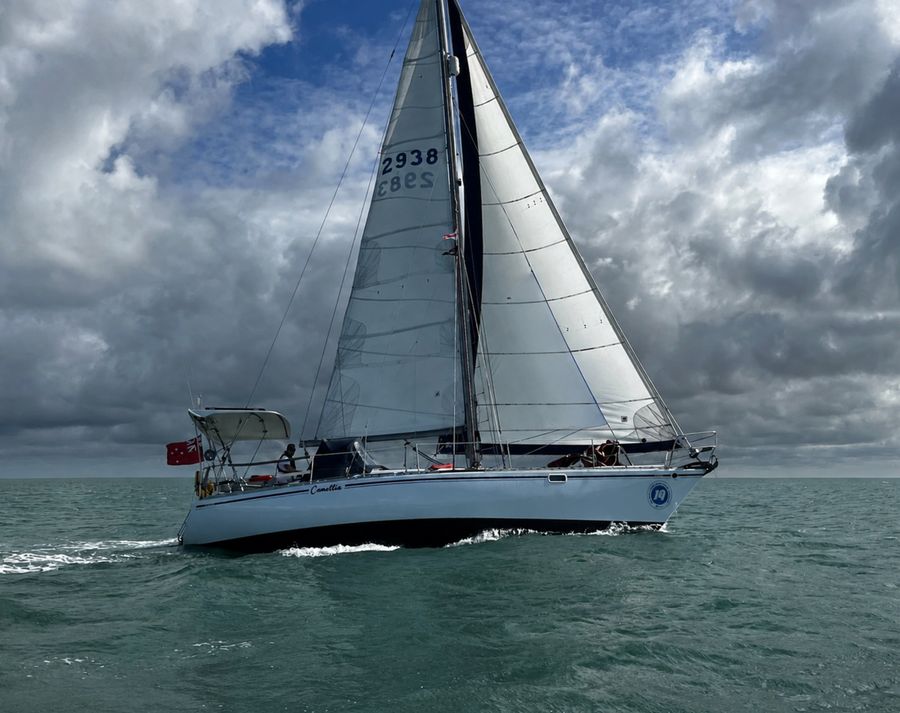
With 121 nautical miles still to run, Ball had found a confident rhythm. He was baking banana bread and keeping the boat tidy, watching where the rest of the fleet sat behind him. His read of the situation was characteristically blunt: "They will have to try hard to [catch] me now." By the previous evening he had moved into second place on PHRF corrected time, sitting ahead of Peter Elkington's Young 11 Pacman and Sharon Ferris-Choat's Verdier 40 Vixen Racing.
His father John and sister Angie were waiting at Southport to meet him, both of them very proud.
A fifty-year-old boat, a Waiheke Island skipper, and a dream carried for thirty-six years. The Tasman threw everything it had at him, and Camellia brought him safely to the other side.
PHRF results are still pending.