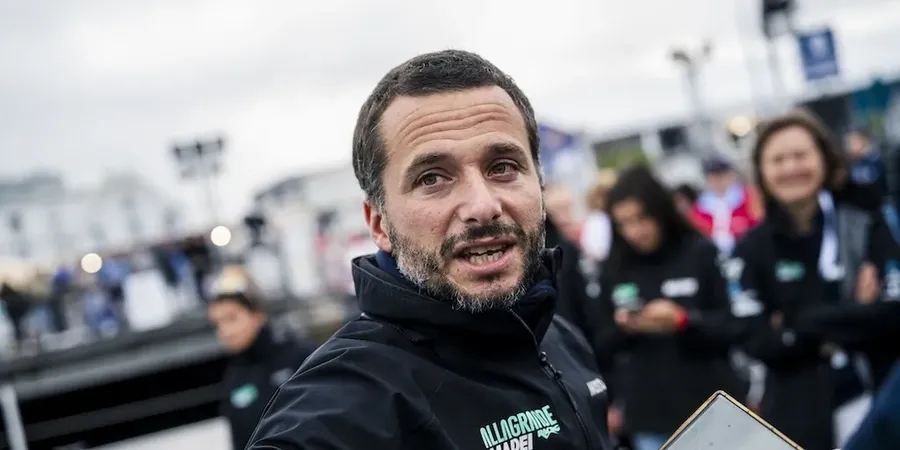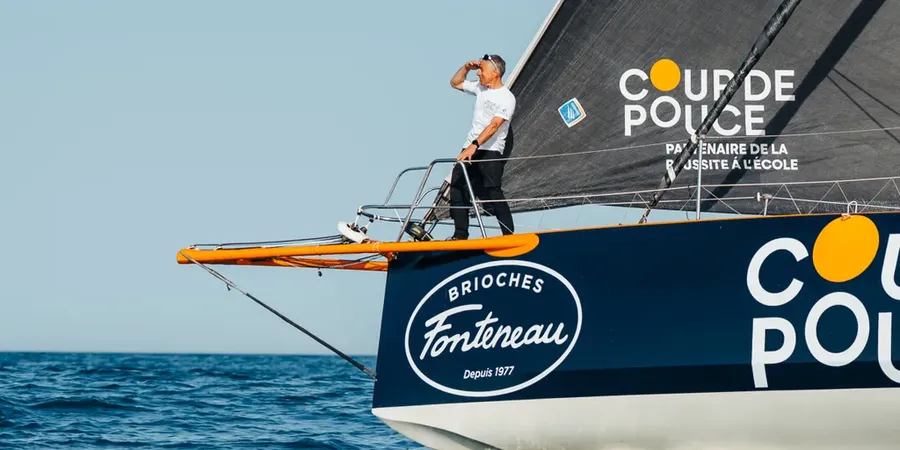
There is a particular kind of suffering reserved for the final stretch of an offshore race, and Manu Cousin was deep inside it. With fewer than 150 nautical miles standing between him and Les Sables d'Olonne, the end was numerically close, yet every mile was being extracted slowly and painfully. Thirteen days had passed since the Vendée Arctique began. Every other competitor had crossed the finish line. Cousin was alone on Coup de Pouce, the last sailor left on the water.
Saturday morning found him off the Breton coast, the finish theoretically within reach, the reality rather different. A broad band of dying winds had settled across the Bay of Biscay ahead of him, quietly dismantling what had looked like a Saturday evening arrival and pushing it back toward Sunday morning. The sea had made him wait before, and it was making him wait again.
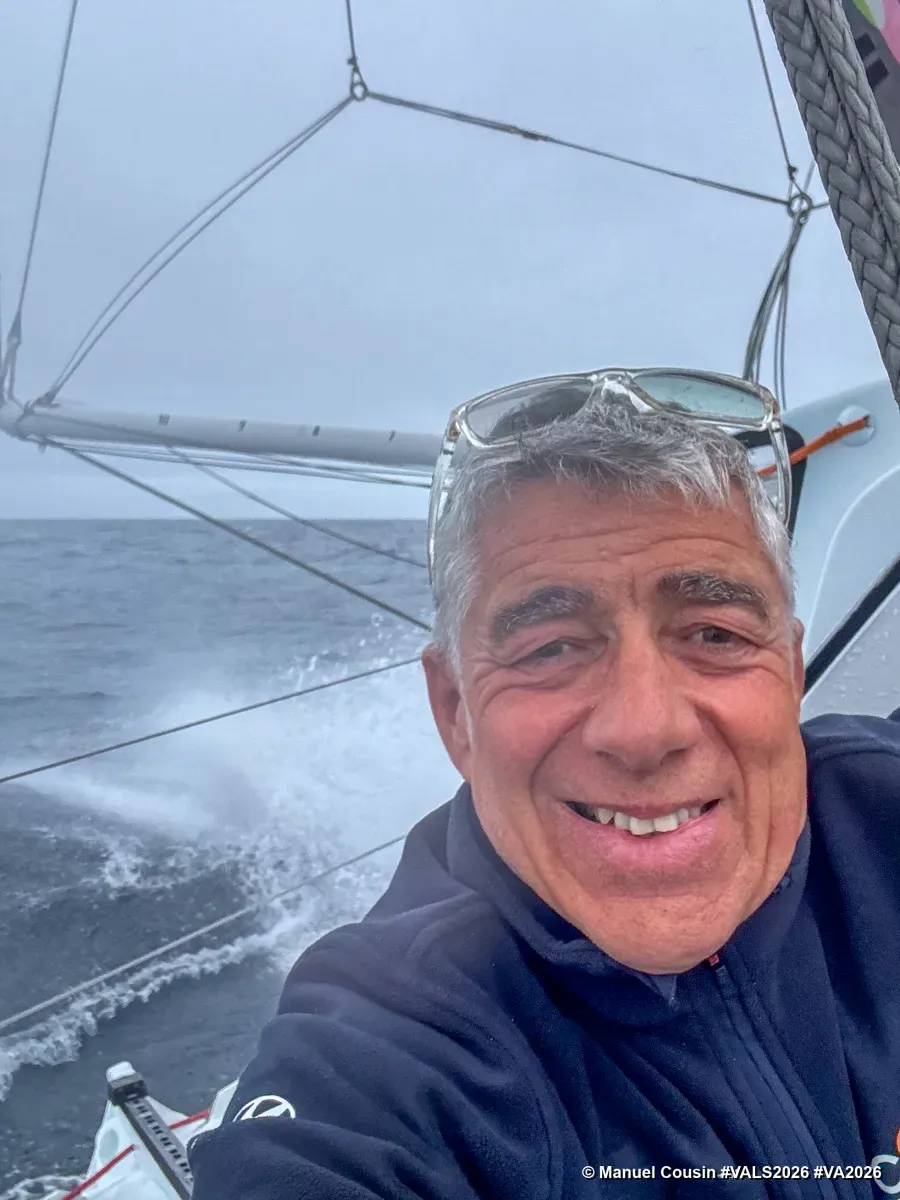
The cruelty of the moment was not lost on him. Nearly 3,000 nautical miles of racing had already delivered frontal systems, squalls, long close-hauled slogs, and repeated patches of flat calm. He had worked through every one of them. Now, this close to the end, the breeze was failing him at the worst possible moment. "The last miles are often the longest," he said. "I'm really in the funnel of the finish now. Until yesterday, a Saturday evening arrival still seemed possible. Unfortunately the wind is dropping, and I expect to arrive Sunday morning instead. That's what makes everything feel stretched out: this very light wind that's likely to stay with me all the way to the line."
Thirteen days at sea accumulate in ways that are genuinely difficult to appreciate from shore. The sharpness that carries a sailor through the opening stages of a race had worn down to something more deliberate, more cautious. Sleep had come in fragments, stolen minutes between instrument checks and brief half-hours snatched when conditions permitted. What had felt like a precarious rhythm early in the race had long since become routine, but the toll it exacted was visible in everything.
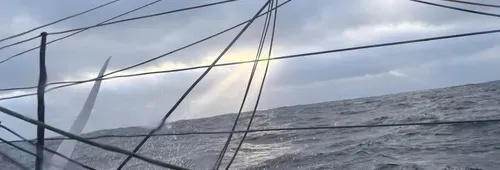
The conditions offered nothing by way of comfort. Fog had closed around Coup de Pouce, reducing the world outside to near nothing. "I'm still in fog and can't see much outside," Cousin said. "So I'm watching the boat settings, the AIS, the radar. I'm really hoping to find some sun again, because I'm starting to seriously miss it." The grey damp pressing down on the water was more than a practical inconvenience. It wore at morale in a way that even a brief return of sunlight could have quickly reversed.
The final approach to a finish carries its own quiet danger, one that has nothing to do with navigational complexity. Fatigue reaches its lowest point precisely when the mind begins persuading itself that the difficult work is done, and it is in that gap, between exhaustion and proximity to the coast, where sailors have come unstuck. Cousin understood that clearly. At least one more night lay ahead of him, at least one more slow passage waiting on wind that showed no sign of hurrying, while the finish line sat just over the horizon, close enough to feel real and still stubbornly out of reach.