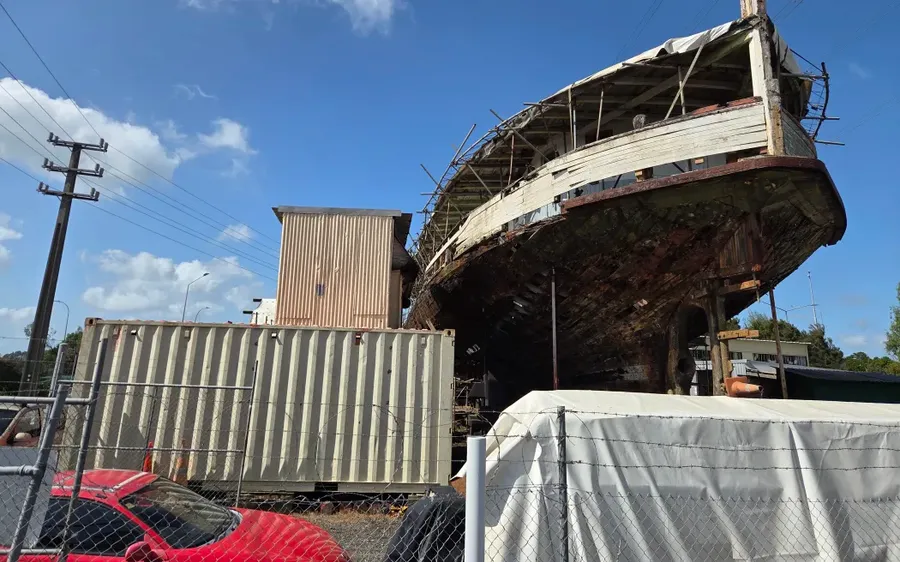
Perched beside the Lincoln Road off-ramp in West Auckland, the steam ferry Toroa has occupied the same spot for 24 years, a landlocked relic that draws more glances from motorists than it does passengers.
In its working life, the Toroa was the last of Auckland's steam-powered ferries. It is believed to have carried more than 70 million passengers across the Waitematā Harbour and out to the inner islands of the Hauraki Gulf. Peter McCurdy, president of the Toroa Preservation Society, can count himself among that number. "The first time I was on this one was a trip to Islington Bay, Rangitoto and Mototapu," he recalled.
Today, the only commuters the Toroa sees are those streaming past on the Northwestern Motorway. The Toroa Preservation Society has other ideas, and its members have been working to bring the old vessel back to life.
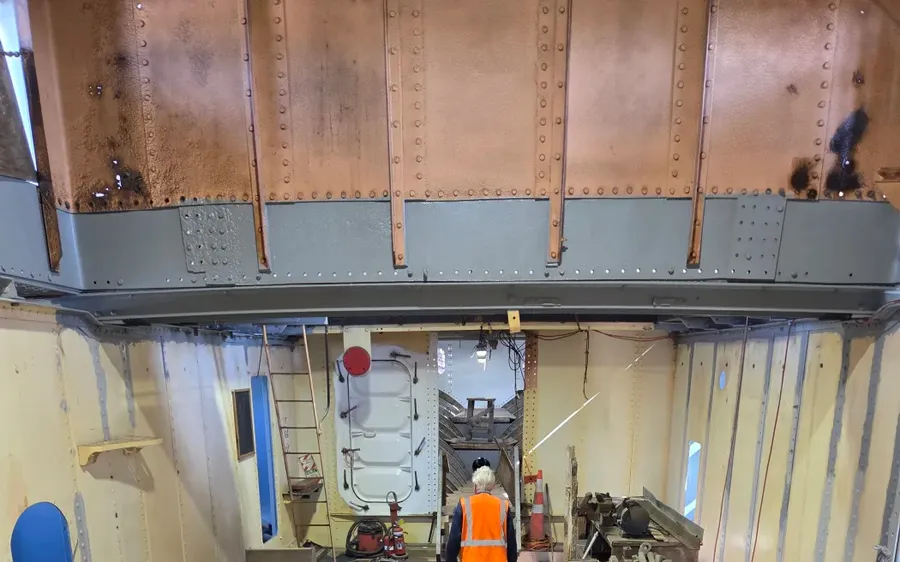
The effort draws a dedicated core. "The usual gang is 10 on site and there's another eight or nine who come on special occasions or when they haven't got a clash," McCurdy said. The Toroa, which turned 100 this year, has had no shortage of adversity to overcome. Retired from service in the 1980s, it came close to ending up as landfill at Westhaven. Then, in 1998, early restoration work was dealt a serious blow when the Toroa sank off Birkenhead Wharf. A full month passed before it could be refloated, and the damage sustained in that time was widespread.
Hull planking is being replaced using a combination of old kauri and new macrocarpa. The society has been fortunate in sourcing some of that timber locally. "We had some wonderful trees from Henderson park that suffered from the cyclone and the Council has donated those. So we've been milling those for new planking," McCurdy said. The interior, though, must be completed before attention can turn fully to the hull.
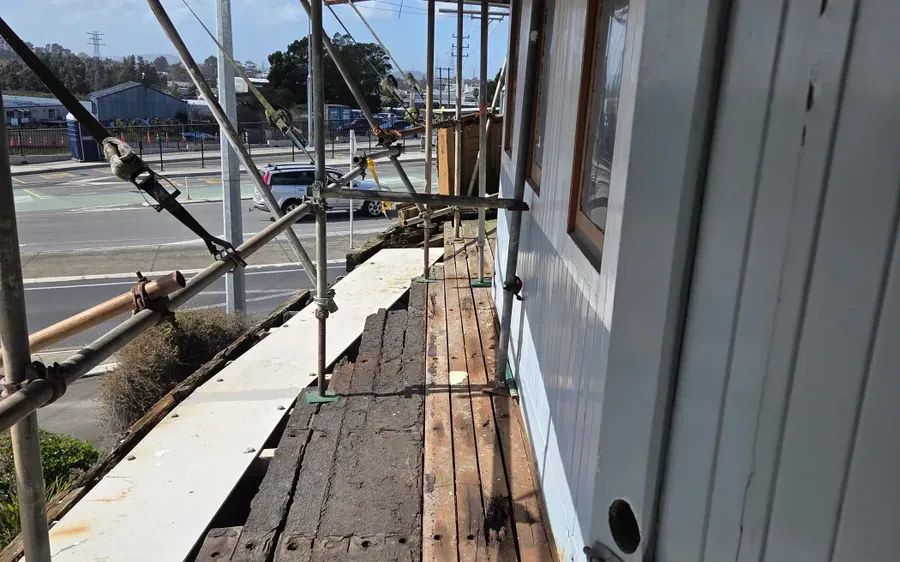
Sourcing parts for a century-old vessel demands considerable ingenuity. Custom steel framing was manufactured in the United Kingdom, while other components have been salvaged from decommissioned ships, among them the former Navy frigates Wellington and Canterbury. Not everything has needed replacing. The Toroa's engine has endured, and society member Robert Brown tends to it regularly, running it to prevent it from seizing.
"It was dismantled after the boat sunk at Birkenhead Wharf and cleaned... and it had been worked on for a long time at Birkenhead Wharf. The pistons aren't there at the moment, it just needs a couple of rings and it's all there," Brown said.
Like every ferry of its era, the Toroa ran on steam. When it eventually returns to the water, its boiler will not be fired by coal.
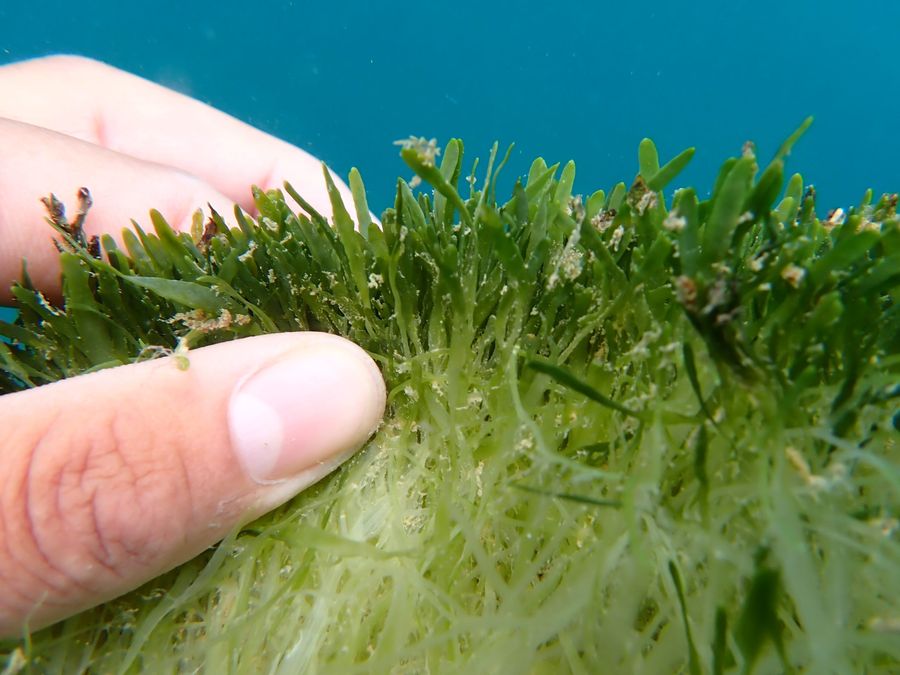
Brown explained the alternative the society has been trialling. "Because of all the carbon pollution, we've done a trial on compressed wood waste from an outdoor factory. It's squeezed out in a tube about 60 to 70mms in diameter and broken into short lengths, and it burns really hot. You just have to stoke carefully and there's not too much smoke. But it's carbon neutral. The tree absorbs it, and then we burn it. It's not like coal."
McCurdy believes the Toroa could be back on the water within five years, provided the project can secure the $5 million it requires.
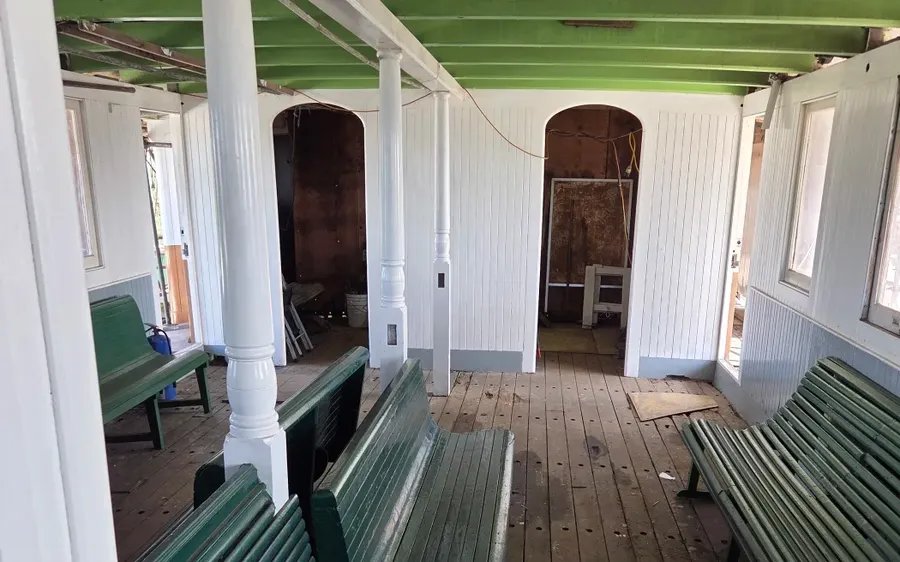
"The longer it takes, the more that sum increases," he said. "Fundraising has become much, much more difficult for everybody, really. In recent years."
The public can see the Toroa up close during tours held as part of the Auckland Heritage Festival, running across three consecutive Sundays beginning 21 September.