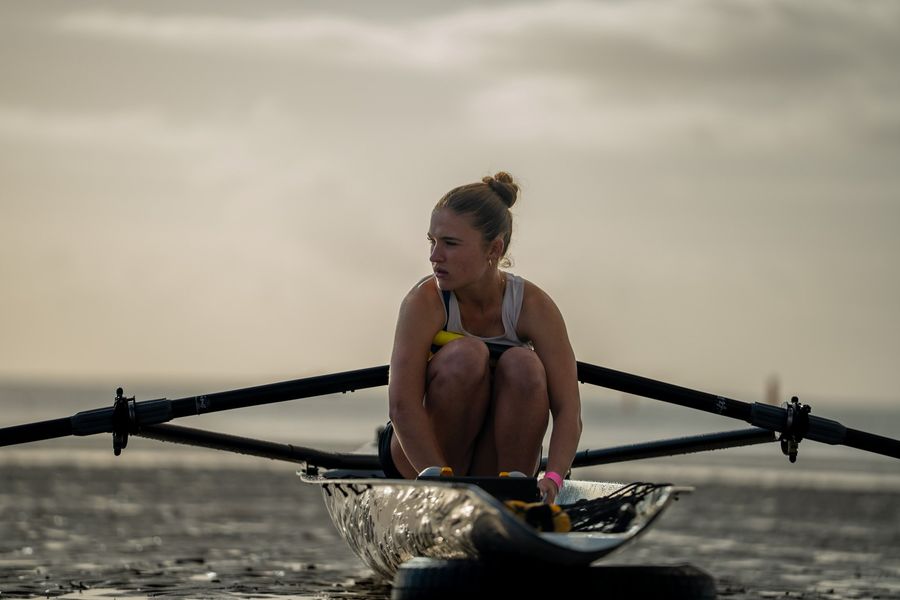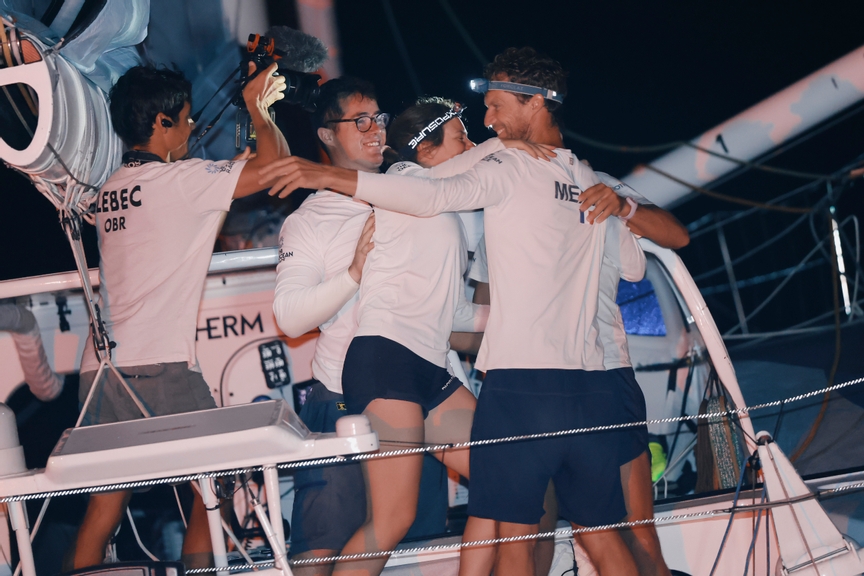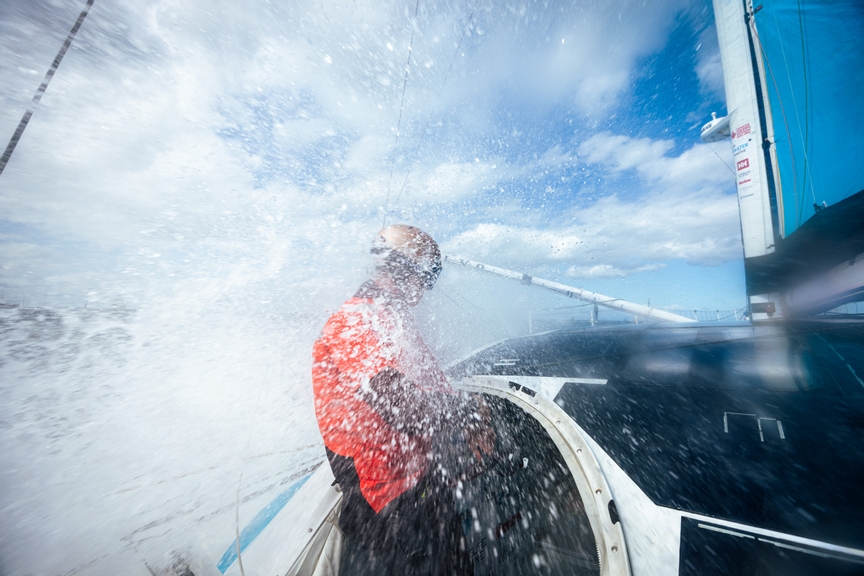
The drama began before the fleet had even cleared the harbour mouth. Kiel turned on a spectacle for the August 10 start of The Ocean Race Europe 2025, with the Kiellinie promenade alive with flags and brass bands, a dense pack of spectator craft jostling for position around the IMOCAs on the start line. A week of parades and speed demonstrations had built to this: an 850-mile sprint to Portsmouth, curving past Denmark's jagged coastline and across the North Sea.
The fleet had covered barely a mile when the day turned serious.
Holcim-PRB, skippered by Rosalin Kuiper, and Ambrogio Beccaria's Allagrande Mapei Racing collided at speed. Helicopter footage suggested tangled sails; the truth was considerably worse. Mapei's deck spreader drove into Holcim's hull, tearing away carbon panels and opening what one commentator dryly described as a new window in the side of the boat. Both crews escaped without injury, but their Leg One races were finished on the spot. Structural damage and wrecked sails sent both boats back to Kiel, where shore teams immediately began working against the clock to have them ready for Leg Two.
Five teams remained in contention.
Paul Meilhat's Biotherm seized the initiative from the outset, banking maximum points at the Kiel Lighthouse scoring gate and carrying that momentum through the first night at sea. Co-skipper Amélie Grassi described the opening hours as "relentless," with unstable breeze and constant course changes in heavy coastal traffic leaving almost no opportunity for rest. "All four of us were in the cockpit working for hours," she said.
The approach aboard Biotherm was deliberate. Rather than loading on canvas in the unsettled early conditions, the team held a measured pace, and that discipline paid off as they rounded Denmark's northernmost point at Skagen still holding the lead. From there the character of the race shifted entirely: short-tacking into 15 to 20 knots of westerly breeze, a battering, noisy grind that wore on everyone aboard. Even so, the order at the top held firm. Biotherm led, Paprec Arkéa sat second, and Team Malizia had worked its way into third.
Yoann Richomme's Paprec Arkéa had kept close company with the leaders through the opening phase, their tactics clean despite the unexpected removal of Allagrande Mapei from the contest. As the fleet pushed into the North Sea, Paprec Arkéa and Malizia exchanged tacks, each crew probing for an edge. Below decks on Paprec Arkéa, Pascal Bidégorry moved between sides after every manoeuvre to keep the boat trimmed, while Richomme sat in his suspended cockpit seat watching instruments and horizon in equal measure. When the wind eased later in the day, onboard reporter Julien captured the mood succinctly: "It's finally time to sleep a little — the boat is slow, so it's a good rest."
Team Malizia left Kiel to the loudest reception from the waterfront crowd, and the German-flagged team had a podium firmly in their sights. Onboard reporter Flo endured a bout of seasickness on the first night but found some comfort in fresh provisions while they lasted, sharing an avocado with co-skipper Will Harris as the boat pushed north. Her reading of their third-place position carried a hunter's confidence: "We prefer to be the hunter rather than the hunted. It's a good position to attack."
Further back, Canada Ocean Racing – Be Water Positive pressed on despite losing their onboard camera feeds. OBR Georgia painted a vivid picture of a punishing night below decks: "They kept waking me up — 'We're tacking again!' — and we had to keep moving sides." Running fifth, Alan Roura's Team Amaala found a different rhythm, sailing into lighter winds with music drifting through the cockpit speakers, the mood aboard in clear contrast to the focused intensity elsewhere in the fleet.
Back in Kiel, the situations facing Holcim-PRB and Allagrande Mapei Racing were complex but not hopeless. A transit through the Kiel Canal could cut hundreds of miles from the route to Portsmouth, provided repairs could be completed in time. Rival teams stepped up to help source critical components, with a replacement outrigger from TR Racing's Advens 1 and rigging from Paprec Arkéa among the parts made available, a display of solidarity that sits alongside the fierce competition at the front of the fleet.
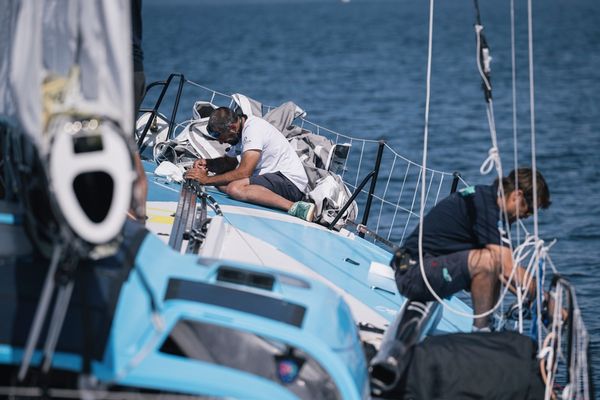
For those still racing, the task ahead was to manage a forecast easing of the breeze without surrendering position, or to find the opening needed to move forward. Biotherm's lead had been constructed on patient, consistent decision-making in the opening 24 hours, and it would face its sternest test as the fleet fanned out across the North Sea. Grassi's summary of how it had been achieved was straightforward: "We had a clear plan for organisation and sail trim to make sure we were fast. So far, it's gone without a hitch."
Leg One had already delivered enough incident for an entire regatta, a pointed reminder that in The Ocean Race Europe, a single mile can rewrite everything.