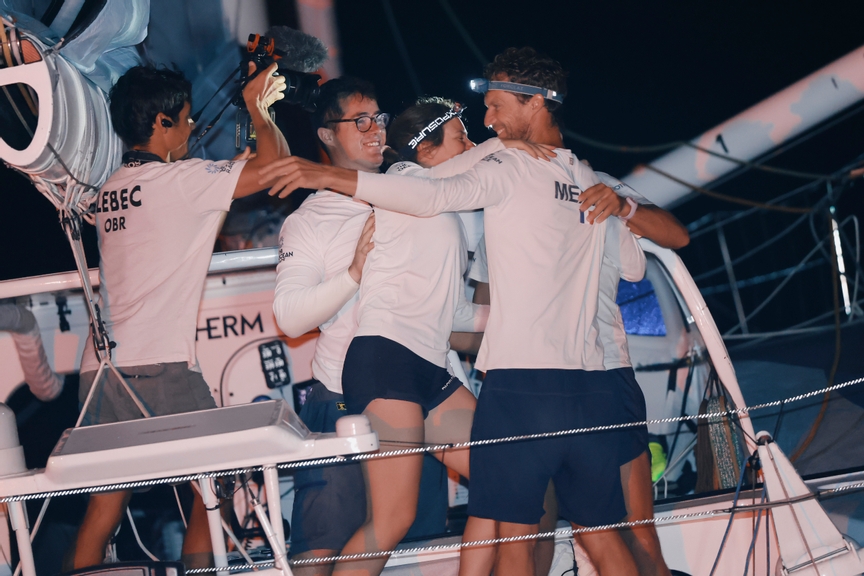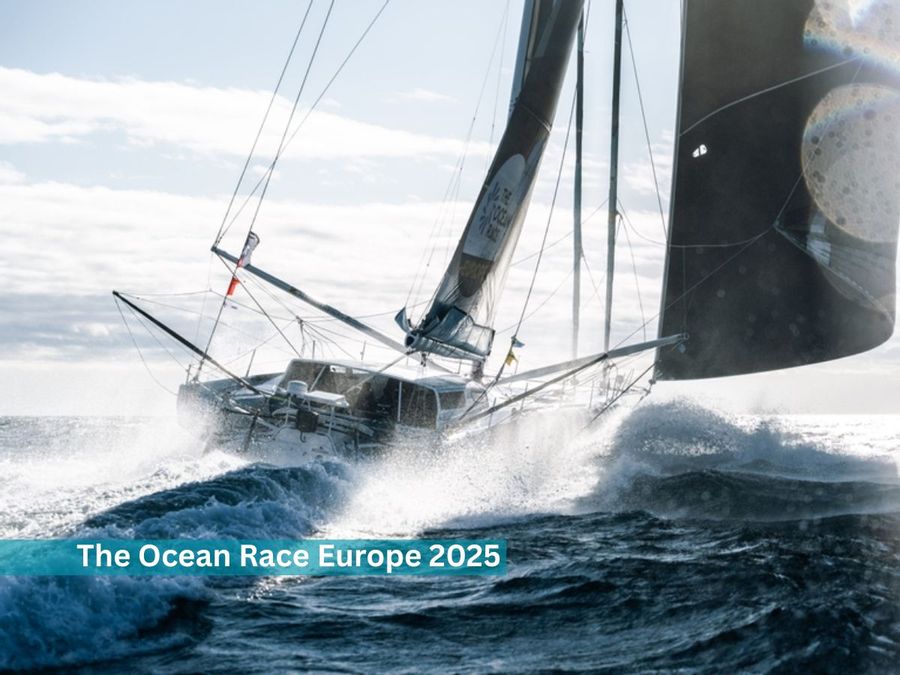
Racing has a way of revealing what matters most, and the Ocean Race Europe 2025 looks set to do exactly that. With the starting gun set to fire in Kiel at 15:45 on 10 August, the fleet has just three days to wait before 4,500 nautical miles of European coastline, culture, and competition open up ahead of them.
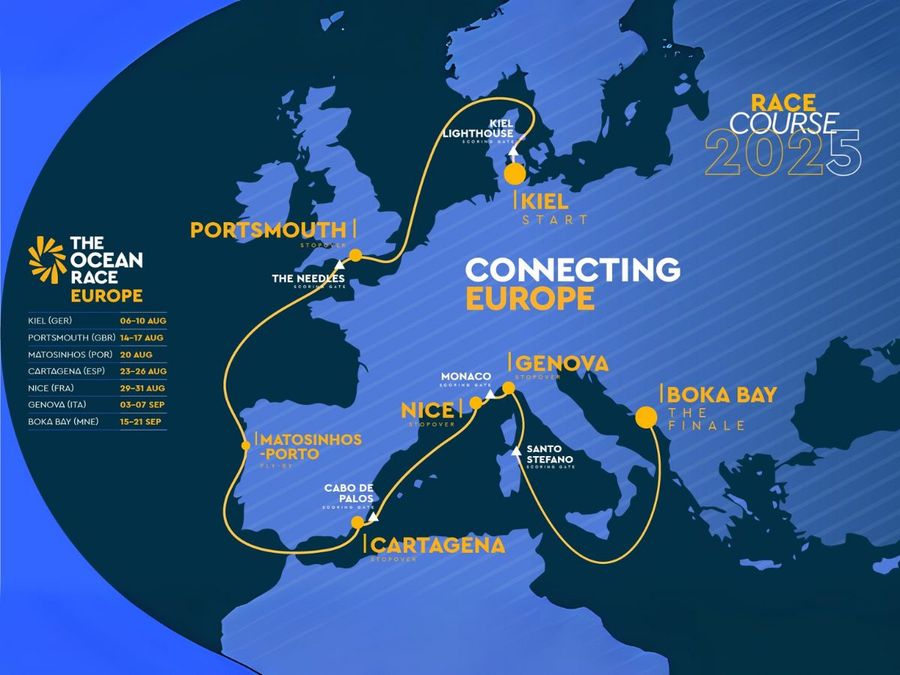
Only the second edition of a race that arrived with real ambition, the inaugural Ocean Race Europe was born in the disrupted summer of 2021 and showed clearly there was appetite for a new kind of high-intensity, high-stakes offshore contest on European waters. The 2025 renewal takes that foundation and pushes it further, racing under the banner of "Connecting Europe" and doing so quite literally, threading the course through the Baltic, the North Sea, the English Channel, the Atlantic, the Mediterranean, and, for the first time in any Ocean Race event's history, the Adriatic Sea. The finish line lies in Boka Bay, Montenegro, a narrow, fjord-like inlet hemmed in by dramatic limestone shores.
The fleet is an all-IMOCA affair, seven of the quickest 60-foot foiling monohulls on the planet lined up at the start. These machines more commonly operate solo in the Vendée Globe or double-handed in the Transat Jacques Vabre, but the Ocean Race Europe asks something different of them: fully crewed racing, with each team fielding a mixed-gender crew of four alongside an onboard reporter. Scan the entry list and the pedigree is striking. Eleven Vendée Globe veterans, at least six Ocean Race winners, plus Olympic medallists, solo circumnavigators, and record-setters spread across the rosters.
The race unfolds over five offshore legs, with a coastal finale awarding full-leg points. The opening stretch from Kiel to Portsmouth covers 850 miles through some of the busiest and most unforgiving shipping lanes in the world, a fast and crowded introduction. Leg 2, Portsmouth to Cartagena, carries the extra weight of double points and routes the fleet past Porto, meaning the standings could shift dramatically in that single passage. After Cartagena, the race enters the Mediterranean, running to Nice and then on to Genova, before the final leg carries the boats into Boka Bay. The coastal race finale is scheduled for 20 September.
Scoring gates provide additional tactical wrinkles early in each leg. Kiel Lighthouse on Leg 1 and Cabo de Palos on Leg 3 are among the checkpoints where bonus points are available, giving crews the chance to bank points even if conditions turn against them later in a leg.
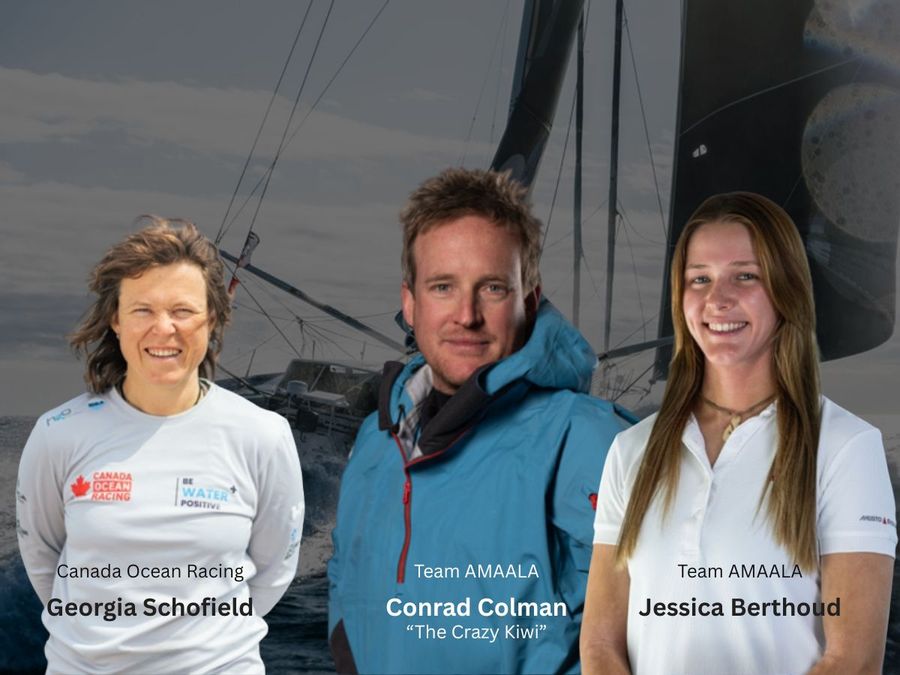
New Zealanders have more than one reason to follow proceedings closely. Team AMAALA, the Swiss-Saudi campaign led by Alan Roura, carries Conrad Colman, a veteran of two Vendée Globes completed without fossil fuels, alongside 23-year-old Jessica Berthoud. Born in New Zealand, Berthoud comes from a family with deep roots in The Ocean Race and steps into the international offshore spotlight for the first time on Legs 2 and 5. "Joining this project means discovering the open sea while continuing a family tradition," she says. Georgia Schofield, one of only a handful of full-time female onboard reporters in the field, brings a Kiwi perspective to Canada Ocean Racing's campaign and will document the race for a global audience.
Canada Ocean Racing is itself an intriguing entry. Led by Scott Shawyer and crewed by offshore legends including Brian Thompson and Pip Hare, the team frames its campaign around water-positive advocacy as much as competition. Italy's Ambrogio Beccaria skippers the newcomers Allagrande MAPEI, a youthful and energetic campaign that adds a fresh perspective to the fleet.
Among the more established rivalries, Team Malizia and Team Holcim-PRB pick up a contest that burned brightly during the last full circumnavigation. Boris Herrmann heads a formidable Malizia crew that includes Cole Brauer and Francesca Clapcich, while Rosalin Kuiper leads Holcim-PRB with Franck Cammas and Carolijn Brouwer providing considerable depth of experience. Paprec Arkéa's Yoann Richomme, a multiple Figaro winner with a reputation for sharp tactical thinking, brings a crew that balances proven performers such as Mariana Lobato with emerging talent in Gautier Levisse.
Biotherm's Paul Meilhat comes into this race with a score to settle. After finishing fourth in the last global Ocean Race, he has assembled what he describes as a "team of winners," pairing himself with Jackson Bouttell, Sam Goodchild, and Amélie Grassi, with a podium firmly in his sights.
Conditions across the route are expected to vary enormously. Race Director Phil Lawrence has described the challenge as significant, with the course testing navigation, raw boat speed, and crew resilience across radically different sea states and wind regimes.
"Racing around Europe is a major challenge that takes the fleet across the congested waters of the North Sea, through the confines of the English Channel, out into the open waters of the Atlantic, before taking on the tricky conditions of the Mediterranean and the Adriatic seas," says Lawrence. "The crews will need to perform well across a range of conditions to get to the podium."
Competition is only part of the story. Every boat in the fleet carries scientific instruments measuring microplastic concentrations, water temperature, salinity, oxygen levels, and CO2, contributing to the "Racing for the Ocean" initiative that runs as a thread through the entire event. Some teams plan to deploy drifting buoys that will continue monitoring ocean conditions long after the race has finished.
Seven nations, seven race-hardened foiling IMOCAs, stops spanning a continent's worth of coastline, and a number of New Zealanders contributing skill and storytelling to proceedings: the Ocean Race Europe 2025 offers spectacle and substance in equal measure. The starting gun fires in Kiel, and from there, all of Europe opens up.