The first leg of The Ocean Race Europe 2025 has unfolded in distinct chapters: an adrenaline-charged departure from Kiel, a foiling blast across the Baltic, a steady reach through the North Sea, and now a punishing finale of light-air tactics and relentless manoeuvring through the English Channel.
A sprawling high-pressure ridge dominated the past 24 hours, shifting the race from outright speed into a test of nerve and patience. The front-runners managed to slip through before the worst of it. "We enjoyed dream conditions right after the ridge, with an east-southeast wind that allowed us to make rapid progress," said Biotherm skipper Paul Meilhat. Paprec Arkéa's Yoann Richomme was similarly encouraged: "We crossed faster than expected. Medium winds aren't our strong point, but we'll keep pushing."
Those who arrived at the ridge later paid a steep price. Team Malizia's Will Harris was frank about the setback: "We lost more time than we thought we would — it felt like we were stuck." What had been a 2.5-mile deficit to second place swelled to 10. Further back, Team Amaala ground through the night at an average of just 3 knots, battling light air and an adverse current. "The current is against us and there's only 4–5 knots of wind ahead," said skipper Alan Roura. "It's tough because we've lost touch with our Canadian friends, but we're not giving up."
By morning, the English Channel presented itself as a narrow, obstacle-laden funnel. Off Dover, the usable corridor between the coastline and the exclusion zone measures less than five miles; further along, the passage tightens to just 3.3 miles. A southwest wind, precisely the direction no one wanted, left the fleet with no alternative but to tack back and forth between the shoreline and the traffic separation schemes every 20 or 30 minutes in an exhausting ping-pong rhythm.
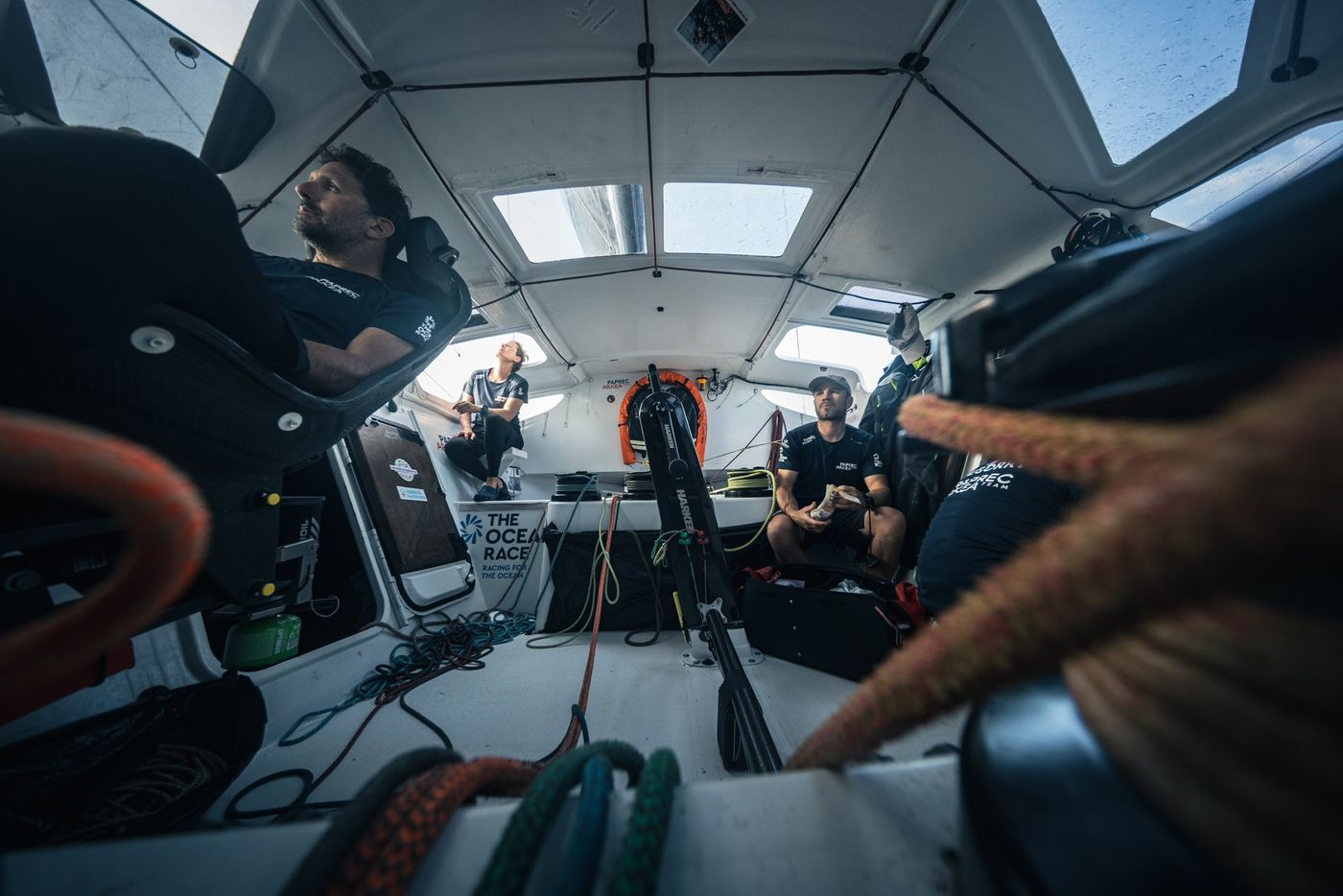
Meilhat spelt out the reality aboard Biotherm: "We won't have more than half an hour without a manoeuvre until the end." Every tack involves shifting hundreds of kilos of sails and gear to windward, in darkness, while ferries, cargo ships, and tankers pass close by. Sleep arrives in five-minute snatches, if at all. Paprec Arkéa summed up the run to the finish as "a long zig-zag to the finish — unstable weather, head currents, and a zone full of pitfalls."
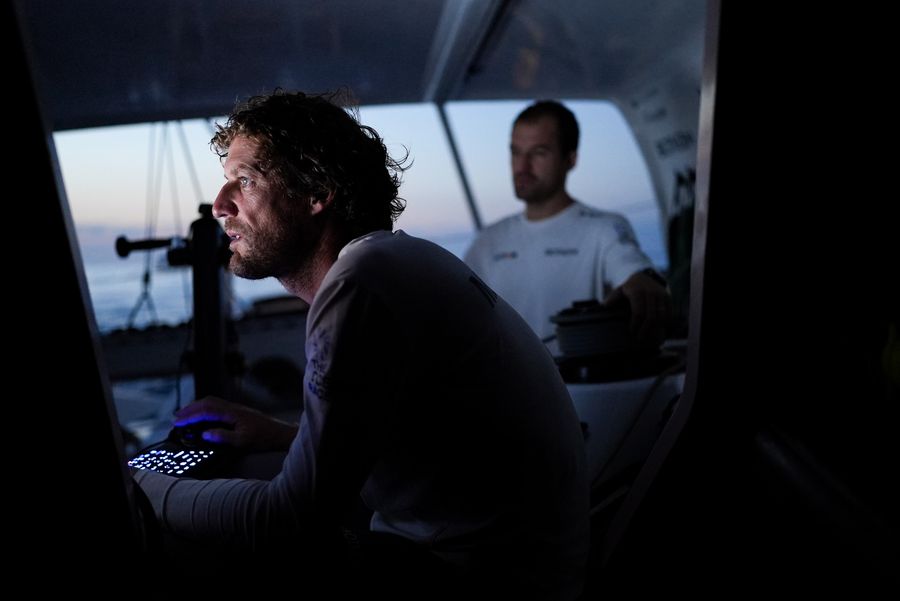
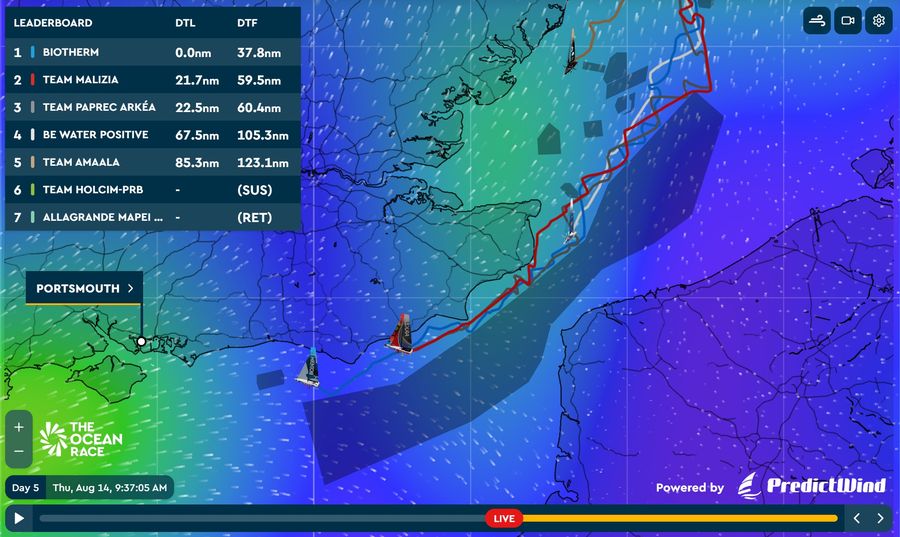
The race tracker made the struggle plain, showing loops, zig-zags, and stretches of backwards movement as the tide overpowered whatever breeze remained. Malizia's onboard reporter Flore Hartout described the lowest point: "The wind disappeared, the current pushed us backwards for hours. The fog rolled in, and visibility was gone. Then, finally, a gentle breeze and we were off again."
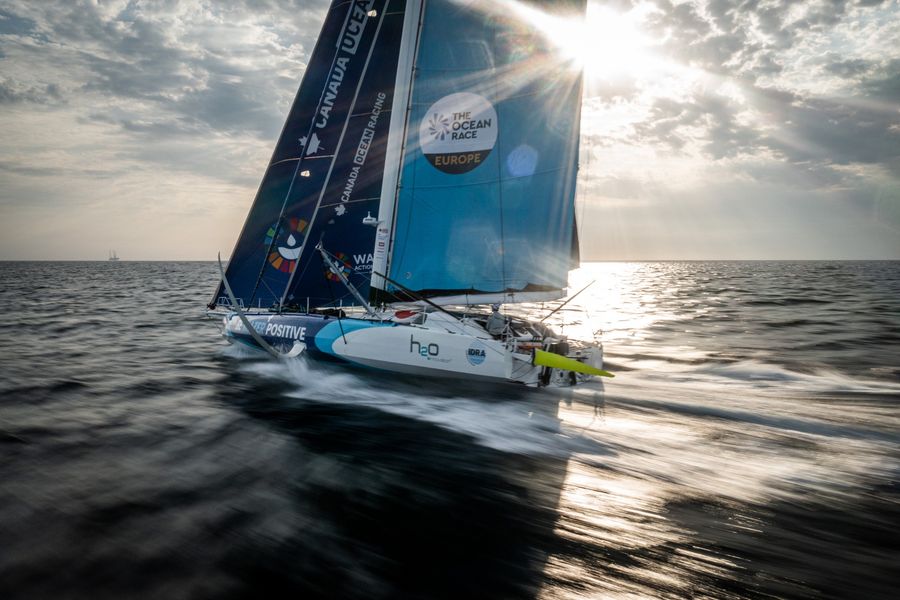
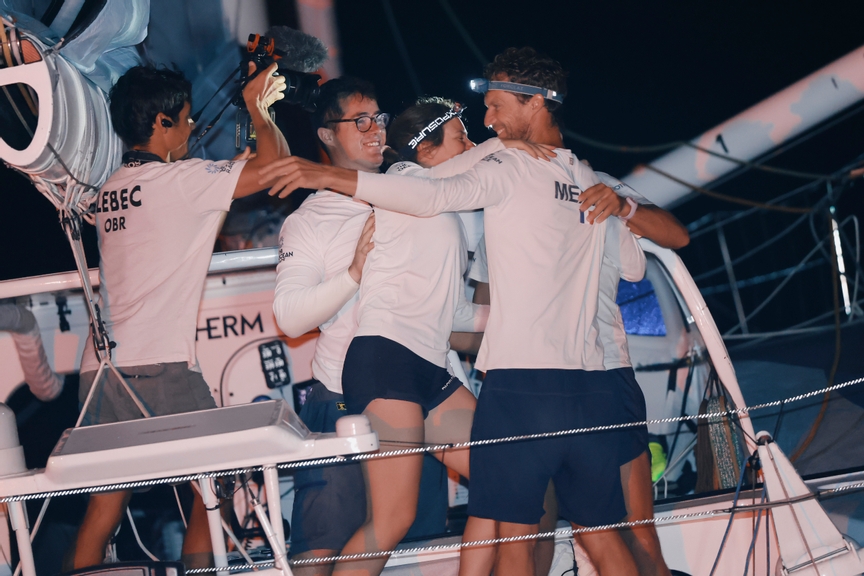
Crews have kept spirits up through the grind. Malizia's crew turned the misery of sail stacking into something approaching a team chant: "We love stacking, stacking is GREAT!" Canada Ocean Racing kept their updates buoyant with sunset shots, drone footage, and notes about "oil rigs in the rearview" as England crept closer. Amaala's crew joked about being "on a diet" during the slow stretch, consoling themselves with thoughts of "a good English breakfast at the finish."
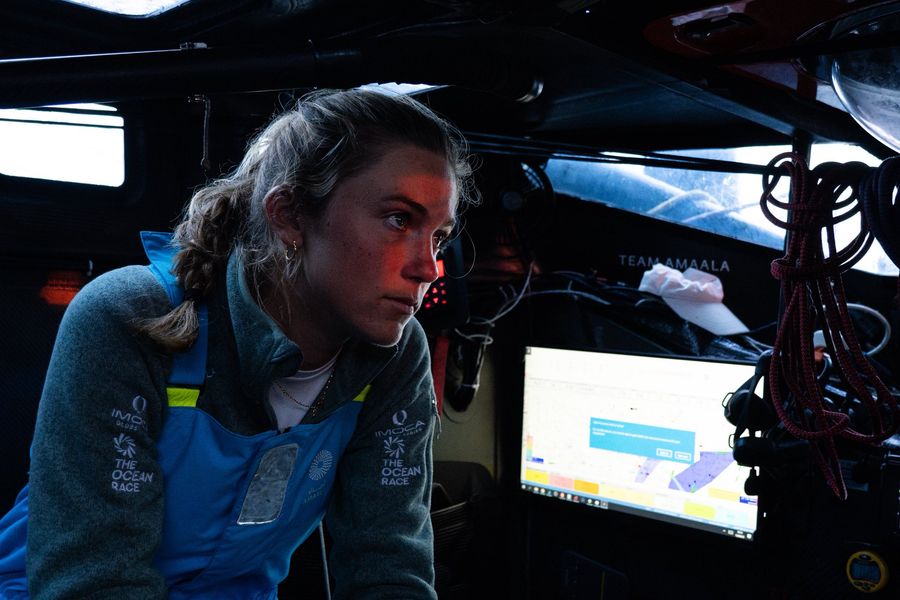
A brief easing of conditions the previous day handed Biotherm a rare window to rest, eat, and prepare for the hard night ahead. Even then, Meilhat was already looking forward: "We'll be tacking all day, playing ping-pong between the English coast and the DST. The further away our opponents are, the better, especially with what's coming."
At the time of the latest report, Biotherm held an 18-mile lead over Paprec Arkéa, with Malizia just a few miles behind them. Canada Ocean Racing sat 70 miles off the pace, Amaala a further 96 back. Race control was weighing whether to extend the course and bring the fleet in during daylight, but whenever the arrivals come, the final hours will look the same for everyone: a sleepless procession of tacks, stacks, and split-second decisions in the busiest shipping lane in the world.
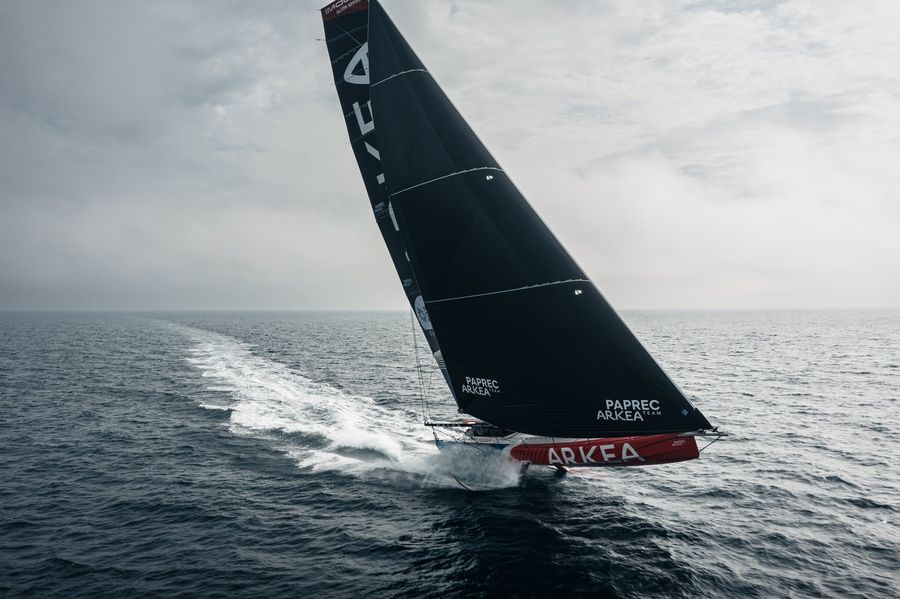
In a finish shaped more by moments than miles, a single well-timed tack or a fortunate wind shift could yet change the order. Nothing will be settled until the lines go ashore.