The America's Cup has outlasted two world wars, recessions, depressions, famines and pandemics. It remains the hardest trophy in international sport to win. Only four countries have ever managed it.
Guided by the Deed of Gift's framework for "friendly competition between foreign countries," the Cup has always attracted obsessive innovation. But technical arms races and legal battles tell only part of the story. The characters are what have defined it.
Rivalries built over decades remain just as raw today. Here are some of the most significant people to have shaped the competition across its long history.
John Cox Stevens (1785–1857)
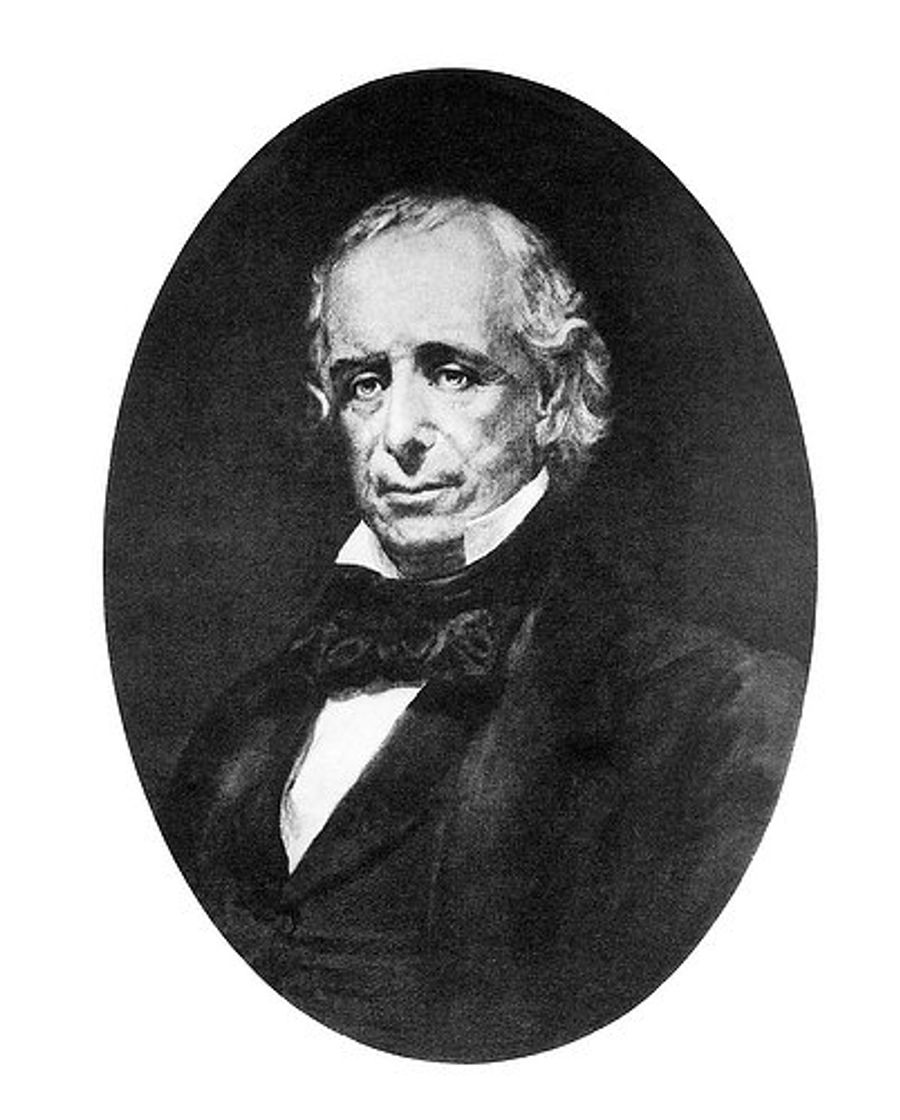
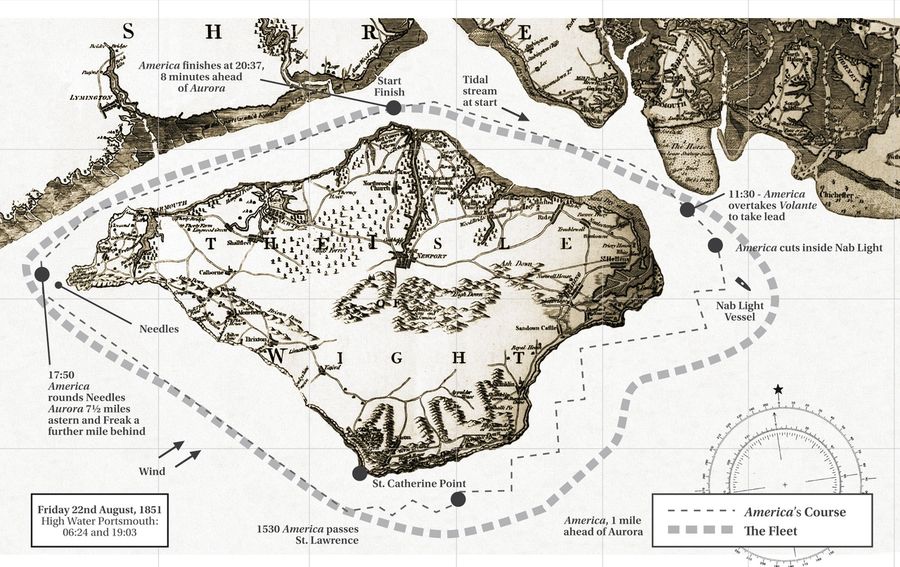
Stevens was a wealthy New York businessman and the first Commodore of the New York Yacht Club, founded in 1844. A passionate advocate of yacht racing since boyhood, growing up on the banks of the Hudson River, he owned the pilot-schooner America and skippered her to victory around the Isle of Wight in 1851. His decision to donate the RYS £100 Cup to the New York Yacht Club created what became the America's Cup. He died in 1857, never knowing the legacy his vision would create.
George L. Schuyler (1811–1890)
Following Stevens' death, Schuyler re-drafted and executed the Deed of Gift in 1857, formally donating the trophy to the New York Yacht Club as a perpetual challenge cup for "friendly competition between foreign countries." His carefully crafted legal framework established the principles that still govern the competition today, and he defended the Deed through numerous legal and sporting challenges over the following decades. Schuyler never raced for the Cup himself, yet his stewardship laid the constitutional foundations upon which every subsequent edition has been contested.
Susan Henn (1853–1911)
A pioneering Scottish yachtswoman, Susan Matilda Cunninghame-Graham Henn used a substantial inheritance to commission and finance the steel cutter Galatea, which challenged for the Cup in 1886. She sailed the yacht across the Atlantic rather than travelling by steamship. When her husband, Lieutenant William Henn, became unwell during the Match, she took command, making her the first woman to command an America's Cup yacht. Galatea was defeated by Mayflower, but her seamanship earned widespread admiration at a time when women were largely excluded from competitive sailing.
Nathaniel G. Herreshoff (1848–1938)
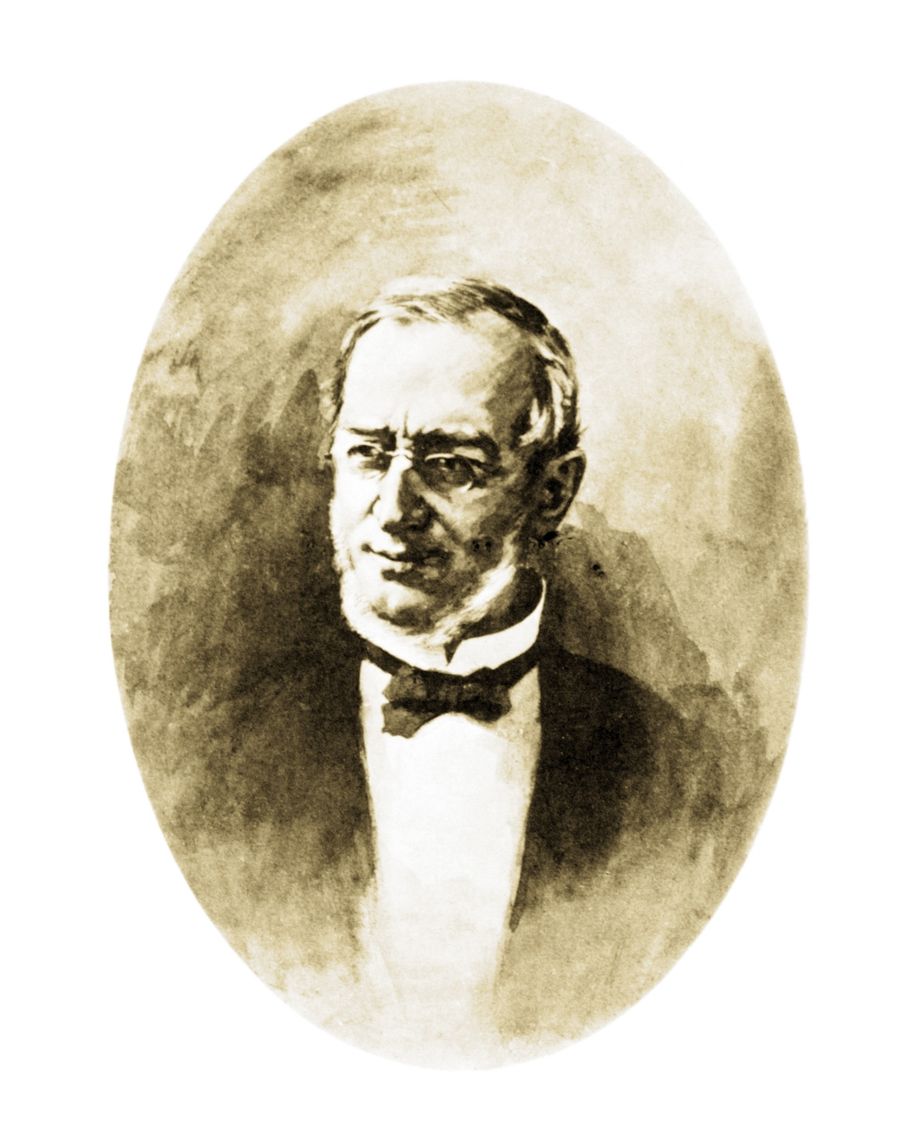
Known as the "Wizard of Bristol," Herreshoff designed five consecutive successful defenders for the Herreshoff Manufacturing Company: Vigilant (1893), Defender (1895), Columbia (1899 and 1901), and Reliance (1903). He pioneered lightweight steel construction, advanced hull forms, balanced rudders and sophisticated sail plans, bringing scientific engineering to yacht design decades ahead of his contemporaries.
Harold S. Vanderbilt (1884–1970)
Heir to the Vanderbilt fortune, Harold Stirling Vanderbilt successfully defended the Cup three times, skippering Enterprise (1930), Rainbow (1934) and the superboat Ranger (1937), the latter two financed by himself. He combined exceptional tactical ability with meticulous preparation across the J-Class era, a period often called the Golden Era of the Cup. He is regarded as one of the greatest helmsmen ever to have contested it.
Hope Goddard Iselin (1868–1970)
Married to banker and yachtsman C. Oliver Iselin, Hope Goddard Iselin became a familiar presence aboard Cup defenders during the late nineteenth and early twentieth centuries. Closely connected with the New York Yacht Club, she entertained royalty, industrialists and leading yachtsmen, helping to raise the competition's social profile during the Gilded Age. She lived to the remarkable age of 101, spanning almost the entire era from Sir Thomas Lipton's first challenge to the dawn of the modern Cup. The dates alone tell you something about the world she moved through.
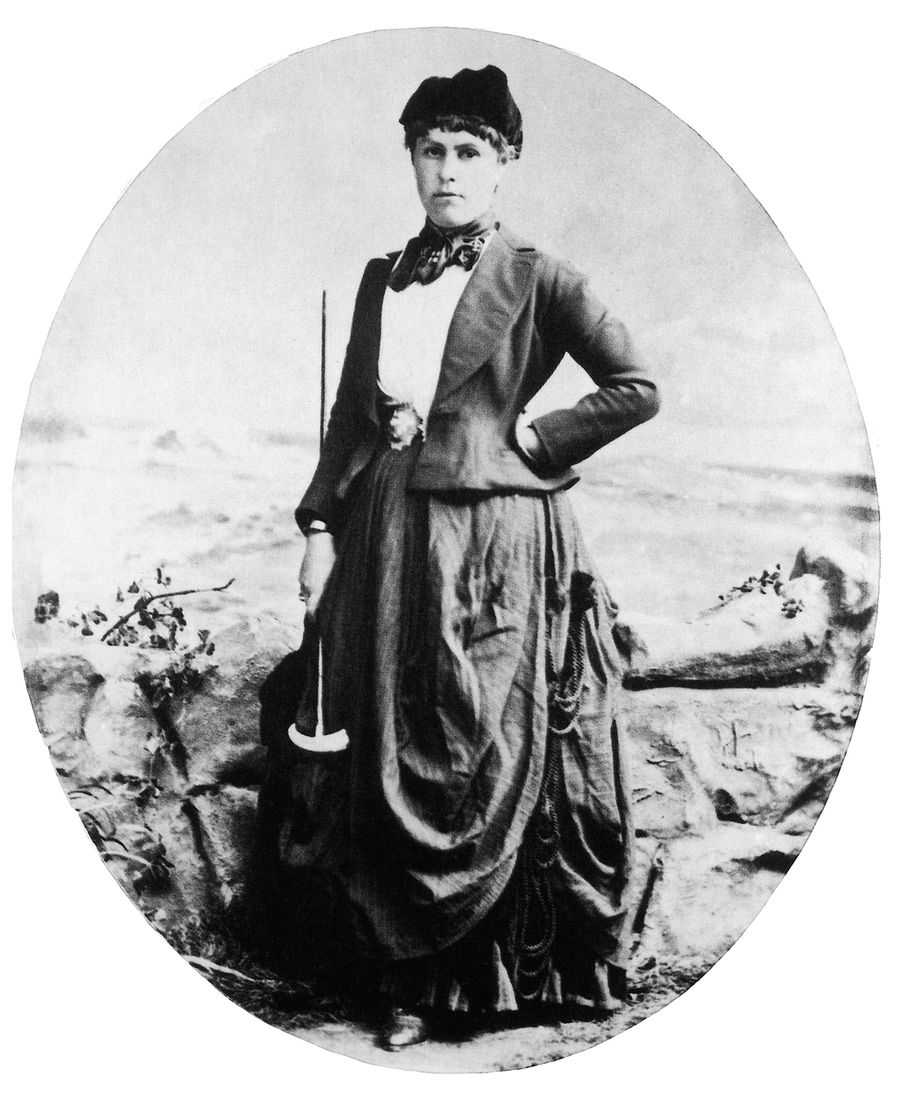
Sir Thomas Lipton (1848–1931)
Scottish-born tea merchant, at one point thought to be the richest man on the planet, and the most beloved loser in Cup history. Between 1899 and 1930, Lipton mounted five unsuccessful challenges with his Shamrock yachts, winning enormous admiration for his sportsmanship and determination. His friendship with American competitors strengthened Anglo-American sporting relations. He never lifted the Cup, but his name remains synonymous with gracious defeat and unwavering optimism.
Sir T.O.M. Sopwith (1888–1989)
Sir Thomas Octave Murdoch Sopwith was a pioneering aviator, industrialist and founder of the Sopwith Aviation Company. A gifted yachtsman, he challenged twice with the magnificent J-Class yachts Endeavour (1934) and Endeavour II (1937), introducing unprecedented professionalism and financial commitment to British yacht racing. Endeavour came closer than any British challenger in decades to lifting the Cup. Sopwith is remembered as one of Britain's greatest sporting entrepreneurs.
Olin Stephens (1908–2008)
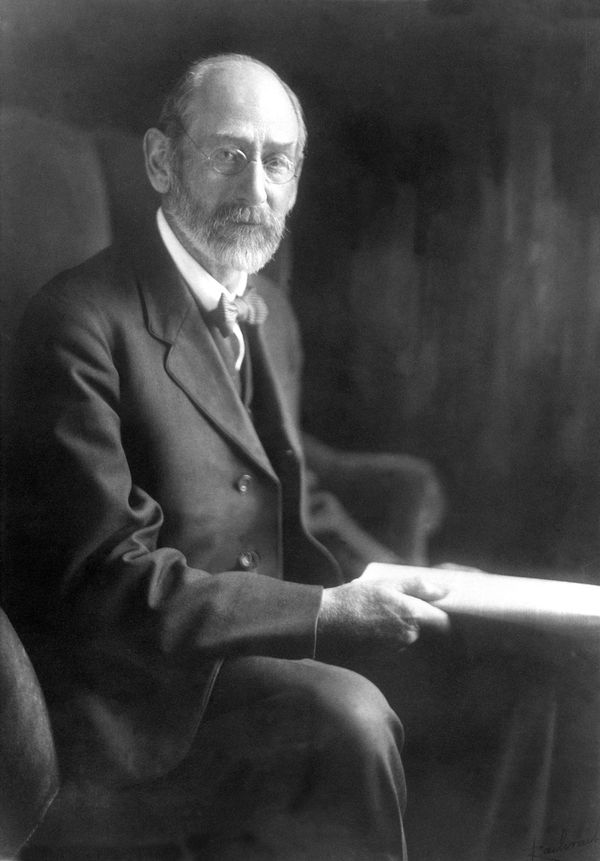
Co-founder of the renowned firm Sparkman & Stephens, Stephens designed or co-designed no fewer than eight successful defenders: Ranger (1937, with Starling Burgess), Columbia (1958), Constellation (1964), Intrepid (1967 and 1970), Courageous (1974 and 1977) and Freedom (1980). He pioneered tank testing, structural engineering and meticulous performance analysis long before computer modelling became commonplace, combining scientific naval architecture with an intuitive understanding of yacht performance. No designer has shaped the America's Cup more thoroughly.
Baron Marcel Bich (1914–1994)
The French industrialist and co-founder of the BIC company, Bich financed four campaigns between 1970 and 1980: France (1970), France II (1974), France III (1977) and France III again in 1980. He was determined to break the long-standing Anglo-American dominance of the competition, combining substantial personal investment with a scientific approach to yacht design. He never reached a Cup Match. But his commitment laid the foundations for France's emergence as a serious force in international sailing and inspired future French syndicates.
Ted Turner (1938–2026)
Founder of CNN and one of the most recognisable figures in twentieth-century media, Turner skippered Courageous to victory in the 1977 America's Cup, defeating Australia's challenge. His aggressive tactics and charismatic personality brought a new level of celebrity to the event and confirmed him as one of the outstanding helmsmen of the 12-Metre era. He later became one of the world's leading philanthropists and environmental campaigners.
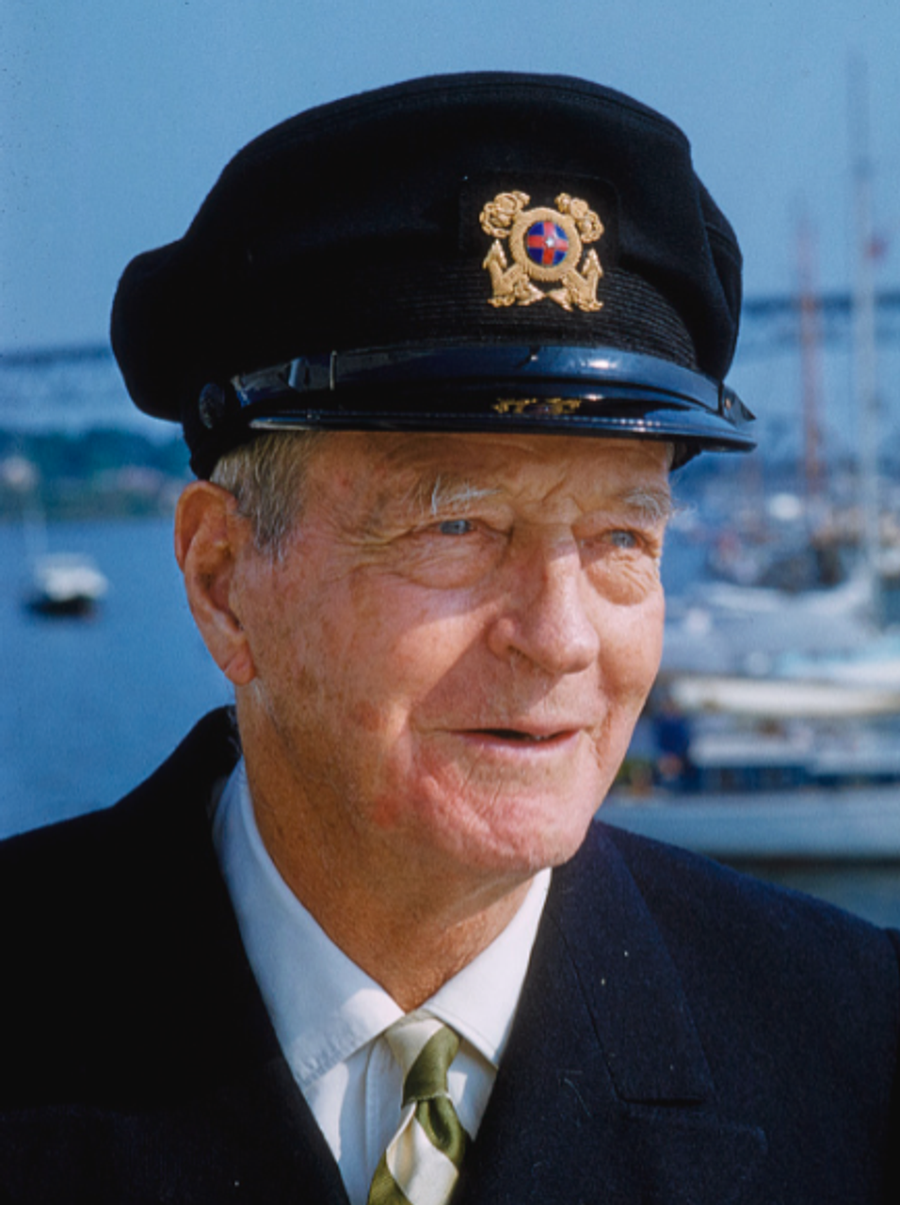
Dennis Conner (1942–)
Few individuals have shaped the modern Cup more profoundly. Conner won the trophy four times and became the first American skipper to lose it, surrendering the Cup in 1983 before winning it back in Fremantle in 1987, earning the nickname "Mr America's Cup." He revolutionised campaign management by embracing sports science, sponsorship and professional teamwork, and also skippered the controversial catamaran that won the 1988 Deed of Gift Match. His mantras, "No Excuse to Lose" and "The Commitment to the commitment," remain as relevant as ever.
Alan Bond (1938–2015)
Bond's 1983 victory with Australia II ended 132 years of American dominance. It took four successive challenges to get there. His willingness to invest heavily in technology and recruit the world's best sailors, designers and sailmakers transformed international yacht racing. His later business empire collapsed spectacularly. The sporting achievement stands untouched.
John Bertrand (1946–)
The Australian skipper who led Australia II to its historic 1983 victory and ended the New York Yacht Club's 132-year winning streak. Bertrand's calm leadership and tactical intelligence were central to that campaign, and he has since become an influential advocate for high performance in business and education. His book Born to Win is regarded as essential reading for anyone serious about competing at the top of the sport.
Ben Lexcen (1936–1988)
The designer behind Australia II's revolutionary winged keel. Lexcen was a fiercely original thinker who constantly challenged conventional yacht design, and the keel gave Australia II a performance advantage that broke the New York Yacht Club's grip on the Cup after 132 years. It remains one of the most famous innovations in sailing history. His legacy is that of one of the most influential designers the competition has ever seen.
Dawn Riley (1964–)
In 1992, Riley became the first woman to compete in a Cup Match as a crew member aboard America³, which successfully defended the trophy in San Diego. She later became the first woman to manage a Cup syndicate, leading America True during the 2000 campaign in Auckland. Beyond the Cup, she has competed in multiple Whitbread Round the World Races and has been a passionate advocate for diversity, leadership and youth development in sailing.