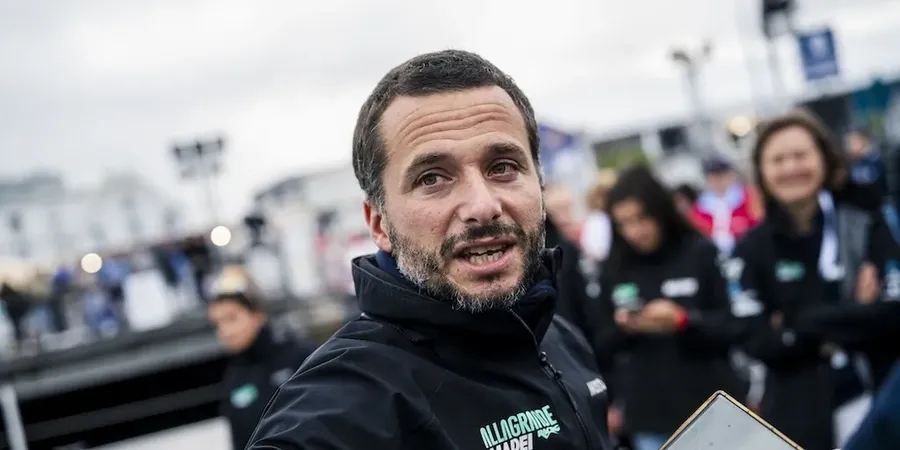
Manu Cousin's Coup de Pouce crossed the Arctic Circle through the night, breaking through to the southern leg of the Vendée Arctique at last. Every boat in the fleet had rounded and turned for home, bows pointed back toward Les Sables d'Olonne. The direction of travel was now the same for all of them, but beneath that shared heading the race had fractured into separate battles, each shaped by different strategic calls, different weather windows, and the creeping weight of accumulated fatigue.
The northward passage had been anything but straightforward for Cousin. Technical difficulties had followed him from the start, a consequence of a late launch and a winter of drastic modifications to the boat. He had entered the race clear-eyed about this, treating it as an extended sea trial and understanding that the Arctic would expose whatever the tank testing had not. "The climb wasn't simple," he said. "I won't pretend it was. But that's partly why we came." He watched rivals ease ahead while Coup de Pouce remained temperamental, yet he had reframed what success meant for him. Crossing the 66th parallel north carried weight beyond race position. It was a marker in a sailor's career, the kind of threshold you carry with you afterwards. "Everything we fundamentally changed on the boat is working well," he reflected. "There will be adjustments to make. We're paying for them in cash. But that's normal. Nothing replaces sailing in the Arctic to learn."
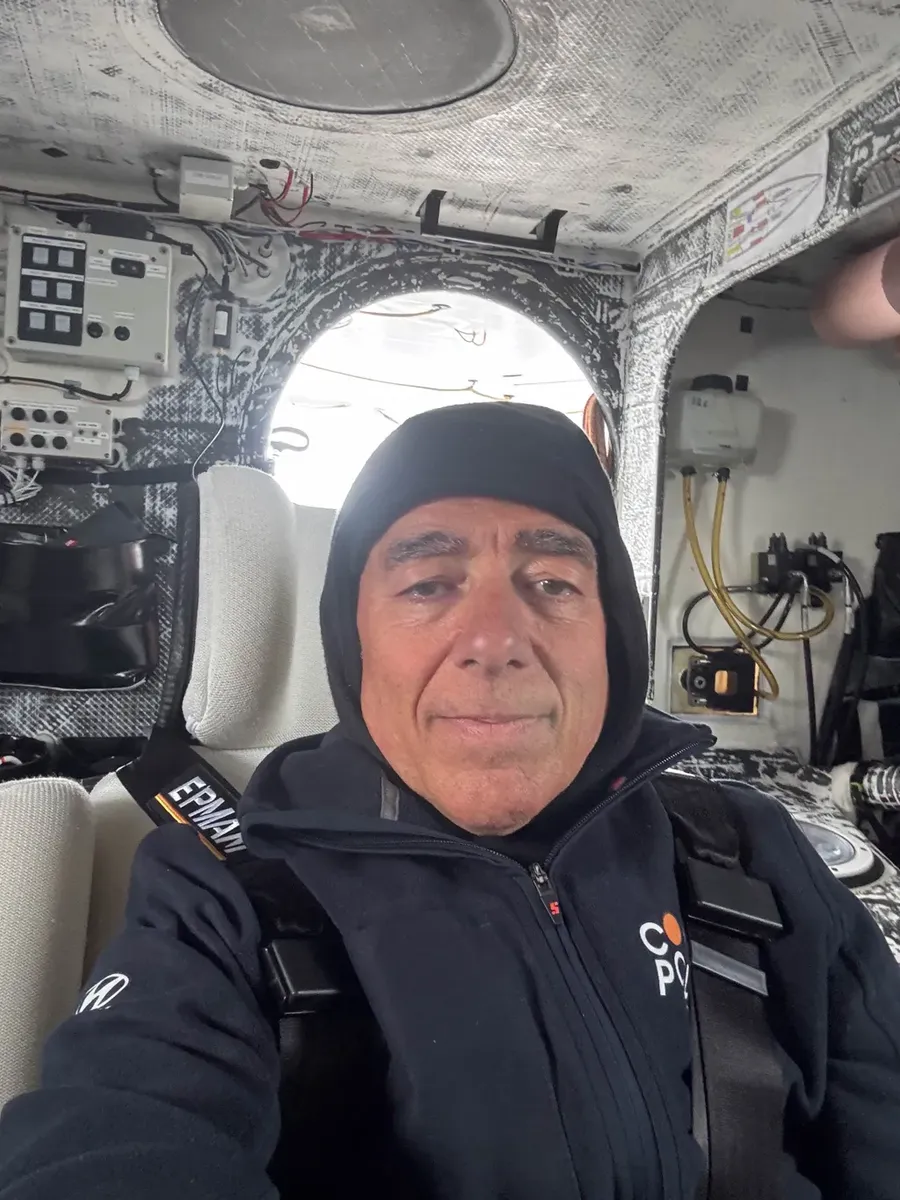
With the circle behind him, Cousin's ambitions had narrowed to one clear aim: get Coup de Pouce home intact. Neptune had been brutal on the way north, and he was hoping for something kinder on the return. His routing pointed to an arrival somewhere between Friday night and Saturday morning, though the Bay of Biscay forecast carried enough uncertainty to push that window a day in either direction.
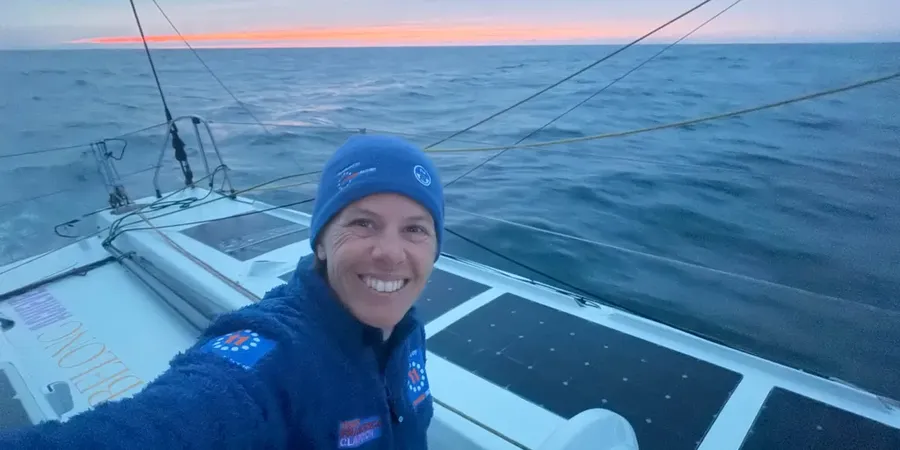
Further south, Violette Dorange was picking her way along the Irish coast through conditions that lurched between flat calm and twenty knots with barely a warning. She had chosen to go west of Ireland, accepting the distance penalty of the outer passage rather than committing to the North Channel route. The inner path would have offered speed in the breeze, but thirty knots of wind and the steep close-hauled seas she had already encountered felt like overreach. "I didn't see myself pushing the DST in those conditions," she said. The longer way around had cost her roughly a day on paper.
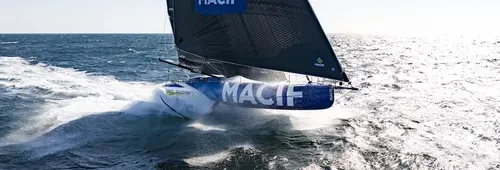
The forecast was beginning to shift in a way that suited her. A soft wind patch, what sailors call a "molle," was expected to settle over the fleet as it converged on the finish. Should it arrive as forecast, it had the potential to compress gaps that had opened during the hard running down the Atlantic. "If the fleet regroups, that would be brilliant," Dorange said. The margins between her and competitors including Ambrogio Beccaria and Élodie Bonafous had not grown insurmountable, and a softening of the wind could easily reshuffle the finishing order. The loss of her mainsail several days earlier remained a serious concern, one that would hurt most in precisely the light airs she was now hoping for. Even so, her routing had turned more encouraging since she rounded Ireland, and the brutal conditions she had feared most at the outset showed signs of relenting before the finish line.
The race was far from over.