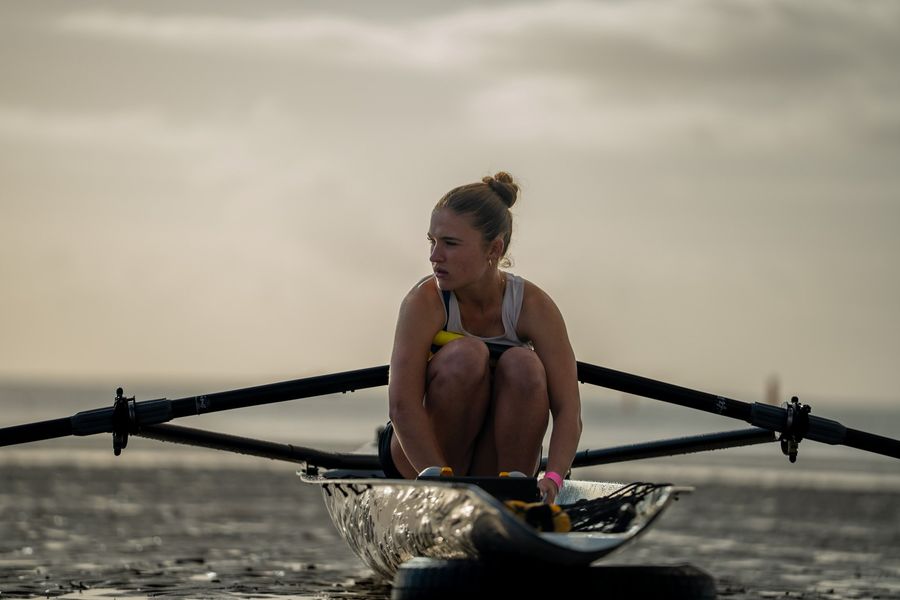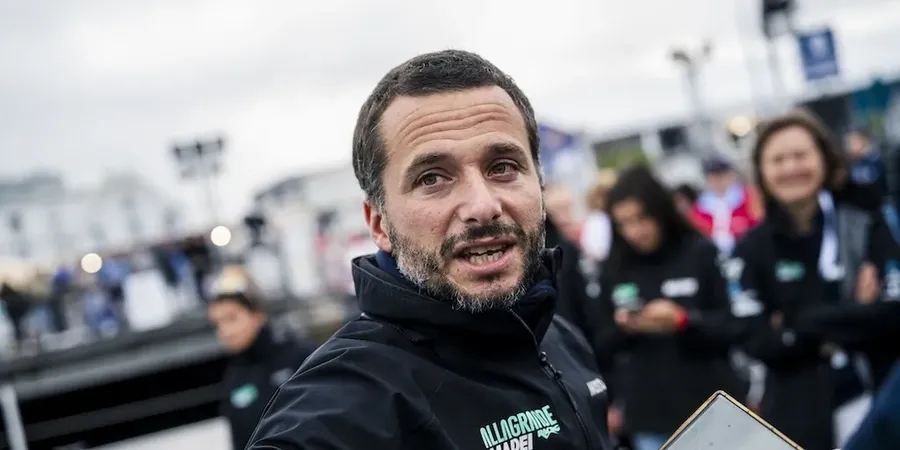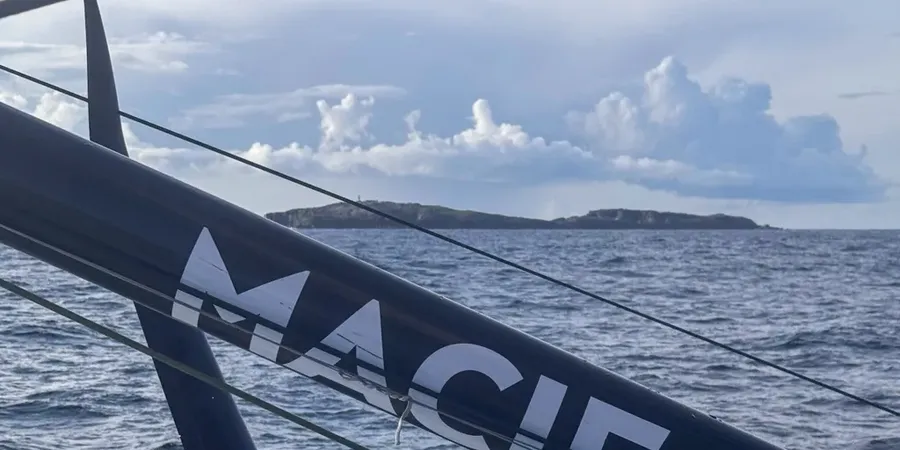
Three days of bruising conditions finally relented on Wednesday morning for the nine IMOCA skippers battling through the Vendée Arctique. From the gun on Sunday, the fleet had been hammered by sustained winds working against an abnormally steep sea state, a combination that reduced even the most basic tasks aboard to feats of raw endurance. By 5:35 pm Wednesday NZST, the race leaders were sailing in just 13 knots of breeze, and genuine rest had at last become possible.
Sam Goodchild leads the fleet aboard MACIF Santé Prévoyance, with Elodie Bonafous on Association Petits Princes – Quéguiner tracking 50 nautical miles behind. The preceding days had extracted a heavy toll across the fleet. Bonafous put it with characteristic understatement: the wind alone was manageable, the sea alone was manageable, but together they turned even the simplest movement into a survival exercise. Loose gear flew around the cabins. Helmets were worn below deck. Anything not firmly secured became a projectile. Arnaud Boissières on APRIL Marine admitted the risk of injury had felt real enough that he had geared up in similar fashion. Nicolas d'Estais on Café Joyeux had weathered such severe seasickness that no warm meal had passed his lips since the start, a stretch of more than 48 hours.
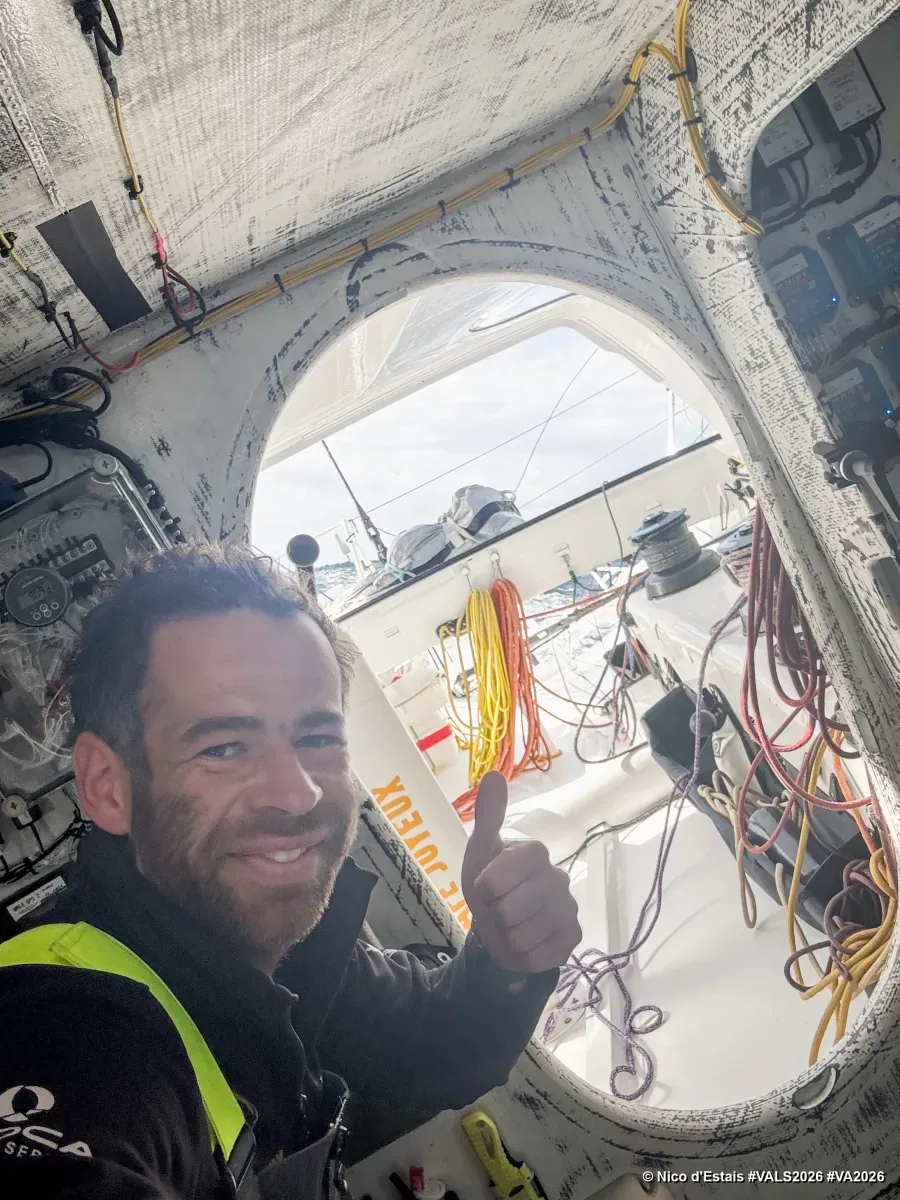
The easing of conditions brought an almost immediate lift in mood across the fleet. Bonafous spoke of the sea settling to a smoothness that felt almost unreal after everything that had come before. She reached for a video game analogy to capture the sensation, describing the shift as recovering "life points," and the metaphor stuck. Sleep returned. Battered bodies began to recover. The reserves ground down over two and a half days started coming back.

The fleet is already abeam Lewis and Harris in Scotland's Outer Hebrides, having covered nearly two days of sailing in slightly more than two days of elapsed time. The Faroe Islands will soon slip past to the west. Within 24 hours, the leading boats expect to cross 66 degrees North, the Arctic Circle boundary that marks the formal turning point of the race. From that line, the run home to Les Sables d'Olonne begins.
Crossing that threshold is one matter. Choosing exactly where to cross it is quite another, and the tactical question now dominates thinking throughout the fleet. The fastest route to the Arctic Circle is not necessarily the one that sets up the best run south. A passage around the western side of Iceland, once considered plausible, has been ruled out entirely. The low-pressure system that would have made it viable never materialised, and whale protection zones added further complications to that option. Instead, the fleet pushes north on a westerly to south-westerly flow, converging on a relatively stationary low-pressure system that should eventually deliver stronger winds.
Where exactly that low sits in the hours ahead remains the key unknown, and its position will largely determine the ideal crossing point for the Arctic Circle. The strategic aim is straightforward enough in principle: hold favourable winds for as long as possible while avoiding the headwinds lying to the west of the system. The complication is that sailing east to secure better wind angles also means covering greater distance. Bonafous was deliberately keeping her options open, allowing herself more time to study developing conditions before committing to a final approach. She saw no reason to force the decision early.