Beneath the North Sea
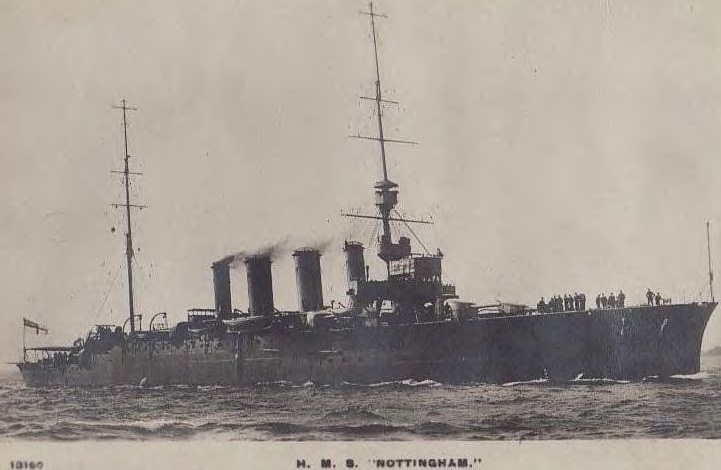
On a grey April morning in 2025, the sonar screens aboard the explorer MV Jacob George brought a century-old mystery into sharp focus. A long, narrow hull, bow pointing north, lying at 82 metres on the North Sea floor. The shape was unmistakable: a warship. After more than a century missing, the final resting place of HMS Nottingham, sunk in battle during WWI, had at last been located.
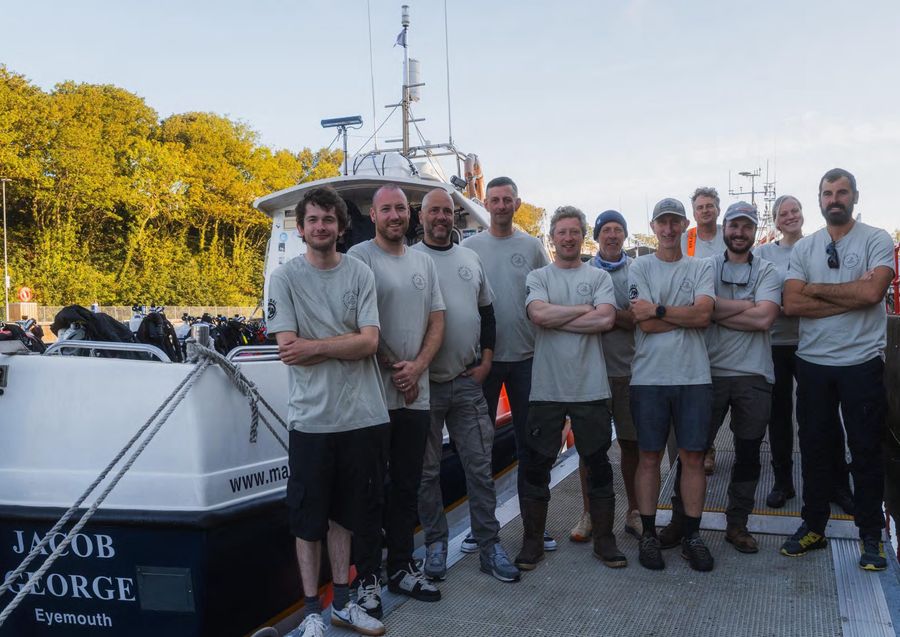
The find was no fortunate accident. It came from painstaking archival research, a demanding offshore sonar expedition, and weeks of careful preparation by the ProjectXplore team, a group of Global Underwater Explorers divers, researchers, and technicians led by Dan McMullen and Leo Fielding.
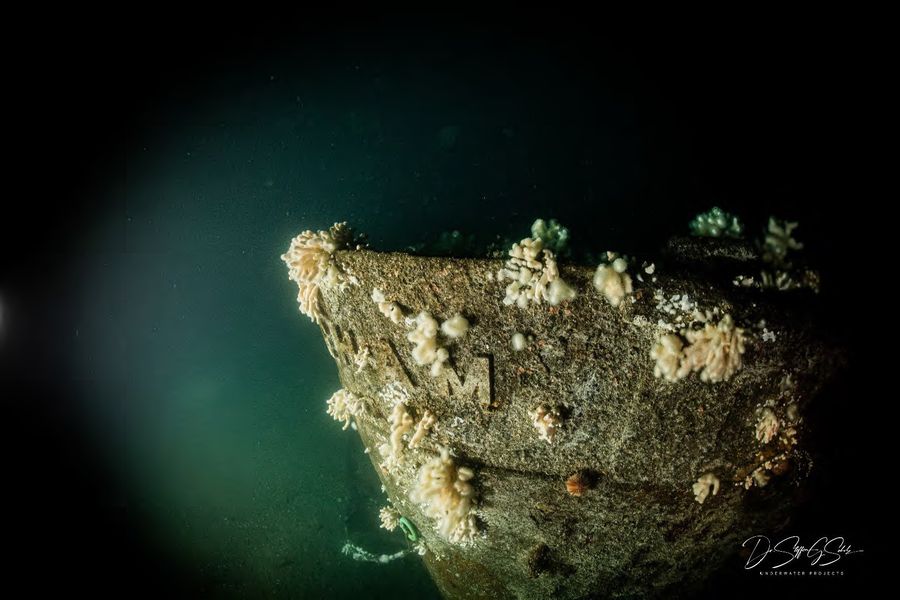
"She's one of the best-preserved WWI cruisers ever located," said McMullen. "We knew within minutes of seeing her armament layout and funnel arrangement, and then seeing 'NOTTINGHAM' embossed on the stern, that we'd found her."
*The HMS Nottingham*
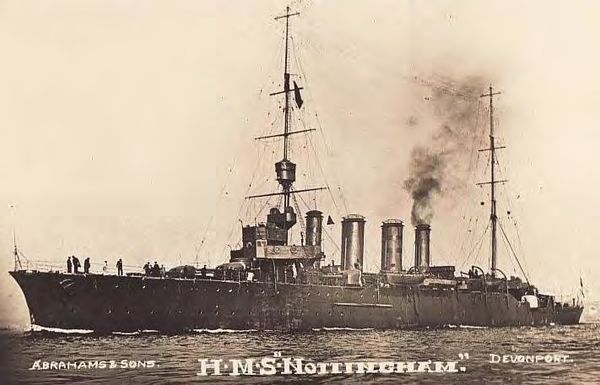
Commissioned in 1914, HMS Nottingham was one of three Birmingham-class cruisers built to scout, screen, and support Royal Navy operations around the world. She stretched 139 metres from bow to stern, displaced over 5,400 tonnes, and was armed with nine 6-inch guns. With a range exceeding 4,000 nautical miles at 16 knots, she was both fast and formidably equipped. Her distinctive thin-thick-thick-thin funnel arrangement set her apart within the celebrated 'Town'-class group, widely regarded as the finest cruisers of WWI.
Before her loss, her service record was distinguished. She had fought at the battles of Heligoland Bight, Dogger Bank, and Jutland. At Jutland in 1916, Nottingham and her squadron caught a German cruiser group in close-quarters combat, opening fire at near point-blank range. "They were very close, and clearly on a converging course," wrote British war historian Henry Newbolt. "In a quarter of an hour it was all over." The engagement demonstrated the ship's speed, firepower, and aggression in equal measure.
Within months of that action, however, Nottingham would fall victim to one of the war's most audacious submarine ambushes.
*The last push to Sunderland, the last stand of HMS Nottingham*
On the night of 18 August 1916, German naval intelligence believed it had identified a rare window of opportunity. The German High Seas Fleet, minus one squadron, put to sea under cover of darkness with a single bold objective: to bombard Sunderland, the industrial city on England's northeast coast.
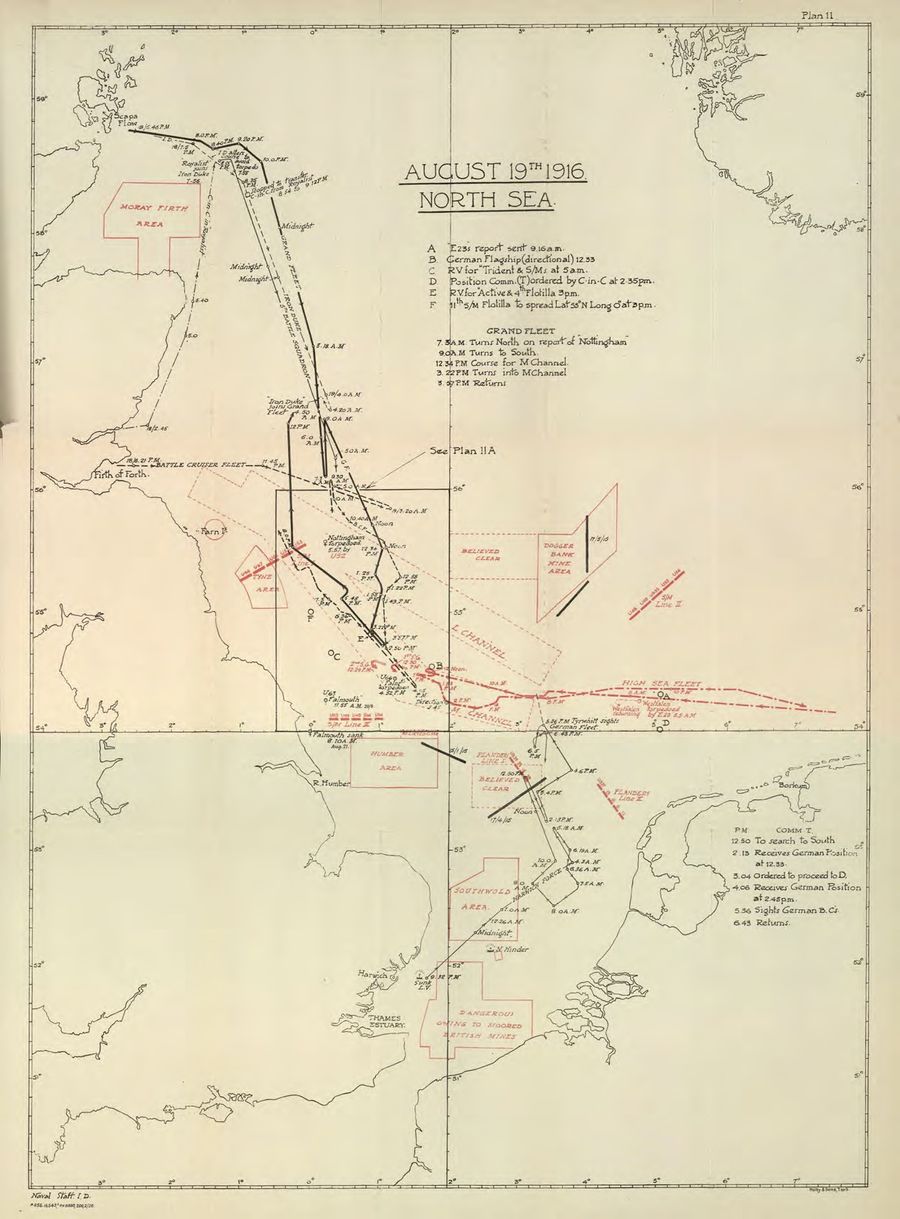
The British had already intercepted the German plan. Nottingham, operating with the 2nd Light Cruiser Squadron, steamed ahead of the main fleet on scouting duties. In the early hours of 19 August, she and HMS Dublin, both running well in advance of the fleet, unwittingly sailed into a trap. A line of German submarines lay in wait, ready to strike any vessels pushing forward.
At 5:30am, Dublin spotted what appeared to be a small fishing vessel. It was, in fact, the sail of the German submarine U-52, manoeuvring into firing position. Twenty-four minutes later, two torpedoes slammed into Nottingham's port side. Captain Charles Miller initially believed he had struck a mine.
Below decks, power failed. Fires were extinguished. Lights went out. The crew mustered at their stations in complete darkness. Minutes later, a third torpedo struck amidships. Water poured in. The ship settled heavily by the head and rolled to a 45-degree list to port, an attitude that ProjectXplore's sonar imaging would later confirm precisely.
Even as she was dying, the crew held their discipline. Guns kept firing at a glimpsed periscope. The ship's wireless aerial had been destroyed, cutting off all radio contact. By the time destroyers Penn and Oracle arrived, themselves under torpedo attack, Nottingham was sinking fast. She went under at 7:10am. Thirty-eight men were lost.
*From charts to sonar*
Despite repeated post-war searches, the wreck had never been found. Some had questioned whether her position had ever been accurately recorded. In 2024, the ProjectXplore team began constructing a fresh hypothesis from scratch.
The research team, which included two native German speakers, worked through British naval charts, German U-boat logs, wreck databases, and hydrographic records. The key breakthrough came from the detailed KTB, the war diary of U-52, which contained both a grid reference and a sketch of the attack. That single square, Quadrat 132 Y5, placed the wreck in open North Sea waters, well beyond any previous search zone.
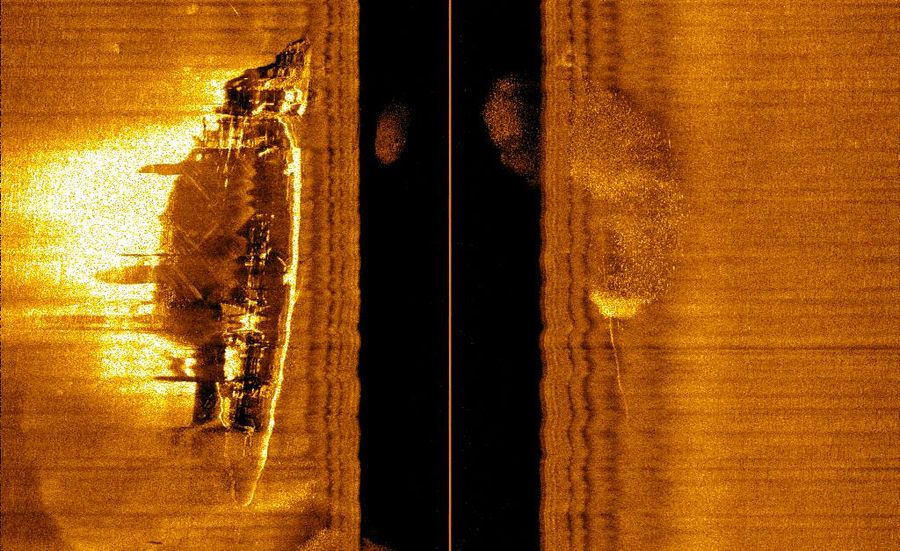
Late in April 2025, sonar sweeps revealed the long, narrow hull at 82 metres, with superstructure shadows visible and funnel profiles matching the original ship plans. The team returned days later with down-scan sonar and echo sounders to confirm the wreck's height and position.
Then came the real test: diving the wreck itself.
*Into the depths*
From mid-July 2025, ten ProjectXplore deep-sea divers drawn from the UK, Germany, and Spain, equipped with underwater cameras, set about documenting Nottingham in detail. Getting a shot line down into 80 metres of current-prone water was no straightforward task. "We were relying on everything we'd learned from April's sonar pass," said diver Joe Colls-Burnett.
The shot landed just aft of the mainmast. Descending into clear water, the divers found themselves between two intact 6-inch Mk XII guns. The breeches remained sealed. Nearby ammunition sat stowed and unused.
[gallery td_select_gallery_slide="slide" ids="150460,150459,150458,150457"]
Spreading out from that point, the team encountered a series of notable features: the embossed nameplate on the stern, positioned just beside the Captain's day cabin; wooden decking still intact amidships; the engine telegraph fallen from the collapsed bridge; and the four funnels, arranged precisely as war records described.
On the port side, divers found white plates stamped with Royal Navy blue crown emblems. A massive tear in the deck near watertight bulkhead No. 40, the forward break in the hull, aligned exactly with U-52's torpedo report.
"The ship is in astonishing condition," said diver Dominic Willis. "You're not just looking at twisted wreckage. You're seeing a working warship, frozen at the moment of loss."
*What ProjectXplore learned about Nottingham's sinking*
The ProjectXplore report also brought to light extraordinary human details from the ship's final hours. Paymaster Lieutenant Davis, ordered to destroy sensitive documents, poured paraffin over the codebooks and set them alight as the vessel sank. "Having obtained permission, he simply walked into the water," wrote Captain Miller. Able Seaman Richard Bawden, aged just 21, jumped from Dublin's cutter twice to pull drowning men from the sea, earning a Royal Humane Society Medal and a promotion for his efforts.
[gallery td_select_gallery_slide="slide" ids="150456,150455,150453,150452,150451"]
The rescue ships Penn and Oracle were targeted by U-boats even as they recovered survivors. Unable to use depth charges without killing men still in the water, their crews could only rely on evasive manoeuvres to dodge the incoming torpedoes.
Hours after the sinking, when U-52 surfaced to examine the lifeboats, her crew found a naval rescue buoy marked 'HMS Nottingham', and a ship's cat curled up in a drifting liferaft. The divers harbour hopes that it lived out its remaining years as a rat-catcher in a German harbour.
*A preserved time capsule*
Nottingham now rests on the seabed in a condition that few wrecks of her age can match. Much of that preservation is attributed to the concentrated nature of the torpedo damage, which was largely confined to the area forward of the bridge, and to the relative remoteness of the site. Many cruisers of her type, Birmingham, Lowestoft, Chester, were scrapped between the wars. Nottingham was the last unlocated loss from the 'Town'-class series, and today she stands as the best-preserved of them all.
Her story is a pointed reminder of what was asked of ordinary sailors. Some of those lost were just 18 or 19 years old. Others survived by swimming through burning oil or boarding lifeboats while torpedoes ran beneath them. All served in one of the most demanding and unforgiving theatres of naval warfare in history.
The site is now expected to receive protected status.