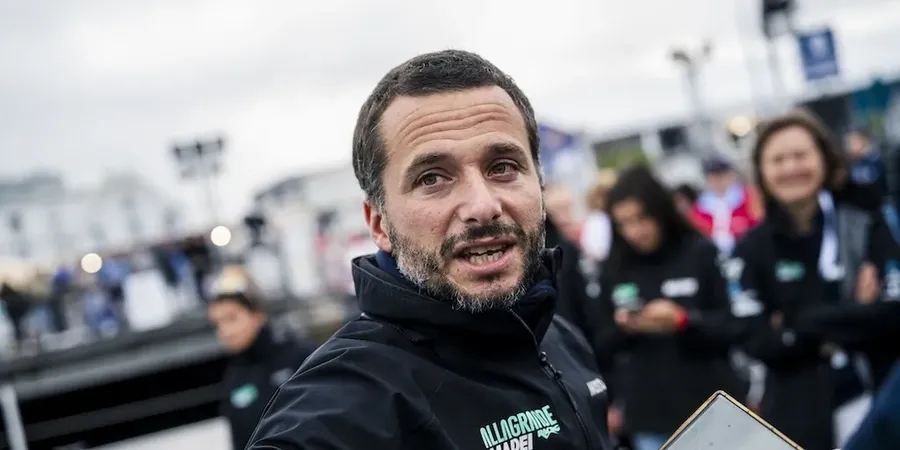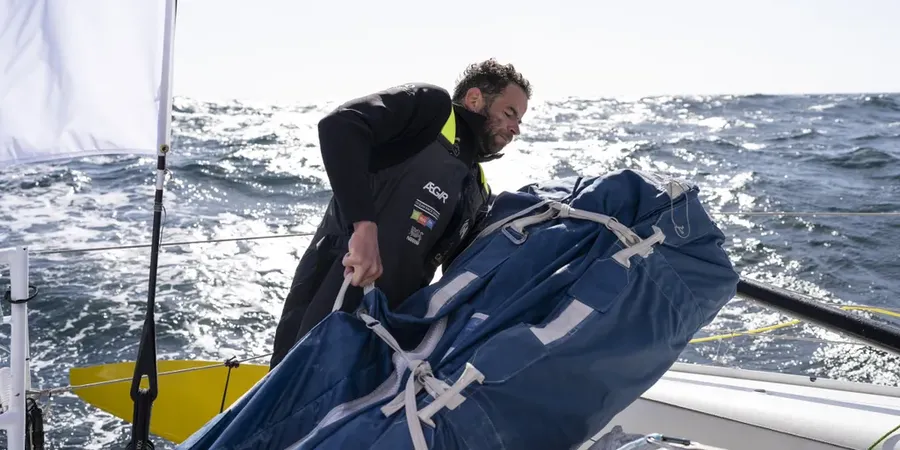
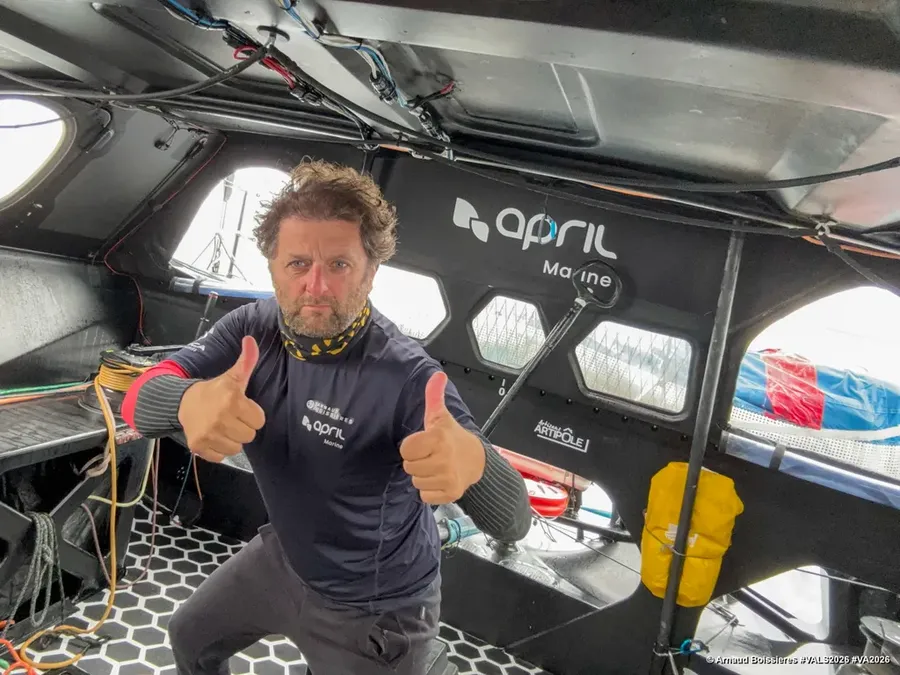
Fewer than 100 nautical miles from the line at Les Sables d'Olonne, the Vendée Arctique was far from decided. Nico d'Estais had held the lead through more than nine days of hard-fought racing aboard Café Joyeux, but Arnaud Boissières on APRIL Marine – recherche co-partenaires was reeling him in with every passing mile. Behind them both, Manu Cousin was pushing Coup de Pouce hard through 25 to 35 knots on approach to Ireland, determination undimmed despite the accumulated toll of exhaustion and circumstance.
The closing miles of the Vendée Arctique handed no one an easy passage home. What made this particular finale compelling was the full commitment of three skippers still wringing every fraction of speed from conditions shifting rapidly beneath them.
D'Estais had spent much of the race grinding through high-latitude depressions and gusts reaching 30 knots, where the North Atlantic conceded nothing freely. The turn south across the Celtic Sea and into the English Channel brought a different set of problems. As the French coast drew closer, the pressure began to ease, swapping the blunt imperative of surviving the next gale for the more nuanced difficulty of managing position in fading breeze. The physical relief was genuine, but light conditions cut both ways tactically. Decent boatspeed and settled water counted for little when a commitment to the wrong angle could cost you everything.
"I took advantage of that window to really recover," d'Estais explained. "It was stable enough to rest before hitting the Breton and Vendée coasts." Rest, though, was not the same as relaxing his guard. Anticipating the slack conditions ahead, he made the call on Wednesday morning to stay close inshore near Belle-Île-en-Mer, betting that thermal effects would keep Café Joyeux moving once the broader pressure retreated.

The numbers were turning against him. The lead he had fought to build was dissolving as Café Joyeux slowed, while Boissières, still finding pockets of stronger wind, chipped the deficit down with gathering confidence. "I'd built a bit of an advantage, but Cali came back," d'Estais said. "We're not in the same place and we're not in the same wind. I can see my lead shrinking as I slow down, but he'll enter this zone too. Whatever happens, I stay focused to the end."
Boissières had no intention of letting the opportunity pass. His window of stronger pressure was narrowing by the hour, and he knew one poor call in the light patch ahead could undo everything he had clawed back. "The wind should gradually shift and we'll probably need a few jibes, but the overall trend looks favourable," he said.
For d'Estais, reaching the finish carried significance well beyond a placing on the results sheet. The Vendée Arctique was a deliberate stepping stone toward the Vendée Globe, a race New Zealand sailors know well. From the outset, the campaign had never been simply about winning or surviving the North Atlantic. It was about discovering what Café Joyeux, its skipper's body, and his mind could genuinely endure when the ocean decided to make things hard.