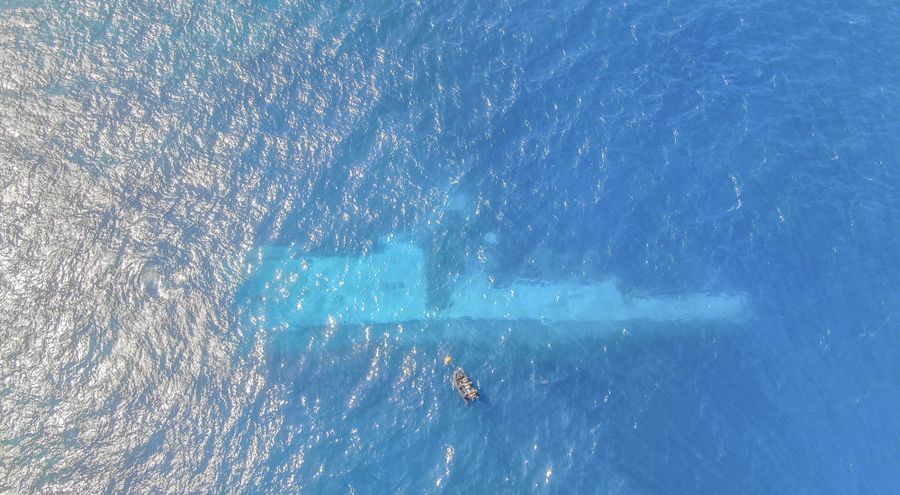
One year has passed since the New Zealand Navy vessel Manawanui struck the Tafitoala reef off the south coast of Upolu and sank, destroying 5,000 square metres of reef, roughly half the size of Eden Park, and releasing hundreds of thousands of litres of diesel and oil into surrounding waters.
Communities in the Safata district were locked out of their traditional fishing grounds for six months after the sinking, and residents say the fish have yet to return. Local business owners and a prominent marine scientist are now speaking out, frustrated at how little information has reached those most directly affected.
Ulugia Su'a Jay Ah-fook Schuster runs the Maninoa Ocean Club in Upolu, just a few villages from where Manawanui came to rest on the seabed. With the New Zealand government having paid $6 million in compensation to the Samoan government, his overriding concern is that the money reaches ordinary people rather than disappearing into official channels.
"Into the villages, not just up, you know, with the high chiefs and the government departments, but I think it should really spread out to the actual people," he said. "Apart from the people that fish out that area, the people that have to buy from the people that were fishing, prices went up because they were now going further away from where they normally fish."
Schuster is equally frustrated by what he describes as a near-total absence of communication from either government. "Sad and disappointing and again, I don't see why it's so hard not just to explain or let us know what is actually happening from both governments," he said. "We even had your prime minister come over and he never made an effort to come out to the village, and we haven't received an apology."
He also noted that local business owners were given no say in the decision to leave the wreck of Manawanui sitting on the Tafitoala reef at a depth of 35 metres. "Everything's been taken off, but the job hasn't been completed, and you know it's open for incidents to happen, and we don't know whether they're going to come back and finish it off or a local company is going to do it."
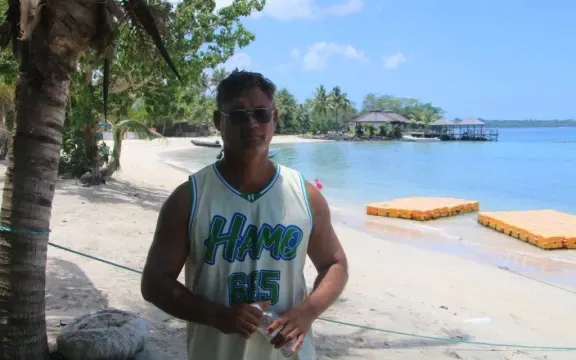
Brent Ross operates fishing and surfing tours through Outdoor Adventures in Samoa, and says many locals want the wreck removed. A 2-kilometre exclusion zone around the sunken vessel remains in place and has pushed his operating costs higher. "We've got to go all the way around that zone to get from A to B, adds travel time, adds fuel expense," he said. "Normally, travelling between the surf spots, you know, we'll do a bit of fishing along the edge of the reef and that and we just can't do that at the moment."
In the months immediately following the sinking, Ross was forced to pay another operator to transport his guests, and at one point he considered shutting down entirely. He welcomes the New Zealand government's compensation commitment but is sceptical about how effectively it will be distributed. "New Zealand's come to the party there and it's a matter of waiting for the Samoan government to virtually pass that through Parliament and implement compensation," he said. "Not holding my breath."
Paul Irving brings four decades of experience working on major maritime pollution incidents worldwide, including the Rena and X-Press Pearl. Until May this year he held the role of Maritime Pollution Project Officer at the Secretariat of the Pacific Regional Environment Programme (SPREP), and he too has concerns about Manawanui remaining where it lies.
"One of the rules about vessels is that waves touch the bottom at seven times the height of the wave," he explained. "So a five metre wave, you know, a storm wave, will touch the bottom at 35 metres... the vessel could bounce."
Irving acknowledges there is potential to develop the wreck as a tourist diving site, but argues it would need to be properly secured first to prevent divers becoming trapped. He is also troubled by the fact that no environmental impact report on the sinking has been released to the public. Such data, he says, would be valuable well beyond Samoa's shores. "It's unfortunate, but it would be nice eventually for that work to be in the public domain it is really important scientific data about the nature of the oil spill," he said. "The lessons to be learned from that environmental report will be important for other Pacific Islands and other places with coral."
While other incidents he has worked on involved larger diesel and oil releases, Irving says the sinking of Manawanui was devastating in ways that are difficult for outsiders to grasp.
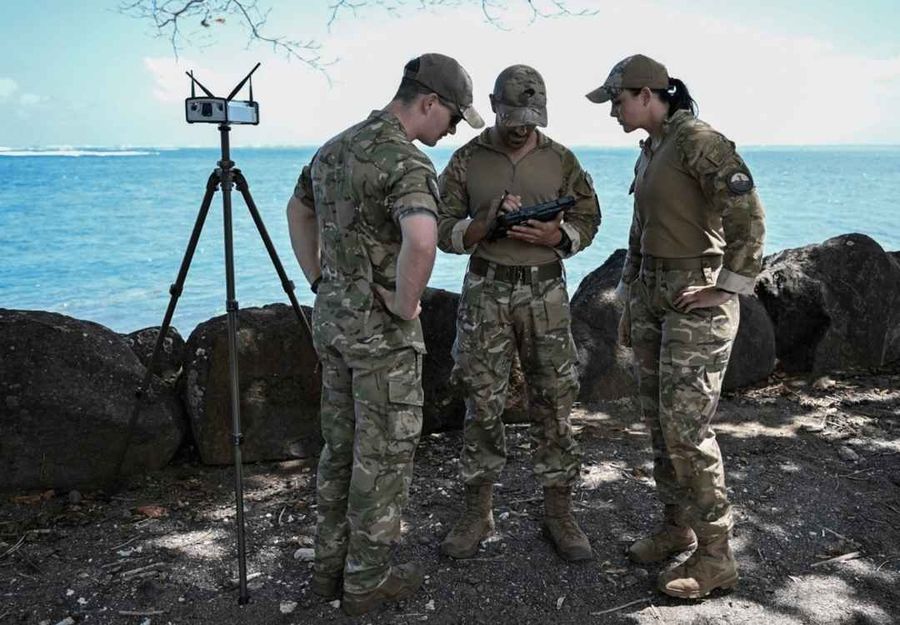
"It impacted those people so completely from a cultural and socio-economic point of view, which I think a lot of people in New Zealand and other countries don't understand, that was those people's backyard," he said.
In a statement marking the anniversary, New Zealand Defence Force HMNZS Manawanui response lead Captain Rodger Ward acknowledged that significant work remains ahead. "That work includes progressing an independent wreck assessment together with environmental studies," he said. "This information will be essential in supporting decisions about the future work required. The priority remains, as it has been throughout, to minimise any environmental impacts of the sinking, and to support the government of Samoa in its response."
Ward also reflected on the broader human dimension of the past year. "One year on we recognise the impact that the sinking has had on the people of Samoa, particularly the communities of the South coast, and also the support the NZDF has received from the government and people of Samoa in dealing with the aftermath," he said.
The New Zealand government has paid the Samoan government $6 million in compensation following the sinking of HMNZS Manawanui.