Few production yachts earn the enduring loyalty that the Cavalier 39 commands among serious bluewater sailors. The largest hull ever to leave the Cavalier Yachts yard, it holds a distinctive place in New Zealand maritime history, and its reputation shows no sign of fading.
The origins of the Cavalier name trace back to a partnership between Peter K. Smith and John Salthouse, who established the business together as Salthouse Custom Glass Boats Ltd. When the two went their separate ways amicably, Smith continued alone under the Cavalier banner, eventually building the company into the largest production boatbuilder in the Southern Hemisphere, a title it held through the 1970s. The collapse came swiftly and from an unexpected direction: in 1979, Prime Minister Robert Muldoon introduced a 20% sales tax surcharge on domestic boatbuilding, wiping out Cavalier's competitiveness in international markets almost at once. Orders evaporated, and the company went under. The design itself refused to die quietly. Jim Lawry revived it through Export Yachts Ltd, and the Cavalier 39 found a willing audience in both Australia and the United States, leaving open the question of what the wider industry might have achieved without that untimely fiscal intervention.
Bob Salthouse drew the lines of the 39, and approximately 84 hulls are believed to have been completed. The original intention was a competent family cruiser rather than a race boat, yet the offshore credentials are genuine. Sailor Doug Esterman made that case convincingly by choosing a custom Cavalier 39 as his entry for the demanding 2026 Solo Trans-Tasman Yacht Challenge, citing the design's ability to handle Tasman Sea conditions with reasonable comfort.
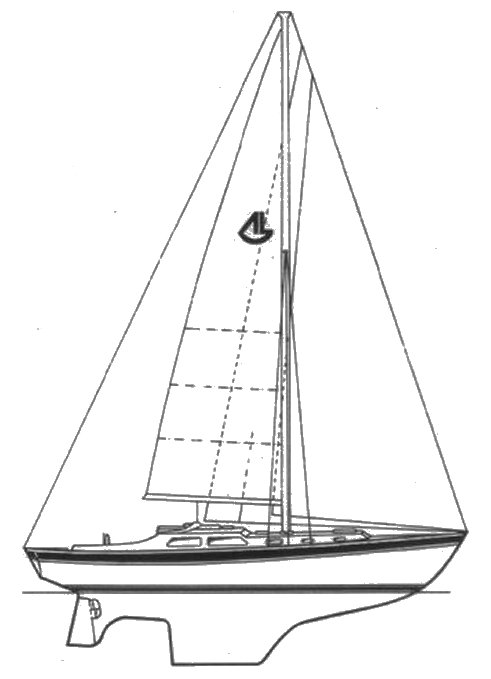
The hull numbers back that judgement. At 8,482 kg displacement, with a beam of 3.45 metres and a draft of 1.83 metres, the boat carries real substance. Water capacity is approximately 400 litres and fuel capacity is 289 litres. For offshore sailors, the figure that matters most is the Capsize Screening Formula score of 1.79. Naval architecture convention treats anything below 2.0 as evidence of strong stability and meaningful resistance to capsize in rough conditions, and the Cavalier 39 sits comfortably within that threshold. Later Mark II versions pushed the design further still, with a deeper keel and increased ballast contributing to a better righting moment and greater confidence when conditions turn serious.
Three Mark II examples are currently available for sale. Each shares the familiar layout, a U-shaped galley to port, a dedicated chart table, a central saloon, and a single head, but each also brings its own history, upgrades, and personality.
| YEAR | PRICE (NZD) | ENGINE | STANDOUT FEATURE |
| 1983 | $59,990 | Perkins M60 60hp | Professional osmosis treatment |
| 1989 | $67,000 | Perkins 4108 | Custom wood interior, 1.97m headroom |
| 1982 | $79,900 | Beta 50hp (2022) | Near-new engine (36 hours) |
Listing details supplied by vendor. Boating NZ has not independently verified specifications or pricing. Contact the vendor directly for full details.
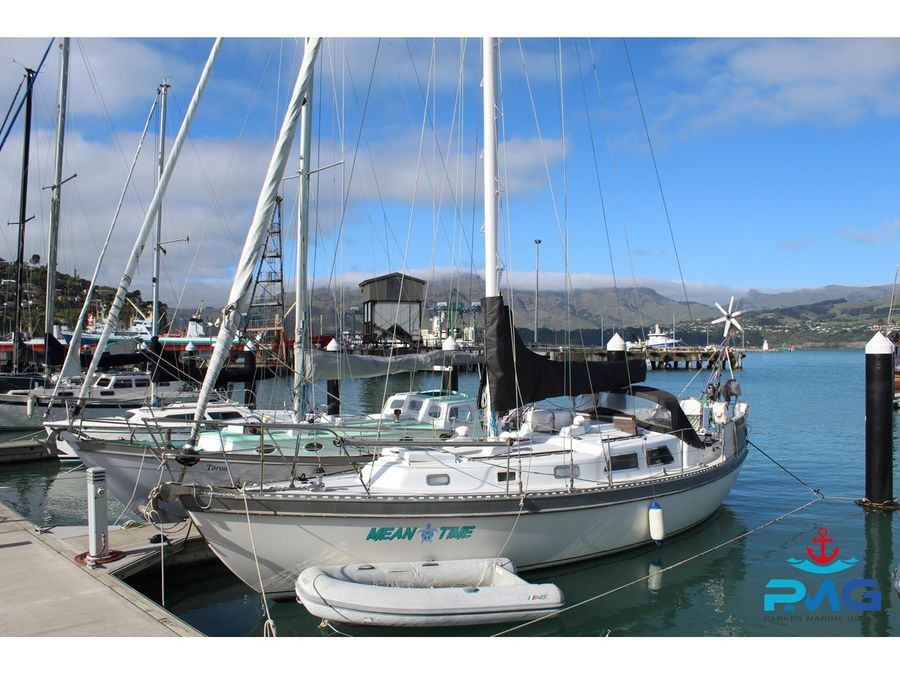
Mean Time, a 1983 Cavalier 39 Mk II located in Auckland and priced at $59,990, is powered by a 60hp Perkins M60 that was fully reconditioned in 2013 and has accumulated only 750 hours since that rebuild. Below decks she offers full headroom, a forward V-berth, a double quarter berth, and sleeping for six in total. An osmosis treatment carried out professionally in 2022 provides structural confidence, antifouling was applied fresh in January 2025, and a complete sail wardrobe including Cat 1 safety equipment is included in the sale.
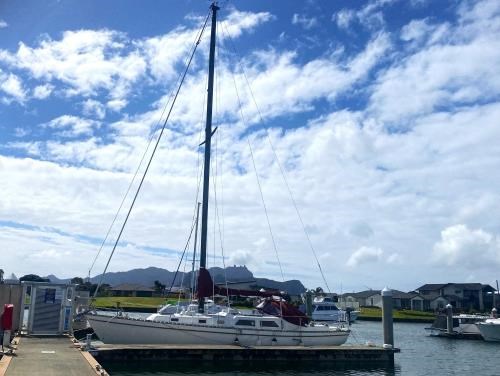
The second boat is a 1989 custom Cavalier 39 asking $67,000, launched by Export Yachts and presenting a noticeably different character. Her white hull with dark blue trim encloses a custom timber interior, and headroom of 1.97 metres gives the cabin a genuinely airy quality. A double berth and chart room are positioned aft to starboard, a second cabin sits forward, and there is a hot standing shower aboard. The engine is a Perkins 4108, fitted with a new gearbox in May 2022. Self-sufficiency features are strong: three 100W solar panels, a universal cable setup, AGM house batteries, a dodger, a bimini, an electric winch, and a dinghy with outboard are all included. Buyers also have the option of purchasing a mooring in Matawhi Bay, Russell.
At $79,900, the third listing is a 1982 custom Cavalier 39 Mk II, immediately distinguished by its dark blue hull with white trim. The mechanical highlight is a 50hp Beta diesel fitted in 2022 that has logged just 36 hours since installation. Berths come in a flexible two-double, two-single arrangement, all newly upholstered. The cutter rig carries a mainsail that was new in 2021, backed by six winches, and the deep-keel, high-ballast configuration keeps the offshore intent front of mind. A wind generator, solar power, a 12V freezer, new hull paintwork completed in 2024, and a full electronics suite covering autopilot, GPS plotter, and fishfinder round out a well-prepared package.
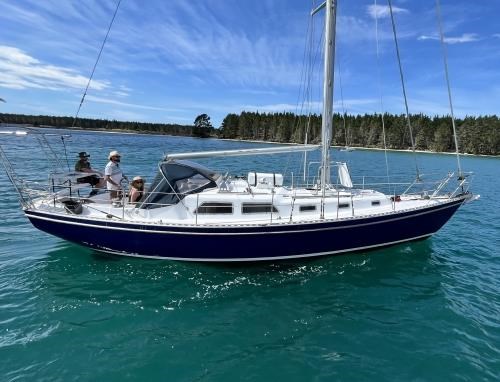
The three boats offer genuine variety within a shared foundation of quality. The 1982 example brings a near-new engine with minimal hours, the 1983 vessel offers the peace of mind of recent osmosis remediation, and the 1989 liveaboard delivers exceptional headroom and craftsmanlike interior work. All three are heavy, purposefully built yachts conceived from the outset for serious passages. Cavalier 39s in sound condition, and with histories like these, seldom linger on the market for long.