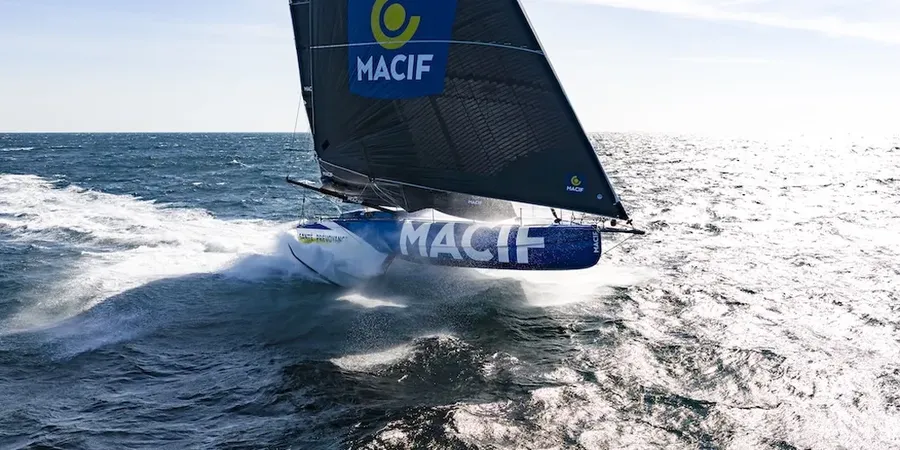
Sam Goodchild holds a clear lead on the tracker as the fleet approaches the finish at Sables-d'Olonne, but a sprawling area of light winds building across the Bay of Biscay could overturn the standings entirely before a single bow crosses the line. Race meteorologist Christian Dumard and race officials have flagged this zone as the critical wildcard of the closing stages, one with enough reach to reshuffle positions all the way to the finish.
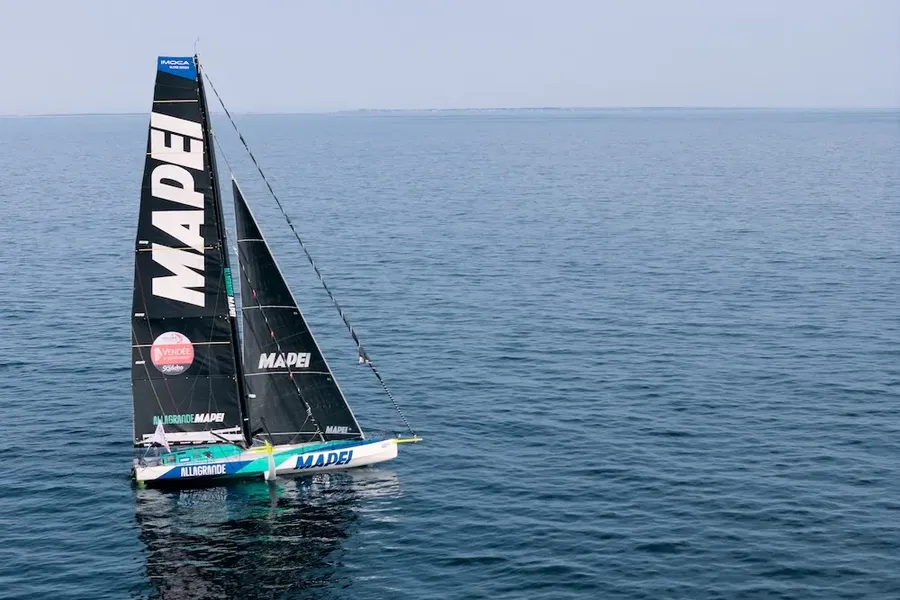
By Sunday evening the light-wind area will stretch from north of Finistère down to the latitude of Bordeaux, then creep eastward towards the finish through Tuesday morning. Dumard characterises the pattern as typical for the summer season, though that offers little comfort to the five leading skippers who must pick their way through it. With boat speed largely neutralised, route selection and instinct become the decisive factors. What remains of this race resembles a chess match far more than a sprint for the line.
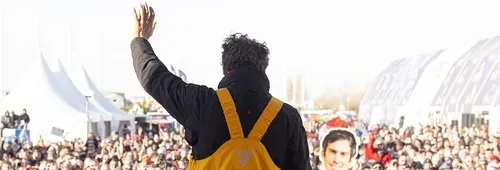
Nobody in the fleet carries more exposure to that light-wind zone than Goodchild himself. As the first to enter it, he has no reference points and no opportunity to watch a rival's angle succeed or fail before committing to his own. The skippers behind him enjoy precisely that luxury, free to read what unfolds ahead and adjust their positioning accordingly. Should Goodchild sail into dead air while the chasing group locates better pressure, a margin built across the full length of the race could vanish inside a single afternoon. Leading the fleet into this situation means leading it blind.
Compressed finishes have become a defining characteristic of modern IMOCA racing, and the Vendée Arctique appears headed towards exactly that kind of conclusion. The Bay of Biscay is notoriously fickle even in summer, and no lead is secure in those conditions. NZST arrival estimates have been pushed back repeatedly as light winds slow progress, a pattern that has become something of a running joke among those following the race closely. The skippers chasing Goodchild are not simply trying to close a gap in distance. They are hunting for the right patch of pressure, the angle that could carry them to the front at precisely the moment it matters most.
The outcome of this finish no longer hinges on which boat is quickest through the water. It comes down to who reads the shifting wind most accurately, who holds their nerve when conditions rewrite the picture without warning, and who is prepared to see every assumption about their race turned on its head in the space of a single afternoon. The final arrivals may well come as a cluster rather than a procession, and nothing about the result is settled yet.