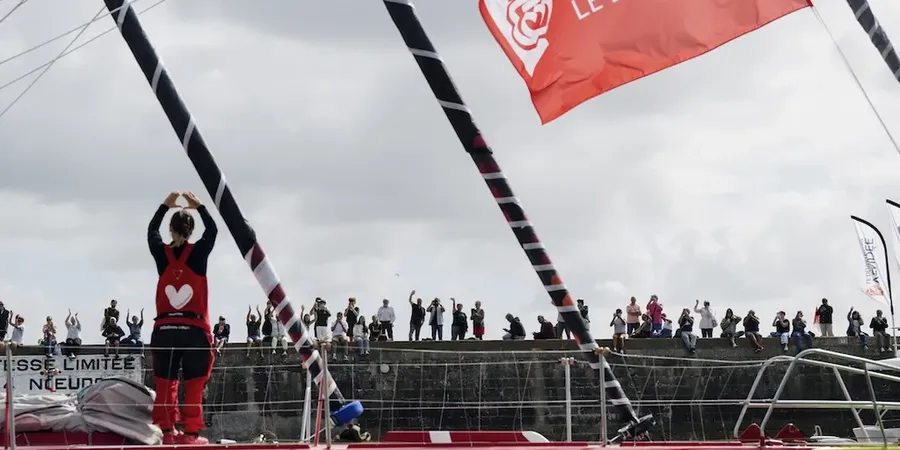
Nine IMOCA 60s departed into the Atlantic last Sunday, and Les Sables-d'Olonne sent them off in a manner nobody present will easily forget. Smoke canisters erupted in bursts of colour above the channel, a crowd stretching two kilometres along the banks made a noise that seemed almost solid, and thousands of hands thrust upward as the fleet pushed through into open water. The Vendée Arctique 2026 was underway.
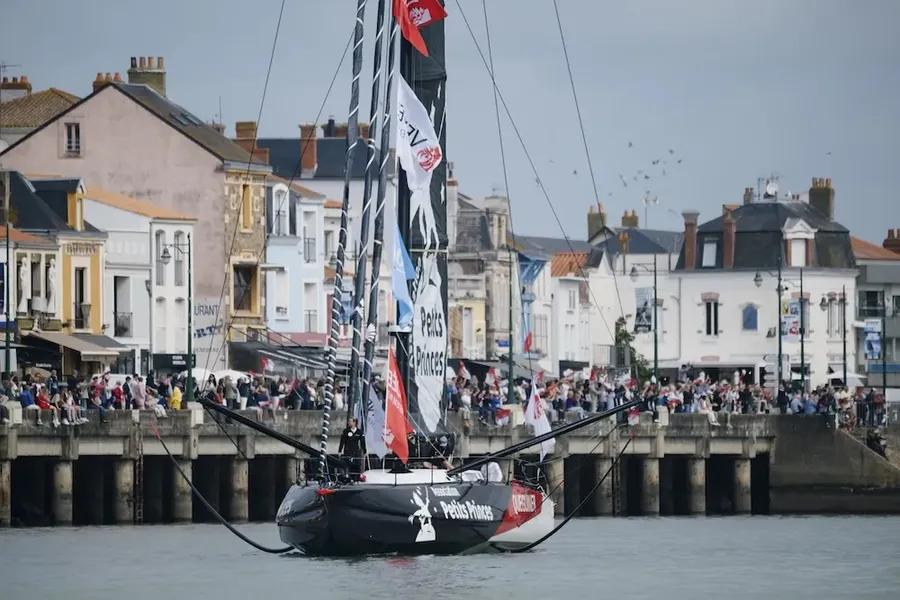
For something close to three hours, the channel compressed everything that defines the Vendée Globe spirit into a single Sunday morning. Not a single accessible metre of bank was left unoccupied. Banners swayed, individual voices dissolved into a collective roar, and on the deck of each boat the nine skippers wore expressions that told the same story: genuine emotion, barely held in check. The full weight of what lay ahead, a race reaching beyond the Arctic Circle and back, had not yet settled on their shoulders. But the faces lining that water were already being committed to memory.

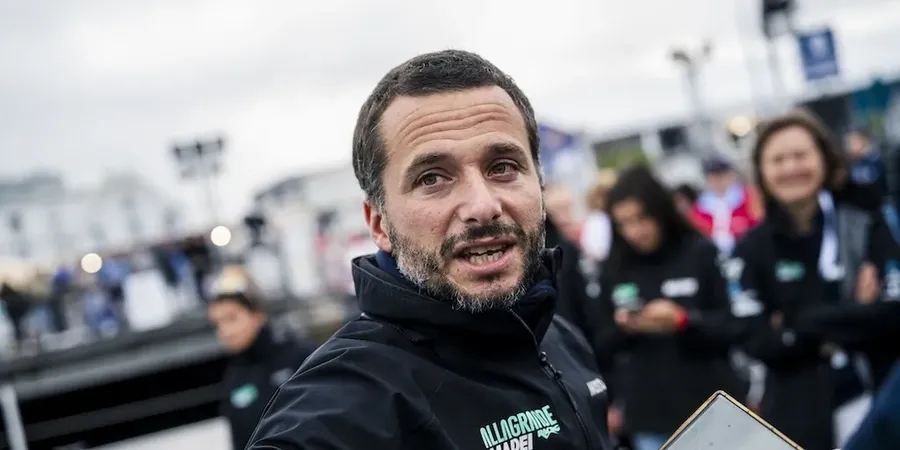
Of those nine skippers, Francesca Clapcich arrived with a particular point of comparison. Competing under the 11th Hour Racing banner, she had previously experienced a race departure of her own, having sailed the Solo Maître Coq singlehanded in a Figaro Beneteau. She thought she understood the ritual. Leaving on an IMOCA bound for polar latitudes, flanked by that volume of people pressing in from both sides of the channel, turned out to be something of a different order altogether. "It's always a magical moment," she said. "But doing it again in an IMOCA, that's something else entirely. It gives you the shivers."
By Monday afternoon, the magic would have yielded to necessity. Strengthening winds were forecast, and with them would come the shift from spectacle to the unforgiving mechanics of offshore racing. That is the point at which singlehanded sailing reduces itself to its core: weather patterns, sail trim, boat management, and the steady accumulation of miles pushing northward across open water.
There is a peculiar disconnection at departures like this one. From the dock and among the crowd, the moment feels entirely self-contained. It holds something real: the courage required to point a boat toward the unknown, the community that coalesces around those who do it, the way nine people and nine vessels can come to represent something far greater than a race. Out on the water, that same moment dissolves almost at once into fatigue, routine, and cold calculation. The skippers carry those cheering faces with them northward, stored somewhere beneath the press of everything else that demands attention. By the time Les Sables-d'Olonne sees them return, the Arctic will have worked on them in ways the crowd on that bright morning could only begin to imagine.