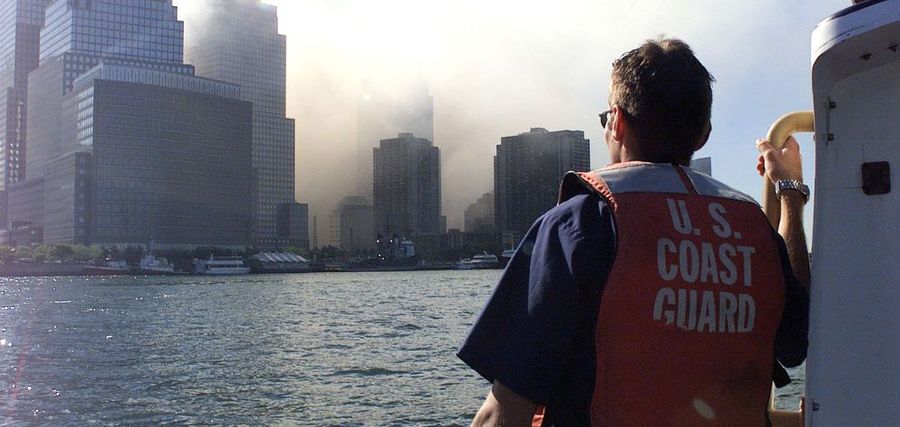
On September 11, 2001, as the World Trade Center burned and escape routes from Lower Manhattan closed, hundreds of thousands of people turned towards the water. Ferries, tugboats, fishing boats, fireboats and private vessels responded, forming an improvised fleet that evacuated hundreds of thousands in a matter of hours. It became what the US Coast Guard describes as the largest maritime evacuation in recorded history.
On the morning of September 11, Captain Rick Thornton was at the helm of the NY Waterway commuter ferry Henry Hudson, working the Hudson River between Manhattan and New Jersey. It was a clear morning, and Thornton was making his usual run when he heard an aircraft flying unusually low.
At 8.46am, American Airlines Flight 11 struck the North Tower of the World Trade Center. Thornton initially thought he had witnessed a terrible accident, but 17 minutes later United Airlines Flight 175 struck the South Tower.
With Lower Manhattan rapidly becoming isolated, Thornton turned Henry Hudson south. Speaking to Sally Helm for HISTORY This Week, Thornton recalled that he did not wait for instructions. He told his crew they needed to get there immediately.
Manhattan becomes an island
As the attacks unfolded, getting out of Lower Manhattan became increasingly difficult. Roads were disrupted, bridges and tunnels closed to traffic and rail services affected. With thousands of people moving away from the World Trade Center, many headed towards the waterfront.
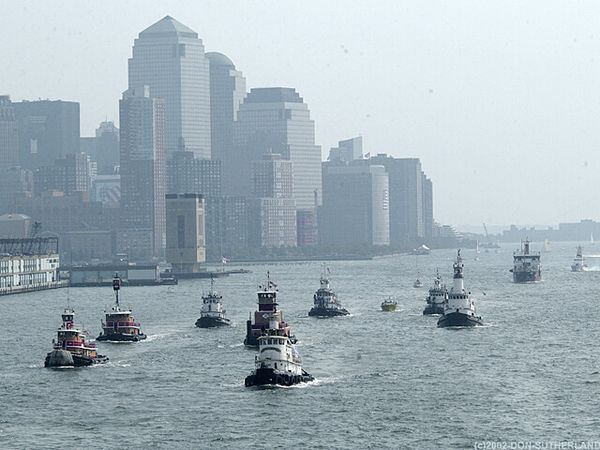
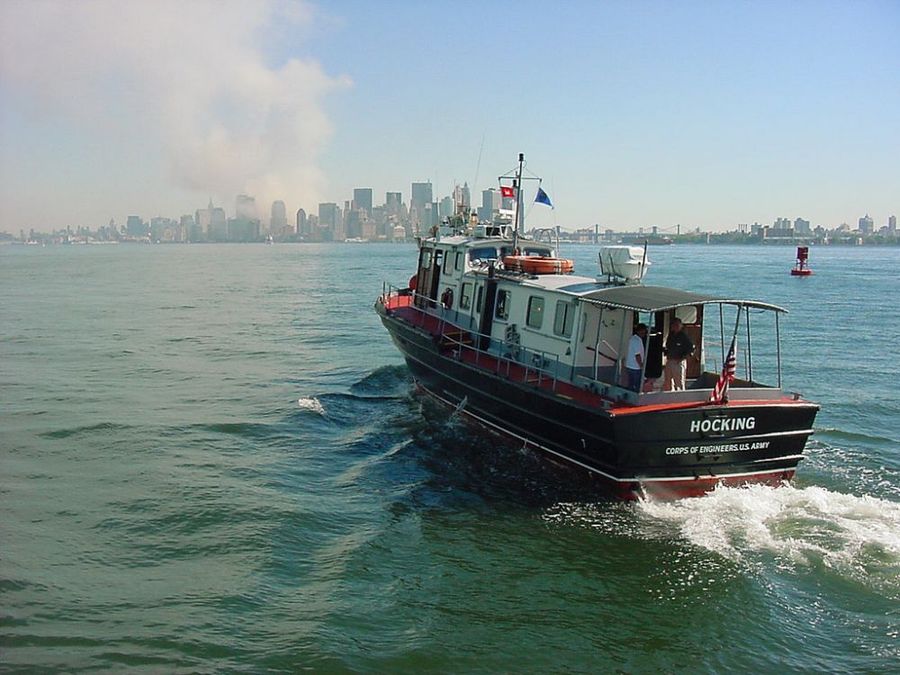
New York Harbor was still operating, with commuter ferries, tugboats, sightseeing vessels, fishing boats, fireboats, police launches and private craft on the water. Writing for HISTORY ahead of the 25th anniversary, Kieran Mulvaney reported that an impromptu flotilla had been evacuating people for close to two hours before the Coast Guard issued its request for all available boats at 10.45am.
NY Waterway port manager Michael McPhillips took two mechanics as deckhands, commandeered the ferry Frank Sinatra and headed for the World Financial Center. Spirit Cruises operations director Greg Hanchrow borrowed a speedboat to reach his dinner cruise vessels at Chelsea Piers, then put three of them into evacuation work.
Even the retired 1931 fireboat John J. Harvey, preserved as a living museum, returned to work. Its volunteer crew used the boat's pumps to draw water from the Hudson and support firefighters ashore.
The waterfront becomes a terminal
Aboard Henry Hudson, Thornton's crew spotted people swimming in the river as they approached Lower Manhattan and pulled two aboard using the ferry's rescue ladder. Thornton then manoeuvred towards a stone seawall where thousands of people were waiting.
There was no dock.
People climbed over a fence towards the ferry. Thornton remembered a woman with a broken leg coming over the railing and landing on a deckhand, while passengers helped people with disabilities aboard and a woman with a guide dog was passed towards the vessel through the crowd.
The 9/11 Memorial & Museum records Henry Hudson's passenger capacity as 399. Thornton recalled carrying well beyond that during the evacuation before taking his first load across the Hudson to Hoboken.
Similar improvisation was taking place elsewhere. Mulvaney describes NYPD Harbor Unit senior pilot Tony Sirvent using an aluminium launch and a rope to pull down wooden fences blocking access to the water. Other barriers were cut through, while damaged communications sometimes left mariners coordinating boat movements with hand signals.
Draught determined where vessels could get close to shore, while freeboard and boarding arrangements affected how easily evacuees could get aboard. Ferries offered the greatest capacity and crews accustomed to rapid passenger movements. In an ABC News report marking the 25th anniversary, Pete Johanson recalled that NY Waterway's larger ferries could carry around 400 passengers and were sometimes filled in less than two minutes.
Once loaded, the ferries crossed to New Jersey, discharged their passengers and returned.
All available boats
At 10.45am, the Coast Guard broadcast its request for all available boats willing to assist and directed vessels towards Governors Island. With dozens already working, attention turned to coordinating the growing fleet.
Coast Guard on scene commander Lieutenant Mike Day brought in the Sandy Hook Pilots, whose knowledge of harbour depths, hazards and berths helped match vessels with places they could safely operate. Mulvaney puts the eventual response at roughly 800 mariners aboard at least 150 vessels.
Ferries brought passenger capacity, tugs powerful manoeuvrable platforms and professional crews, while fishing boats, charter vessels and private craft added smaller options. Fireboats supported operations ashore as well as moving people and equipment.
Receiving points in New Jersey handled those coming ashore, while first responders, federal personnel and supplies travelled in the opposite direction. Smoke, ash and debris swept across the harbour following the collapse of the towers, dramatically reducing visibility as increasing numbers of vessels converged around Lower Manhattan. Thornton recalled radar targets closing around Henry Hudson and almost colliding with a police boat in near zero visibility.
Going back
Thornton was crossing towards New Jersey with hundreds of evacuees when the South Tower collapsed. People aboard were crying, praying and trying to contact their families. After reaching New Jersey, some asked what they owed for the trip. The crew told them there was nothing to pay.
Then Henry Hudson returned to Manhattan.
Thornton and his crew went back through smoke, ash, soot and debris, collecting more people at Pier 11 near Wall Street. Some arrived covered in dust and removed contaminated clothing as they boarded, with crew and passengers offering them clothes. The North Tower collapsed while the ferry was again operating in the area, but Thornton continued making crossings.
Captain James Schneider was aboard the fishing boat James Joseph II off Norwalk, Connecticut, when his brother, an NYPD detective, called with news of the attack. Schneider later told ABC7 New York that he landed his fishing customers, assembled a crew of 13 and headed for New York.
He watched the towers collapse during the journey and spent 17 hours at the helm after joining the evacuation. Among those his boat carried was a woman eight months pregnant. Years later she recognised James Joseph II at a marina and introduced Schneider to the daughter she had feared losing that day.
Hundreds of thousands by water
No definitive passenger count exists. The National September 11 Memorial & Museum estimates that 300,000 to 500,000 people were transported to safety by water in less than nine hours. Mulvaney puts the figure at nearly 500,000, while the US Coast Guard records more than 500,000 in less than eight hours and describes the boatlift as the largest maritime evacuation in recorded history.
Thornton recalled making around 20 trips, a figure also recorded by the 9/11 Memorial & Museum. Johanson estimates that NY Waterway's fleet transported about 200,000 to 220,000 people that day, compared with around 33,000 passengers on a normal day.
For scale, Operation Dynamo evacuated 338,226 Allied personnel from Dunkirk over nine days in May and June 1940. The New York boatlift unfolded in hours.
Twenty five years later
Thornton spent around 11 hours on the water that day and returned the following morning to carry first responders and supplies. In the days that followed, he transported New York Mayor Rudy Giuliani, US senators and families of people killed in the attacks. Regular ferry services resumed about a week later.
He remained a ferry captain, occasionally meeting passengers who recognised him years afterwards. One piece of Henry Hudson also survived. In 2024, the 9/11 Memorial & Museum's Felicity Richards recounted how Thornton noticed the American flag at the ferry's stern when he finally docked that evening. It was covered in dust and damaged from the day's events, so he took it home rather than risk it being discarded.
Thornton kept the flag for more than two decades. In October 2023, he donated it to the National September 11 Memorial & Museum.
| From WorkBoat, here is an in-depth account written by Joel Milton just weeks after 9/11 and republished for the 25th anniversary. Drawing on interviews with ferry captains, tug crews, Coast Guard personnel and other mariners who took part, it gives a remarkable contemporary account of how New York Harbor's working boats were mobilised, what crews encountered at the Manhattan waterfront, and how the evacuation unfolded on the water. Read the WorkBoat article. |