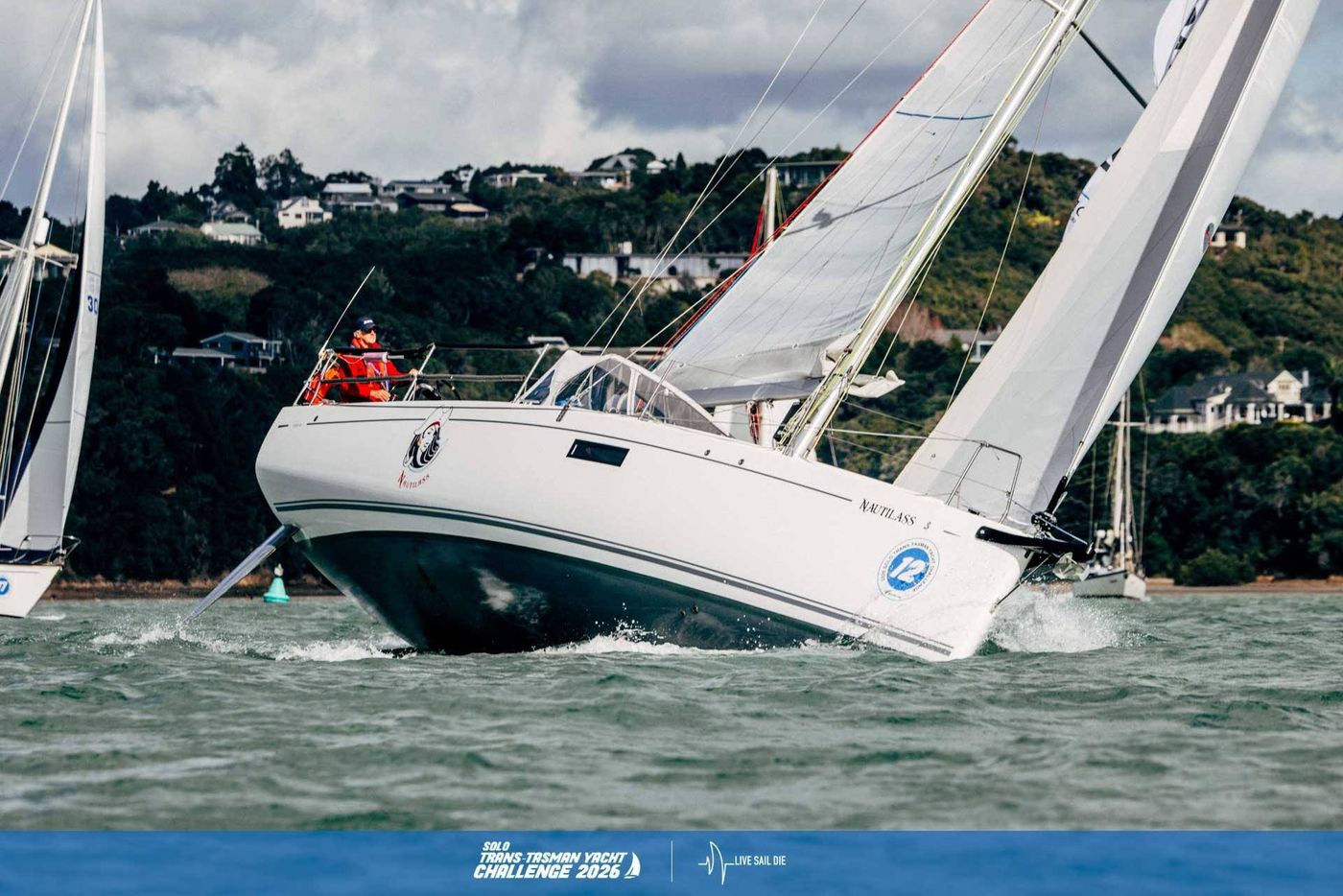
Terry Dunn crossed the finish line at Southport at 04:47 on Tuesday 9 June, NZST, nine days, sixteen hours, and forty-one minutes after departing Opua. The 1,362-nautical-mile crossing was completed single-handed aboard Nautilass, a Beneteau First 36 borrowed from an Australian racing friend. His elapsed time of 9 days 16 hours 41 minutes and 31 seconds translated to a PHRF corrected time of 7 days 23 hours 44 minutes and 17 seconds, placing him eighth overall on line honours and sixth on monohull PHRF handicap at the time of writing, with Diablo, Smoko, and Fair Seasons still at sea.
The story of how Dunn came to be aboard Nautilass rather than his own boat begins weeks before the start. He had spent three months getting Marara, his Sparkman and Stephens 34, ready for the 2026 Solo Trans-Tasman Yacht Challenge. The mast came out, the rigging was redone, and the systems were worked through one by one. Marara was close to ready when an Australian racing friend raised the prospect of the Hamilton Island and Airlie Beach circuit and put forward Nautilass, his Beneteau First 36, as the boat for it. The idea had a certain logic, but in practice it meant beginning the preparation process again with very little time remaining.
Nautilass presented complications almost immediately, among them a mast crane that had to be pulled before anything else could proceed. Dunn worked against the clock and made the start line regardless.
What the Tasman served up over the following nine-plus days was unsparing. The first night alone was horrendous, with 50-knot squalls hitting while he was still trying to get sails down. There was nothing to be done but lay the hull over and blow sideways. "All I could do was lay a hull, just get the rig off and just blow sideways." The wind shifts Peter Elkington had named crazy Ivans were relentless, jumping from 20 to 40 knots with no warning, triggering crash jibes, chaos, water everywhere, before settling back to calm just as suddenly. "What was that all about?" Those experiences left Dunn gun-shy after dark for most of the crossing, his eyes drawn to cloud formations building on the horizon and his mind fixed on what they were likely carrying.
In the final days, the autopilot suffered what he described as a "brain fart", forcing him onto the helm by hand for hours at a stretch. The AIS chose the same moment to pack up, an unwelcome development as he approached the Australian coast with shipping in the vicinity. "Long, tiring day. Running out of enthusiasm at night." A good sleep and a boat that came right got him moving again, and he charged for the finish.
Passing Middleton Reef two nights out from Southport, his thoughts turned to Bill Belcher, the sailor who had wrecked on that reef in the early years of the race, drifted in a life raft for three weeks, and was eventually found with a bag containing his suit because he wanted to be dressed properly for the prize giving. Dunn wasn't sure he had brought his own suit.
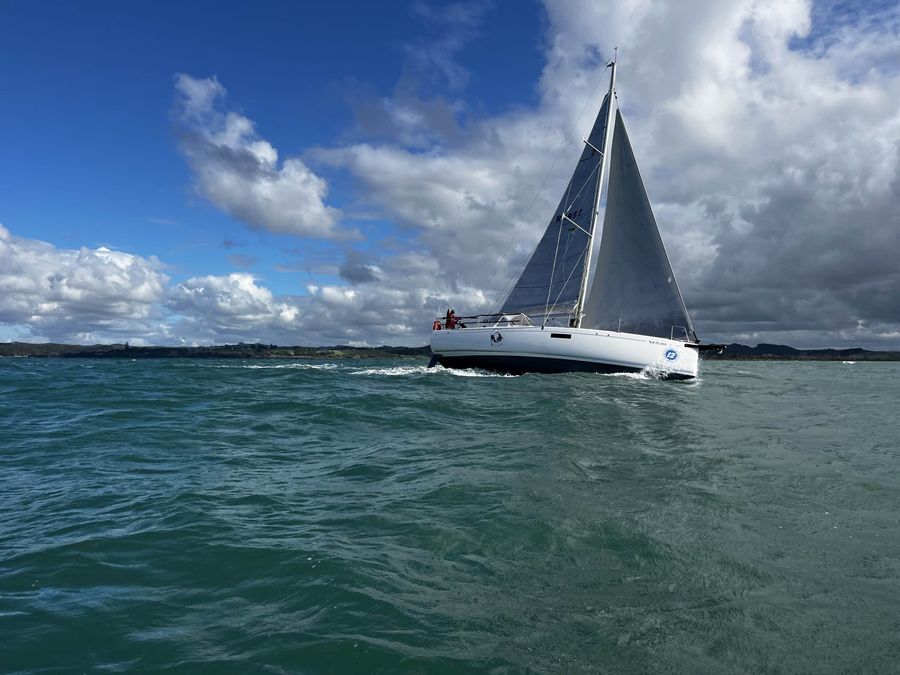
Throughout the crossing he had been trying to close the gap to Geoff Thorn's Catnip. Each day he convinced himself the gap was closeable. Each night it remained the same. "This boat's good downwind, it should be perfect for me. Last night we were doing tens and twelves. I'm thinking we're going to catch up. Geoff's going to look out his hatch and there's going to be Nautilass right behind him. But every day, same thing, 40 miles in front." Catnip crossed the line a few hours ahead of him.
Dunn was warm about everyone who had taken part, reserving particular admiration for those at the back of the fleet. The race, he said, had matched all those trials from the history books: Graeme Francis taking on water and turning for shore, Bill Kidman pulling out, Glen Jeffery on Wave, Doug Esterman hand steering the last 400 miles with a broken autopilot, sick and exhausted, and still not missing the party. "The other sailors are amazing."
He had sailed a borrowed boat he barely knew, in conditions that have broken bigger and more prepared vessels, across 1,362 nautical miles of the Tasman Sea.