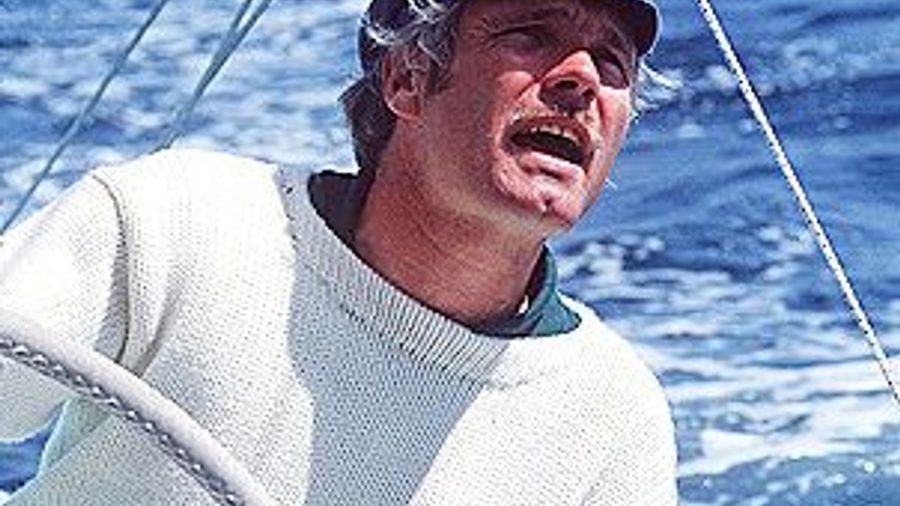
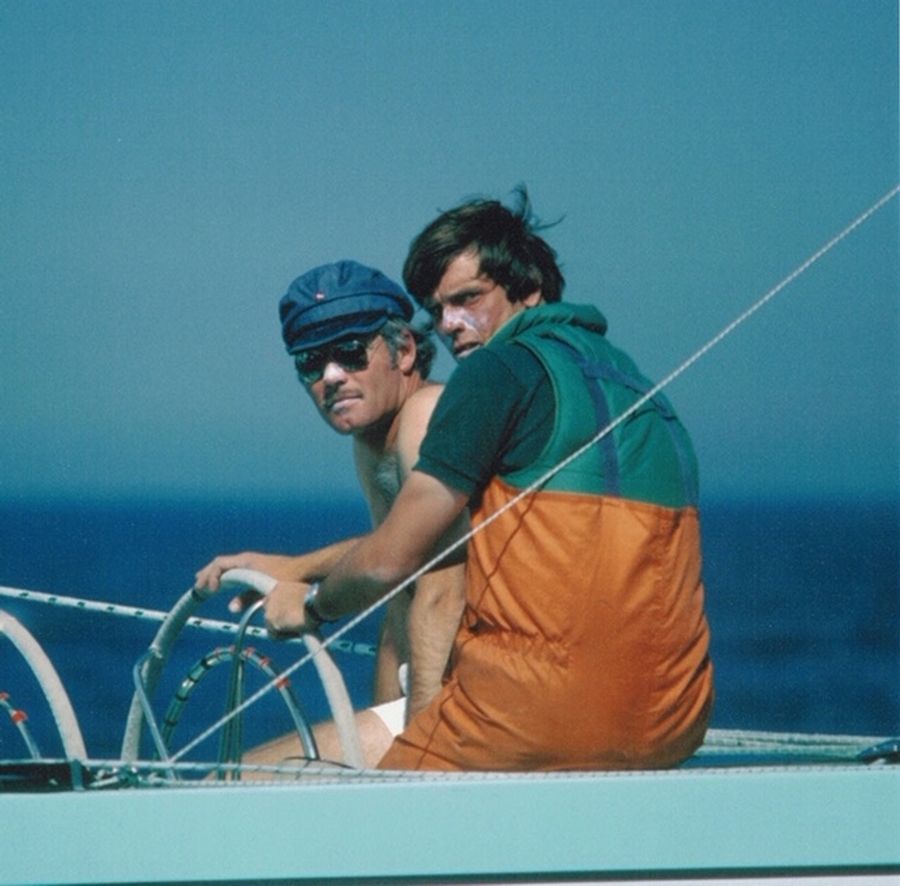
The sailing world stopped when news broke that Ted Turner had died at the age of 87. Among the many chapters of a remarkable life, his 1977 America's Cup campaign stands as one of the most compelling, and what follows draws on archive material from the America's Cup History records to revisit that defence, the trials that preceded it, and the match itself.
The defence trials that year were tighter than most had expected, and the New York Yacht Club's reservations about Turner personally never fully dissolved. Tactician Gary Jobson, reflecting on those weeks years later, described the atmosphere with characteristic candour: "I think the New York Yacht Club realised that Turner had the talent and the crew was good, and Courageous might be the right boat, but what about this mercurial southerner? Should he really be representing the New York Yacht Club in the America's Cup? I think those of us in the boat bet they were looking for any excuse to get us eliminated and the only way to keep going was to keep winning."
Courageous responded to that pressure with something close to ruthlessness, reeling off five straight victories at the start of the defence trials before eventually conceding a race to Independence. Enterprise endured a difficult opening stretch, losing consecutive races to Courageous before managing to split a double-race day with Independence. Lowell North continued making adjustments to Enterprise throughout the early weeks, but after another shared day against Independence and a pair of fog-enforced lay days, he was removed from his shoreside position. Halsey Herreshoff joined the afterguard, Malin Burnham took over as skipper, and yet the overhaul produced little in the way of immediate results. Turner moved quickly to take advantage of the uncertainty aboard Enterprise, winning twice when racing resumed and adding another victory the following day, this time against Independence.
Independence was deteriorating as a competitive force. Hood replaced tactician Scott Perry with Steve Van Dyck, but two further losses to Enterprise and a 1 minute 23 second defeat to Courageous left the straw-boater-wearing NYYC committee with little option but to thank Hood for his contribution and release Independence from the trials. Turner sealed the defence nomination on Tuesday 30th August 1977 with a tactically astute race against Enterprise, identifying the correct side of two shifts on the opening leg and sailing away to an unchallenged margin of 1 minute 26 seconds.
Across eleven races during the trials, Courageous had dropped just one. When the NYYC committee delivered the news of his nomination, Turner's words were those of a man fully aware of what the moment meant: "There will never be a time in my life as good as this time. I can't believe all this is really happening to me." At 38, and very much at the height of his powers, he now turned his attention to a challenger that had been watched closely from the American camp for some time.
Alan Bond's Australia campaign had been developing with real purpose, and the Courageous syndicate held no illusions that this was a significantly more serious proposition than Southern Cross had offered in 1974. In a move that attracted controversy, the Australians brought American match-racing specialist Andy Rose aboard as tactician just ahead of the semi-finals of the Challenger Series. Rose integrated well with skipper Robins, and the two established an effective working relationship. The stage was set for the 1977 Match.
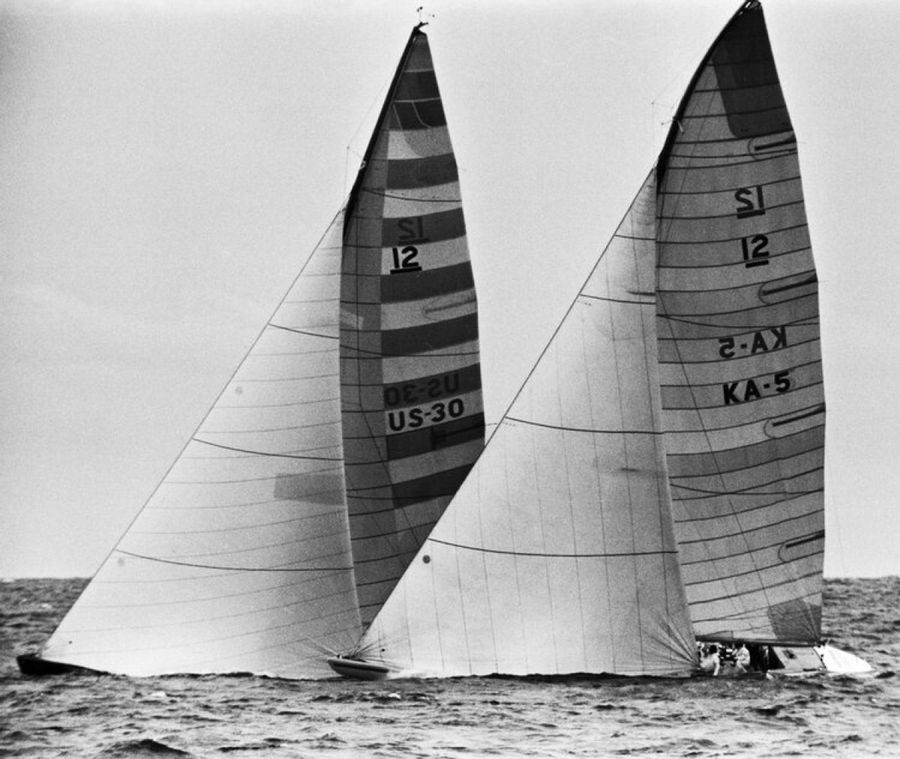
Newport was cold on 13th September 1977. A 12-knot southerly had filled in by the time both boats completed the tow out from their Rhode Island bases and arrived on the racecourse. The pre-start exchanges were combative, in keeping with the standards of modern match-racing, and with 30 seconds remaining both boats hardened up on timed runs toward the line on starboard tack. Jobson called for Turner to hold right, and in the closing seconds Turner swung onto port, leaving Australia to make for the pin end of the line.
Both boats crossed the start line late, but with a veer anticipated on the starboard layline, Australia came back to port to shadow Courageous after five minutes of upwind sailing. Courageous demonstrated a consistent ability to point higher, and the gap closed visually across a port tack leg that extended for around 17 minutes. When Courageous tacked, she was crossing Australia with ease, prompting Rose to call for a tack underneath in an attempt to secure a clean leeward position. The call arrived too late, and Turner simply let Courageous ride over the top, smothering the Australian sails. Robins tacked away at once, a move Turner elected to ignore, instead sailing out of phase toward the windward mark. It was brilliant tactical work for the conditions. Courageous rounded the first mark 1 minute 8 seconds clear, then set her spinnaker with crisp execution as she bore away onto the reaching leg toward the wing mark.
The offwind pace Australia had been expected to show failed to materialise on either reaching leg, and Courageous extended to 1 minute 23 seconds at the first leeward mark. A favourable 20-degree windshift tightened matters on the following beat, but Jobson had been quietly noting Australia's boat speed during training weeks earlier and had kept that information to himself. The confidence it provided showed on the final run, where Courageous edged further ahead before pulling clear to the finish. The winning margin was 1 minute 48 seconds, with the Australians pointing to their headsail selection as a factor in the defeat. A lay day was called.
Race two, set down for 15th September 1977, was abandoned when the 4.40pm time limit expired. The same underlying dynamic had already been establishing itself, with Courageous simply pointing higher upwind and Australia unable to match it. When the race was re-run in just 11 knots of unstable southerly air, those conditions should theoretically have favoured Australia, precisely the kind of sailing designers Ben Lexcen and Johan Valentijn had built the boat for.
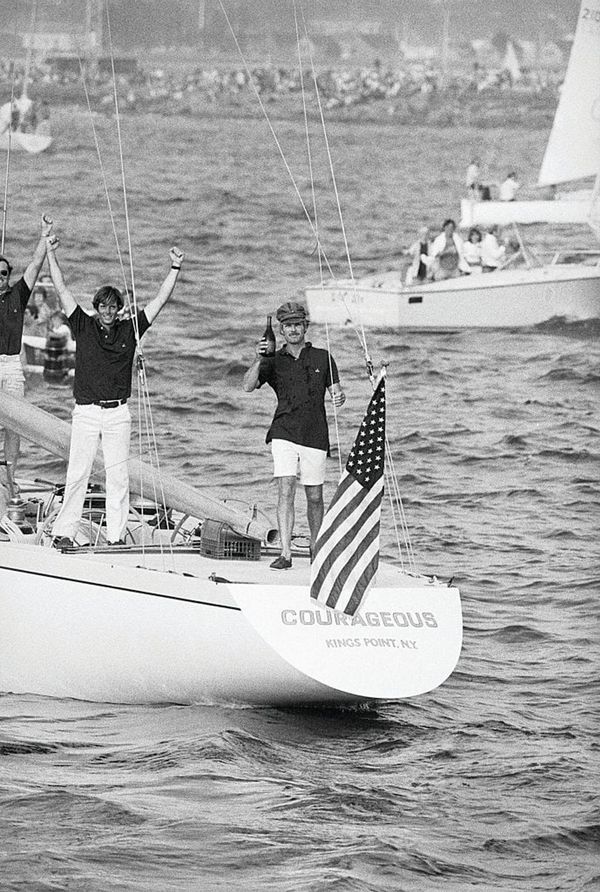
Turner converted the pre-start into an advantage regardless, trailing Australia toward the committee boat before gybing first and taking up a position to leeward, trusting Courageous to hold her lane and build from it. Australia sat firm to windward in the opening minutes, and when Courageous tacked back onto port and found she could not cross, Turner chose to drive hard underneath Australia in a lee-bow tack rather than yield ground. It was the decisive move of the race. Forced to tack away, Australia also changed headsails in the process, a delay from which she never recovered. Courageous led by two minutes at the top mark.
The Australians were far from done. Despite rounding the leeward mark after the first two reaches some 2 minutes 48 seconds behind, they clawed back 30 seconds on the second beat. With the wind building to 15 knots for the run, a further minute was recovered, setting up a final beat with genuine tension remaining. Courageous covered carefully and won by 1 minute 3 seconds. The defence was 2-0.
Race three arrived in classic late-summer Newport fashion, fog slow to dissipate and a light mizzle hanging over an 8-knot unstable south-westerly. The pre-start was relatively quiet, with neither boat managing to engineer the kind of confrontation that might have decided the advantage early. In the closing moments, Courageous had found a position to leeward and ahead on starboard tack, leaving Noel Robins little choice but to wheel away onto port, crossing some six seconds behind and heading right. Turner and Jobson, reading the veering wind correctly, tacked over after just 45 seconds and settled into what became a lengthy drag race to the west. Both boats picked up favourable shifts at various points, and a noticeable header at one stage offered Australia an opportunity to engage. Robins and Rose chose not to take it, reasoning afterwards that they could not have crossed, though crossing was never actually what the moment required. When the breeze swung back in Courageous's favour, the race was effectively over.
Turner and Jobson were working in near-seamless partnership, rounding the top mark 1 minute 50 seconds clear. A veer on the first reach forced both boats to gybe, yet Courageous still arrived at the first leeward mark a little over three minutes ahead. That lead grew to 3 minutes 27 seconds by the end of the second beat before Australia found extra pressure on the final run and rounded the last leeward mark 1 minute 57 seconds astern. A tight cover on the final beat was sufficient, and Courageous crossed the finish line 2 minutes 32 seconds to the good as the theme from Rocky rang out from a Coast Guard cutter. Bond remained outwardly upbeat at the post-race press conference, insisting that more breeze would bring better results for the Australians. It was false hope.
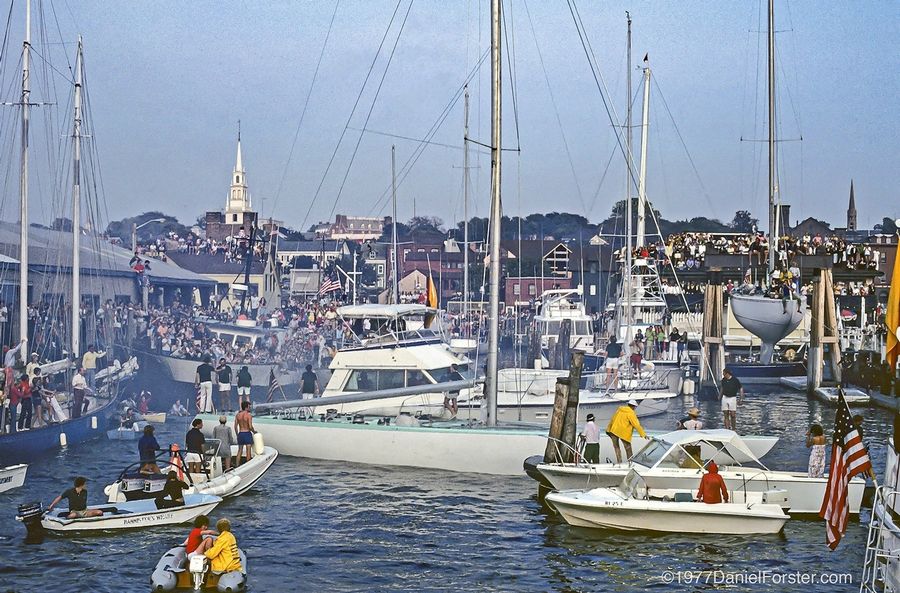
The fourth and final race came in around 14 knots, the very conditions Bond had been calling for, yet if anything the gulf between the two boats looked wider rather than narrower. Both started on port tack with Courageous to leeward, pointing with such precision that Australia simply could not roll over the top and was eventually forced to tack away. Turner gave chase immediately and, coming onto starboard, held the high ground. Robins tacked and ducked Courageous's stern, and the American afterguard chose to hold on, confident they were in a lift. A full two minutes passed before they tacked to cover, and the ease of the crossing confirmed what they had suspected. Courageous reached the top mark 44 seconds clear and bore away onto the reaching legs with full trust in her downwind speed. By the leeward mark the advantage had grown to 56 seconds, and as the wind began to drop, Courageous built a 2 minute 11 second lead on the second windward leg through precise, assured sailing. The run extended that margin still further, and at the finish the winning delta was 2 minutes 25 seconds. Newport celebrated its new hero in Ted Turner.
Much has been written about the press conference that followed, a gathering that became memorable for reasons well beyond the racing. But 32 years on, Jobson gathered recollections from his former crewmates for the American journal Sailing World, and Turner's contribution captured the spirit of that summer with characteristic directness: "I think the '77 Cup race was a high point of our lives. We were the underdogs going into that summer. We were going to have to perform at an absolutely superlative level. It was a crew of 100-percent winners."
The America's Cup had been defended with real authority by one of the most singular and colourful individuals ever to compete for it, and the Auld Mug remained securely at the New York Yacht Club's home on West 44th Street. The New York Times offered perhaps the most economical summary: Turner had "rocketed from famous to superstar."