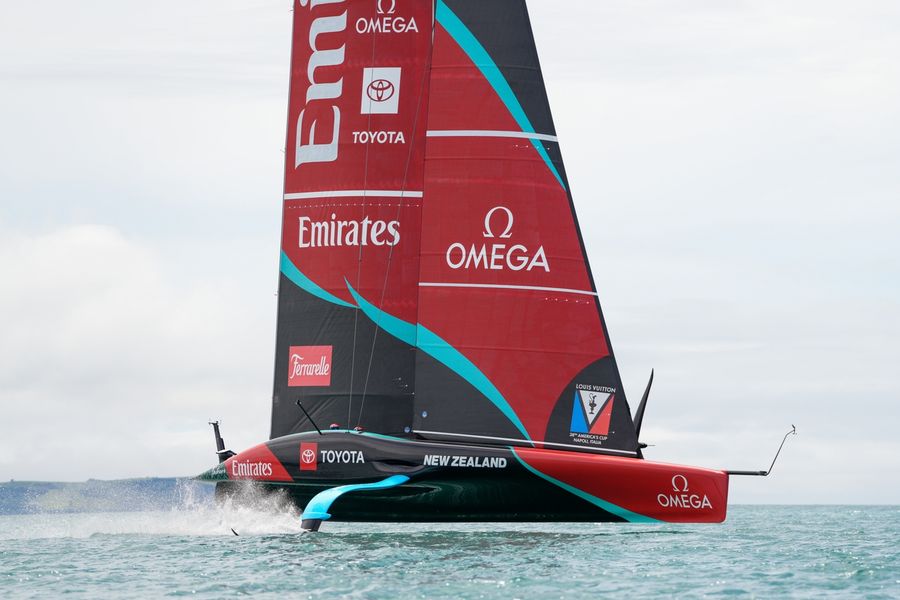
Emirates Team New Zealand took to Auckland's waters on Thursday for a training session that offered a telling glimpse into how the Defender is thinking about Naples 2027. Rather than chasing top-end speed, the outing looked like a deliberate study in failure, and how fast the crew can fix it.
The old line in sailing is that races are won by making fewer mistakes than the opposition. In the foiling era, with breeze sitting right on the minimum needed to keep an AC75 airborne, that adage carries even more weight.
Conditions were light, 4 to 7 knots, when the Kiwis hoisted their smaller M2-1 mainsail paired with the largest J2-1 jib. What followed was a string of manoeuvres marked by repeated touchdowns, particularly coming out of downwind gybes.
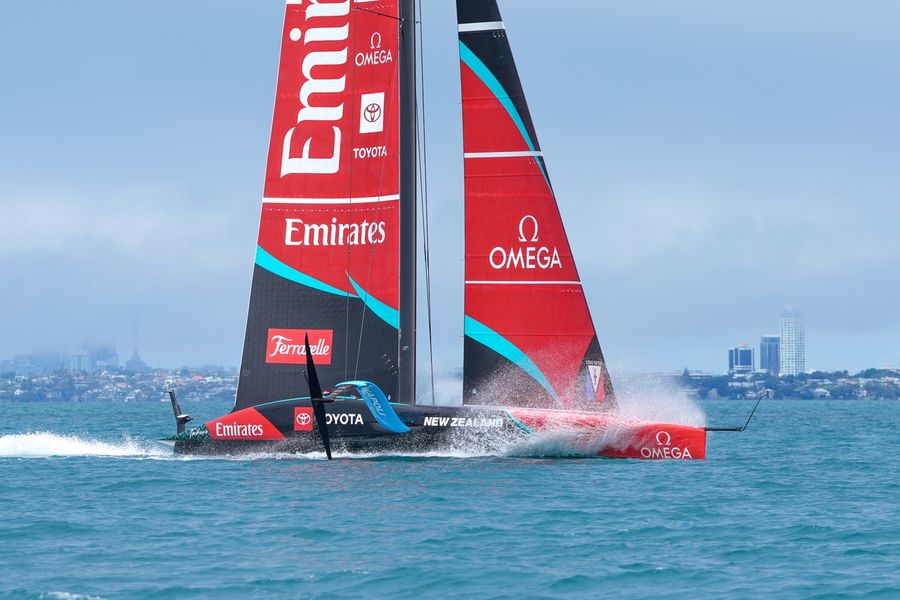
Several of the splash-downs looked deliberate, according to the recon report. The race crew of Nathan Outteridge, Seb Menzies, Iain Jensen, Andy Maloney and Jo Aleh kept bouncing back onto the foils with impressive speed, which raises an obvious question: why train with the smaller M2 rather than the more powerful M1?
Part of the answer may come down to testing the outer limits of the boat's performance envelope. Less sail area means less aerodynamic drive at low speed, which makes the climb back onto the foils harder work. The M2 also produces less drag once airborne, so if the team can master recovery with it across a range of conditions and still hit their performance targets, they may be onto something: another small Kiwi innovation in a Cup that has rewarded exactly that kind of thinking before.
There's a more practical angle too. If the smaller mainsail can be relied upon to recover cleanly in marginal breeze, that builds confidence both in the boat's underlying performance and in the crew's ability to nail the recovery sequence under pressure.
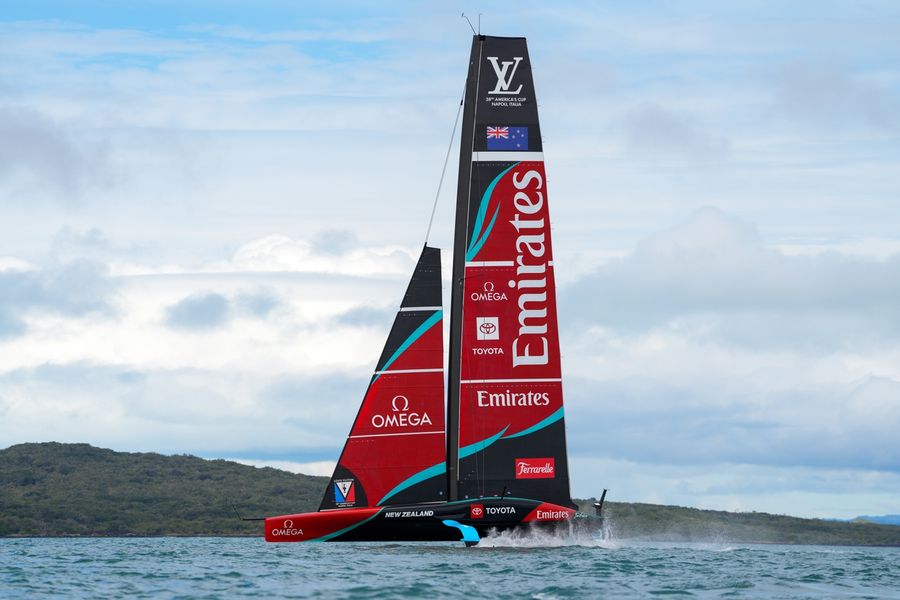
Crew-work becomes everything here. After a touchdown, the helmsman has to find the right course for acceleration, the trimmers have to adjust power and twist almost instantly, and foil cant, flap settings and rudder elevator all need to work in concert to cut drag, manage pitch and build enough lift to take off again.
Timing is everything. The "pop-to-flight" moment is something of an art form. Too much steering input, a touch too much drag, or a sail powered up incorrectly, and a brief touchdown can turn into a race-losing one.
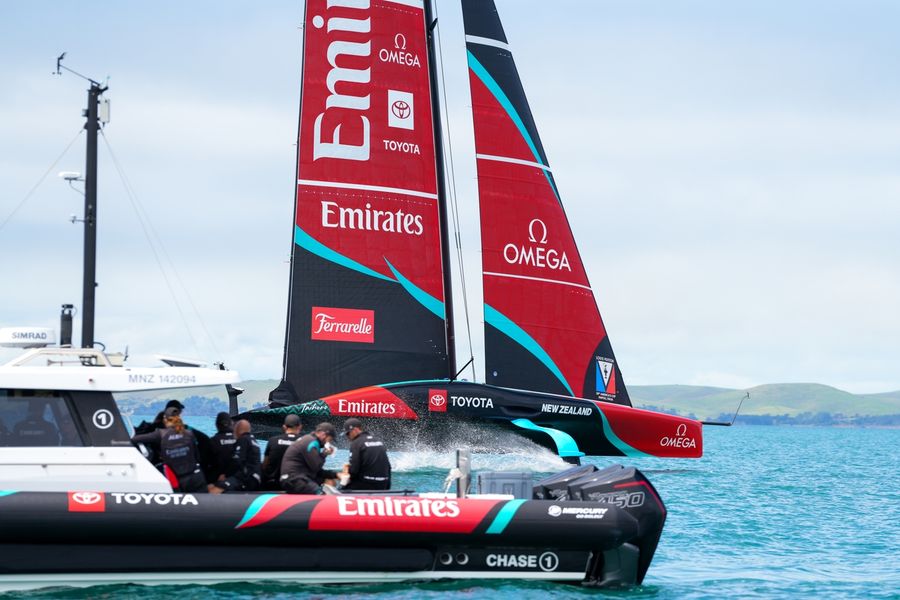
The on-water recon team also picked up improved pitch stability through bear-aways and round-ups, with the stern sitting noticeably higher than in earlier sessions. That points to another likely area of focus: tightening the coordination between sail trim, steering and flight control through the highest-load manoeuvres. The session also featured aggressive virtual pre-starts, with the team occasionally choosing to stay off the foils for extended stretches before resetting.
For Naples, the relevance is clear enough. In tight racing, especially in light air, an opponent's manoeuvre, a wind shadow, or a tactical misjudgement can force a boat off the foils without warning. Being able to recover almost instantly could end up deciding a race outright.
The recon report can't confirm whether every touchdown on the day was intentional, nor pin down exactly what the M2 testing was aimed at proving. But the pattern is hard to ignore. Emirates Team New Zealand doesn't appear to be simply working on flying faster. It looks like they're working on what happens when flight is lost, and by Naples 2027, that skill could prove priceless.