There is no dramatic announcement here, no headline result. Just a quiet modification to Taihoro that rewards a second look.
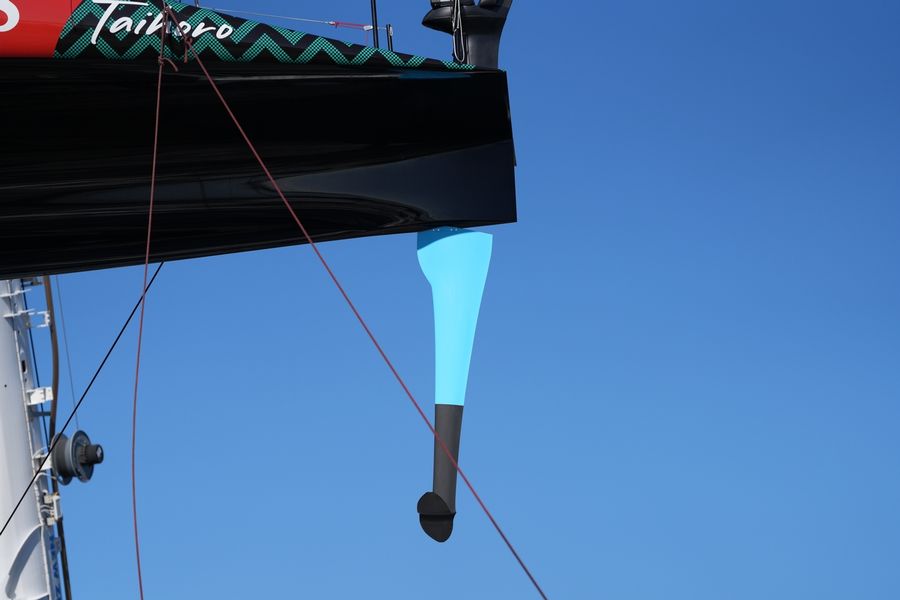
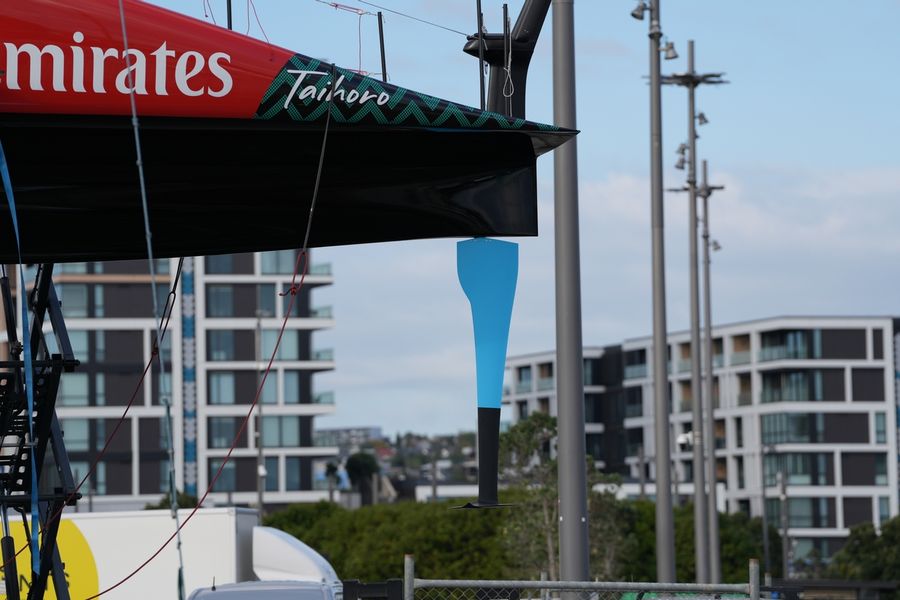
Emirates Team New Zealand has reshaped the legacy rudder the boat carried when it returned to training earlier in March. The change is easy to miss at a casual glance, but the difference from the earlier configuration is real. That version showed a visible gap between the rudder's top and the hull, most obvious at the leading edge. Lower down, the trailing edge stepped outward before tapering away into the blade.
Both of those features are now gone. The trailing edge runs in a clean, uninterrupted line from top to bottom. The rake has been brought forward, pulling the leading edge close to the hull, almost flush against it. The step has been eliminated entirely.
Small as it sounds, this was not a casual tweak.
The reasoning traces back to conditions on the water. Recent training sessions have run in lighter air, and it is precisely in those conditions that Taihoro has shown a vulnerability. Observers watching from the recon boat recorded repeated instances of rudder ventilation, most of them occurring during aggressive turns. When the rudder loses grip, the effect is immediate and obvious: the boat's stability goes with it.
Nathan Outteridge and Seb Menzies responded on the helm by changing how they drove through manoeuvres. Hard, sharp inputs were replaced with slower, more considered turns. The timing of board drops became particularly important in gybes. Committing too early loaded the boat up; holding slightly longer allowed the manoeuvre to settle. Once they adjusted, the boat stayed more composed through exits and carried its flight more cleanly.
That feedback is not from a simulation. It is what the boat showed them in practice.
The stakes around getting this right are real. Each team is limited to a single new rudder across this cycle, which means there is no trial and error once the call is made. This session marked Emirates Team New Zealand's seventh permitted sailing day, and the available days to refine the package are running short.
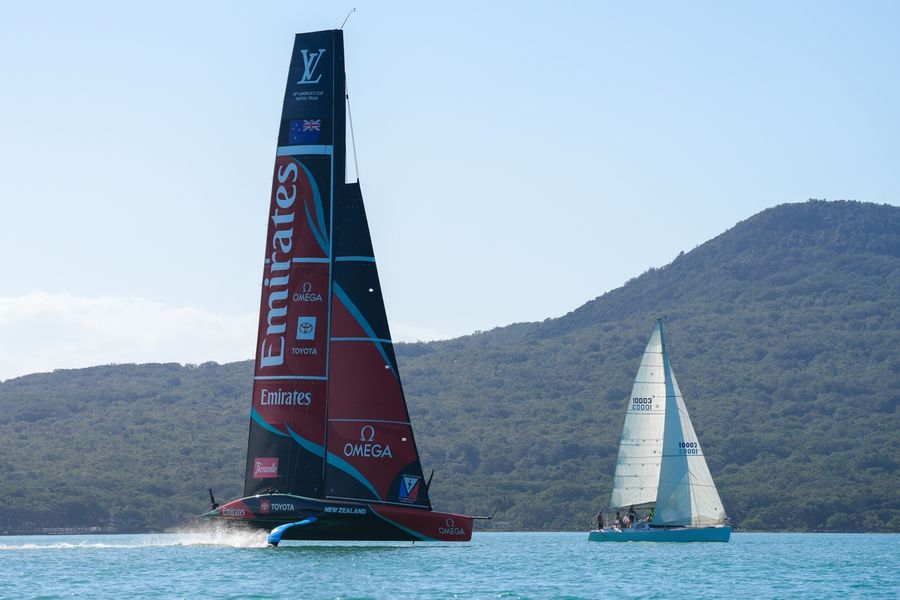
Coach Sam Meech described the difficulty of working within that window: "It's a bit marginal. The weather at this time of year hasn't been quite as settled as we could have hoped, so finding good sailing days, the days that we can make the most of like today, is a little bit harder. But hopefully a couple more days next week."
The challenge is not simply accumulating time on the water. It is finding the conditions that surface weaknesses before racing does.
The focus of the session was not top-end speed. It was control at the boundary of flight, covering take-offs, manoeuvres, and how the boat manages when it is barely airborne. Trim work remained sensitive throughout, with small adjustments to the jib and slot producing measurable results. Onboard systems also continued to receive attention, particularly automation connected to sail control. Battery changes were a recurring task, a reminder that these campaigns depend as heavily on electrical reliability as they do on structure and foil geometry.
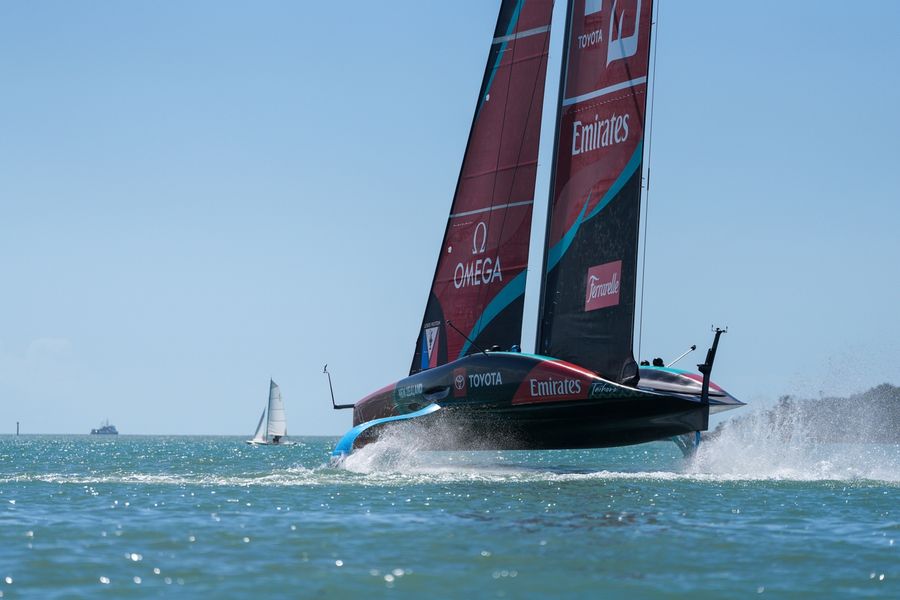
None of these details announces itself as decisive on its own. Taken together, they reflect where this campaign is being shaped.
Naples is not expected to offer the stable, consistent breeze that suits straightforward speed work. The races there will likely turn on which crews keep their boats flying when the pressure drops and others sink off the foils. The modification to Taihoro's rudder sits squarely in that picture.