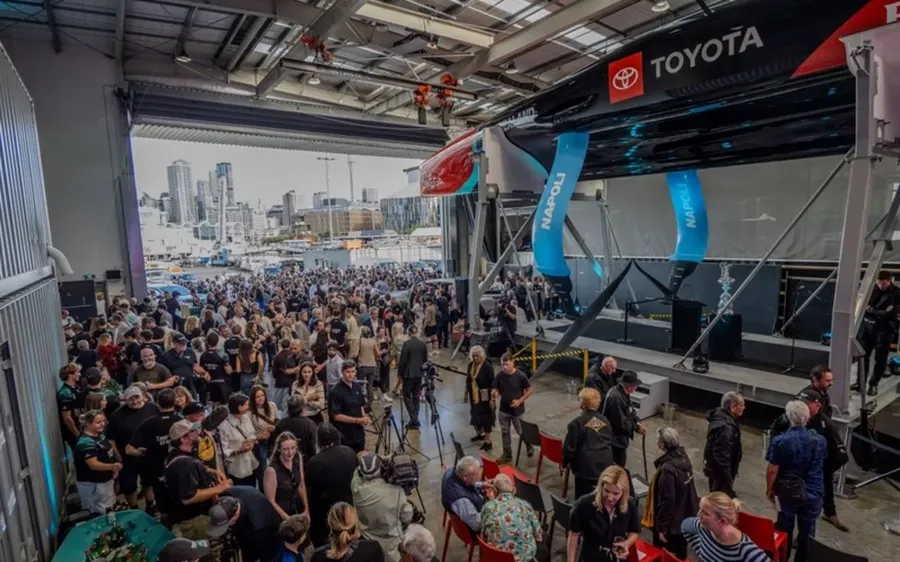
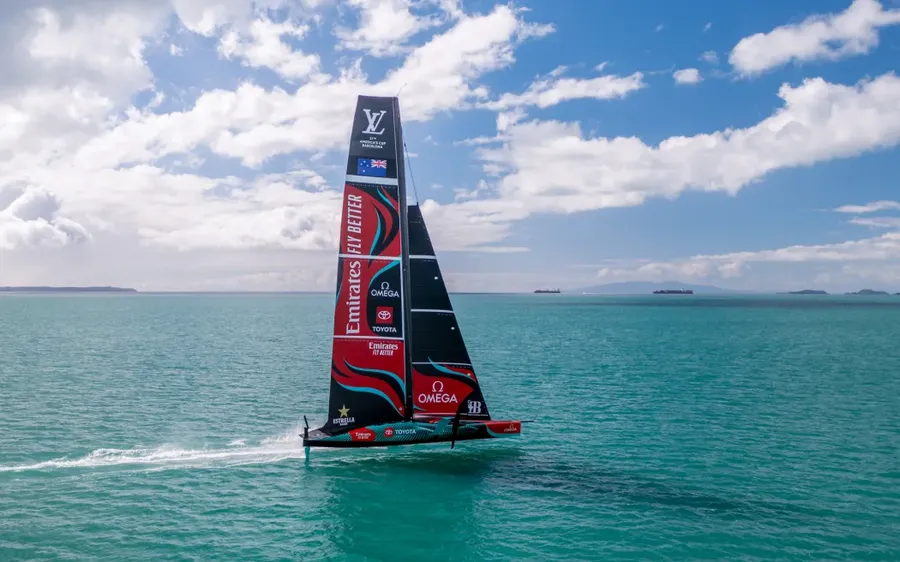
Emirates Team New Zealand has relaunched its AC75 Taihoro from the team's Wynyard Point base in Auckland on Monday, pressing ahead with its bid for a fourth consecutive America's Cup victory. The 38th edition of the event is scheduled for Naples in 2027.
At first glance, Taihoro bears a strong resemblance to the boat that dominated the racecourse in Barcelona. Chief executive officer Grant Dalton was candid about that impression, saying "to outsiders, there may not be a huge amount that is apparently different. From the outside it looks similar." What the eye cannot see is a carefully engineered evolution carried out within the strict cost-containment boundaries that govern the new Cup cycle.
Those rules bind every competing team to the same hull it raced in the previous event. Permitted modifications fall into three defined categories: cockpit changes to reflect revised crew requirements, structural rebuilds of up to 4sqm using the same hull shape but updated materials for localised strengthening or weight reduction, and functional rebates to improve aerodynamic performance. Team New Zealand's designers pushed right to the limits of what those rules allow.
Head of design Dan Bernasconi gave useful context on just how limited hull-to-hull performance differences have always been, even before such restrictions existed. "The hulls have always been one of the most noticeable features on an America's Cup yacht, but because the hulls spend so much time out of the water, there is actually not that much difference in the performance of hulls, maybe five seconds around the race course across all of the boats in Barcelona," he said. "So the class rule and design parameters still allow for important gains and difference in performance from the foils, sails and control systems for example. As with every iteration of the same class of boat, there is no doubt the racing will be a lot closer this time around between all teams. So, as always, winning will be a massive challenge for the whole team."
Chief operating officer Kevin Shoebridge is confident the accumulated changes represent a genuine advance. "Internally, our philosophy is to always drive innovation and technology, so we think Taihoro '2.0' will be a great step on from what we saw in Barcelona," he said.
The most visible change on Taihoro concerns the crew pods on each side of the hull. The cyclors who generated hydraulic pressure through leg-driven effort throughout the Barcelona campaign have been removed under the new Protocol. A standardised high-capacity battery system, shared by all competing teams, now powers the yacht's foil and sail control systems. The change shifts the crew's challenge from sustained physical output to the disciplined management of finite energy reserves over the course of each race.
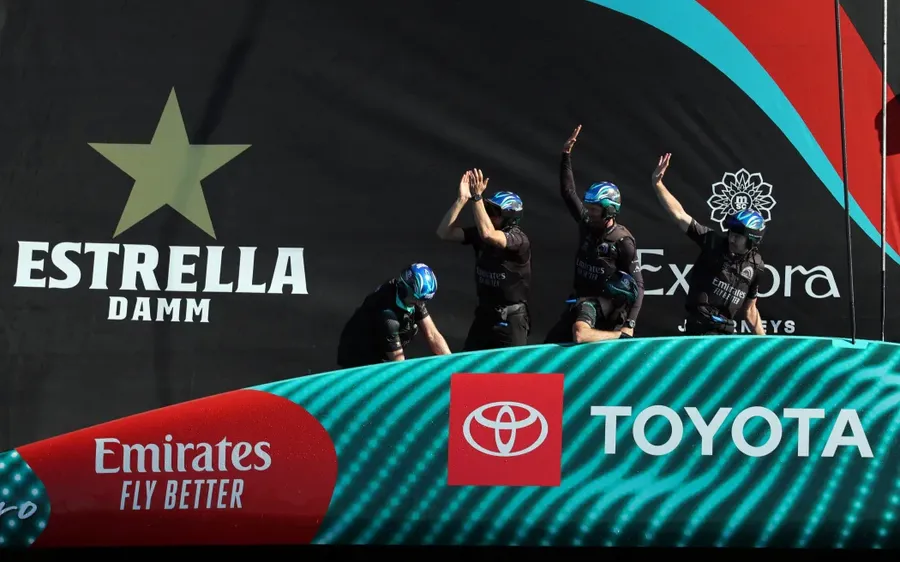
Fewer people will be responsible for that challenge. Crew numbers have fallen from eight to five and, with an odd number on board, role boundaries are expected to blur, with responsibilities such as flight control and sail trimming likely to be handled by the same person. Skipper Nathan Outteridge acknowledged that the makeup of the five-person crew is among the most discussed questions as the new cycle gets under way. "When you look across all of the teams, the question is who will be in the different positions. For us, we have a fresh new team which is an exciting mix of young talent and experience so what that eventually looks like in July next year we don't know right now. That's part of what the next block sailing Taihoro is about."
One confirmed appointment ahead of the upcoming sailing programme is Olympic gold and silver medallist Jo Aleh, who is set to become the first woman to crew an AC75. Her inclusion is enabled by a new rule designed to open a pathway for women beyond the AC40s and the Women's America's Cup through to the Cup itself.
Taihoro also features a dedicated guest racer pod, allowing someone outside the crew to experience an AC75 at full race pace. Nothing comparable has appeared on an America's Cup boat since the version 5 IACC yachts that competed in 2007. The team intends to put that pod to use during its forthcoming Auckland sailing block.
The relaunch was shaped by the cultural customs that have become integral to the team's identity. Iwi Manaaki Ngāti Whātua Ōrākei led proceedings, offering a blessing that reconnected the vessel with its name, which carries the meaning "to move swiftly as the sea between both sky and earth."
Hauraki Gulf sailors will see Taihoro in action soon enough. As the first AC75 launched in the 38th America's Cup cycle, the boat moves directly into an intensive testing programme over the coming weeks, with the crew working to adapt to the dynamics of the reconfigured yacht. After that, focus will turn to AC40 racing at the first Preliminary Regatta in Cagliari, Sardinia, in May.