The 47th Tour Voile got underway with a rally stage that made an immediate statement about the kind of racing this edition would demand. There were no rewards for bold strategic swings; instead, the opening leg tested something more precise and more relentless: the ability to read tidal streams correctly and find the right position relative to the breeze at the moments that mattered most.
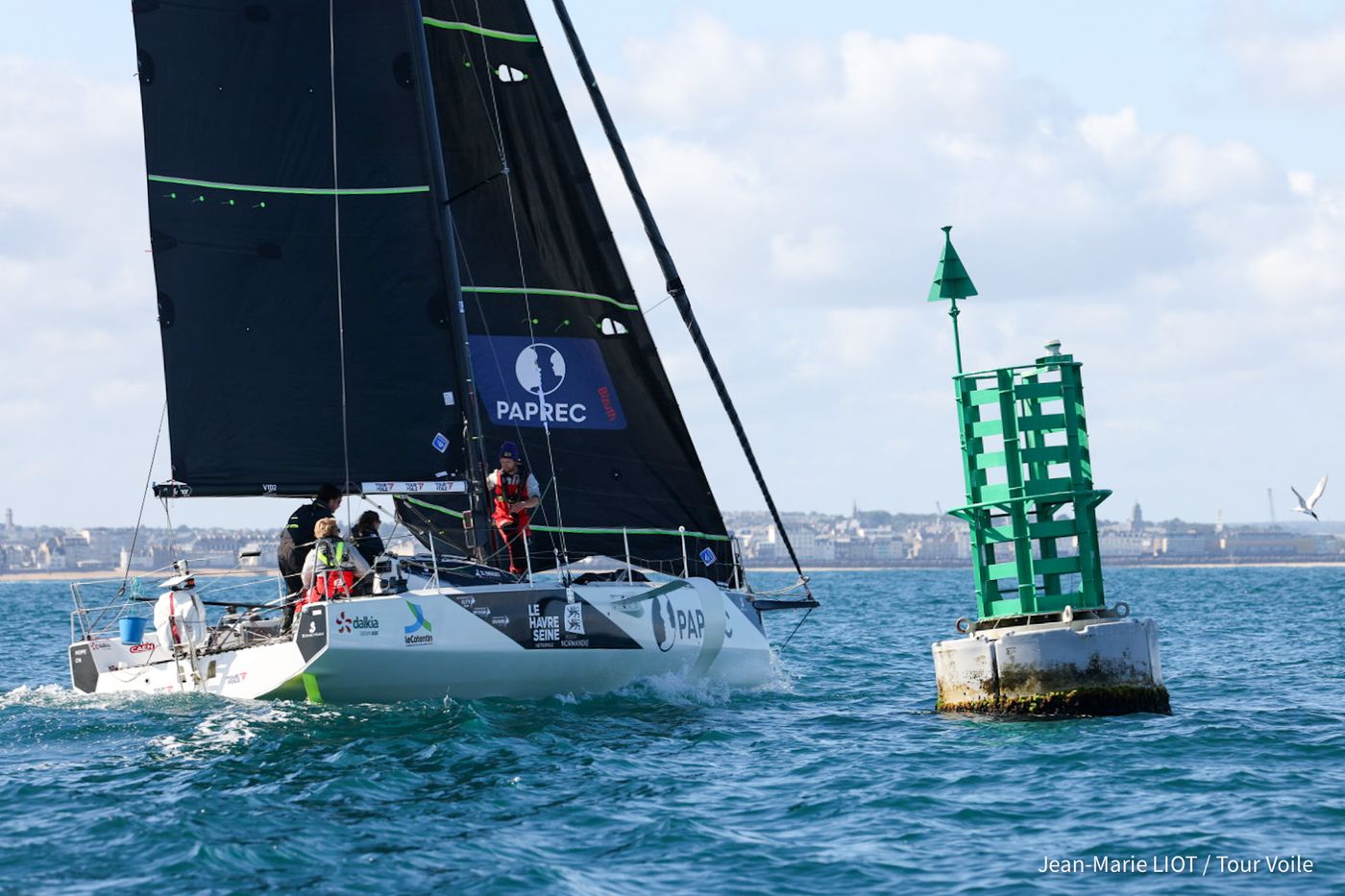
Nine Figaro Beneteau 3 crews departed Cherbourg-en-Cotentin on Sunday afternoon, their course taking them via Needles Fairway off the Isle of Wight before turning toward Saint-Malo. Two rapid Channel crossings unfolded in gusts touching close to 30 knots, with powerful tidal streams adding a further layer of complication to every tactical decision. As dawn broke on Monday and the breeze began to ease along the Breton coast, PAPREC by Normandy Inshore Program had worked its way to the front of the fleet. The field, however, remained tightly bunched across just a few miles, leaving the final result very much unresolved.
Race director Yann Chateau had a clear view of what the night's conditions had demanded. "The crews experienced fairly spirited conditions over the first leg," he said. "Both Channel crossings were very fast. That's exactly the type of course we wanted to deliver: speed, but also enormous precision." The gaps that opened between crews, he explained, were not the product of sweeping directional gambles but of small positional advantages accumulated at the right moments. "It's really about very fine placements relative to current and wind that make the difference. In this context, a few hundred metres gained at the right moment quickly becomes several boat-lengths of advantage."
The overnight hours illustrated this principle with particular clarity. Much of the fleet chose to sail marginally above the direct course line, seeking a margin of protection against any shift in conditions. LGC Sailing – Bretagne Plaisance took a different view, committing to a tighter trajectory that allowed the Saint-Malo crew to pull back into contact with the leading group. "The tighter trajectory allowed them to rejoin the pack," Chateau noted, pointing to exactly this kind of measured departure from the conventional path as the real currency of the race.
The same dynamic played out on the return leg toward French waters. Dunkerque – Kiloutou, which had occupied first place since Sunday evening, surrendered the lead to PAPREC by Normandy Inshore Program after a well-timed move to the east. At this level of offshore sailing, advantages rarely arrive in a single decisive moment. Better boat trim, sharper exploitation of the current, and a cleaner feel for the wind layer on top of each other across the hours, until a new leader materialises almost without announcement.
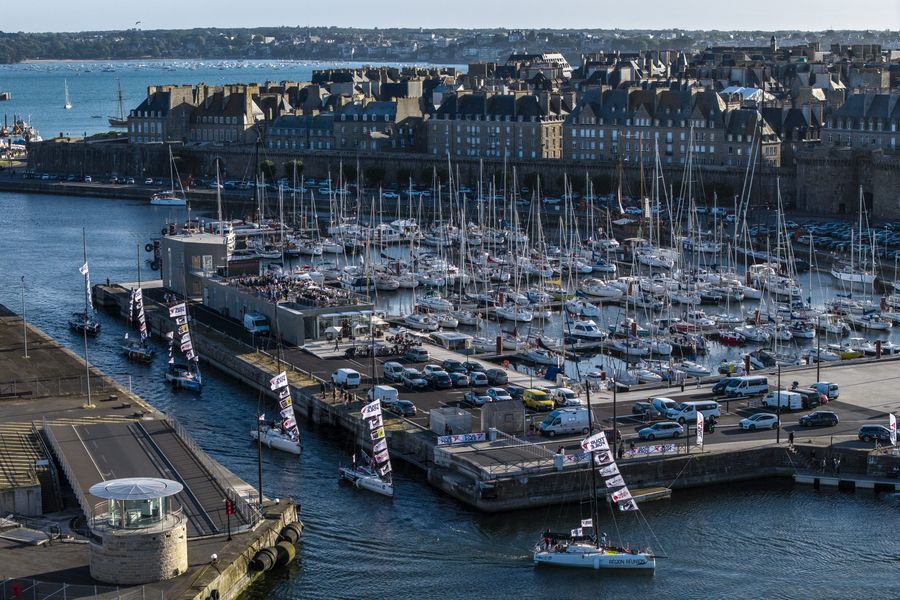
As Monday morning's breeze continued to fade, race control made a considered adjustment to the course. The final offshore loop near Saint-Malo was trimmed back, with competitors redirected toward South Minquiers in place of the original waypoint. The change preserved the competitive character of the leg while giving the entire fleet a realistic path to the Saint-Malo finish gate at a sensible hour. Chateau was comfortable with the decision. "The adjustment is limited," he said. "The finale keeps all its interest. There are still things to do and positions to gain on this final stretch."
At the Saint-Servantine mark, PAPREC by Normandy Inshore Program led the way, with Dunkerque – Kiloutou sitting second and Région Bretagne – CMB Espoir third. The breeze was expected to ease further, and with the fleet spread across roughly ten miles, the finishing order remained genuinely open. The first arrivals were anticipated somewhere between mid-afternoon and early evening, leaving ample time for the small misjudgements, or the small strokes of inspiration, that so often reshuffle positions in the closing miles of a race.