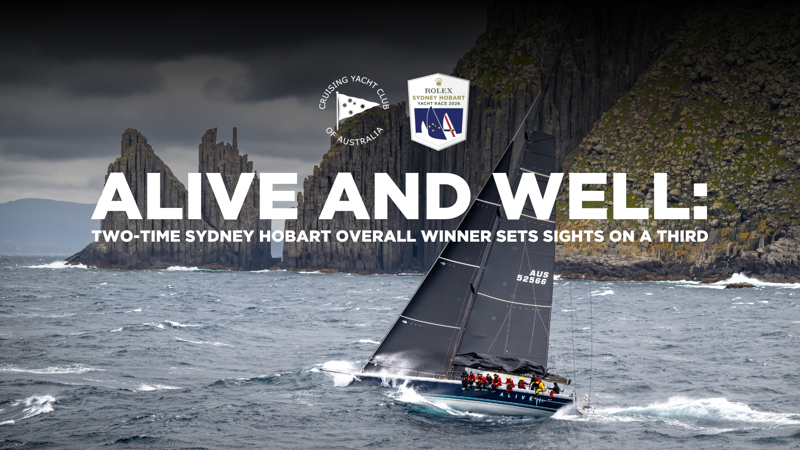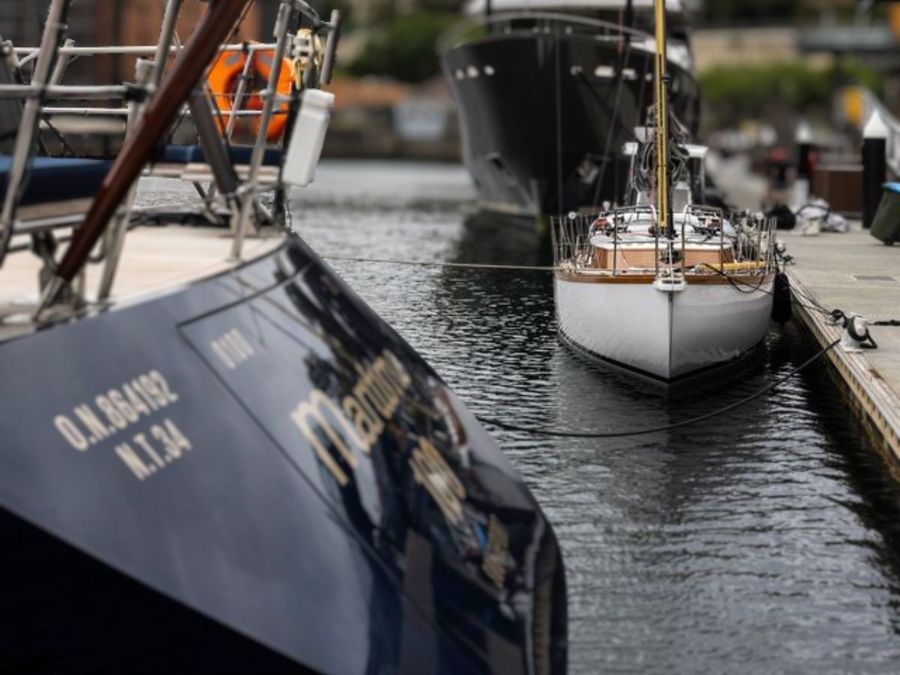
Two yachts that could hardly look more different share a start line, a philosophy, and a purpose that has nothing to do with spectacle.
For anyone unfamiliar with the Maritimo offshore programme, the pairing can seem puzzling. One vessel is small, physically demanding, and more than a hundred years old. The other is contemporary, well-appointed, and engineered around systems integration. The contrast is entirely intentional.
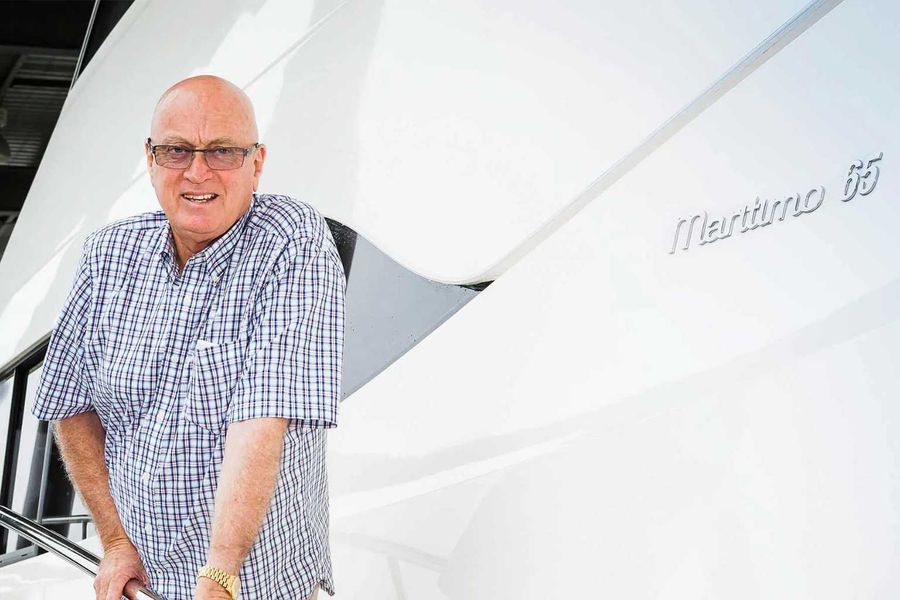
What connects Maritimo Katwinchar and Maritimo 100 is not aesthetics but intent. Both campaigns exist because Bill Barry-Cotter, founder and owner of Maritimo Yachts, continues to treat offshore racing as a working environment, one where decisions carry real weight and consequences follow quickly.
The Sydney to Hobart is one of the few races that applies continuous rather than intermittent pressure to boats, crews, and systems alike. That sustained demand is precisely what gives the event its value as a testing ground, and it is why Maritimo's involvement in the Rolex Sydney to Hobart remains deliberate rather than ceremonial. The two boats are not stylistically paired. Together, they cover ground that neither could manage independently.
Maritimo Katwinchar was built in 1904. She was owned by Bill's father, Frank, and Bill grew up sailing her. Rather than allow the boat to age out of service, he chose restoration. Approximately 14,000 man hours were committed to returning Katwinchar to racing condition, preserving her character while bringing her in line with modern safety standards.
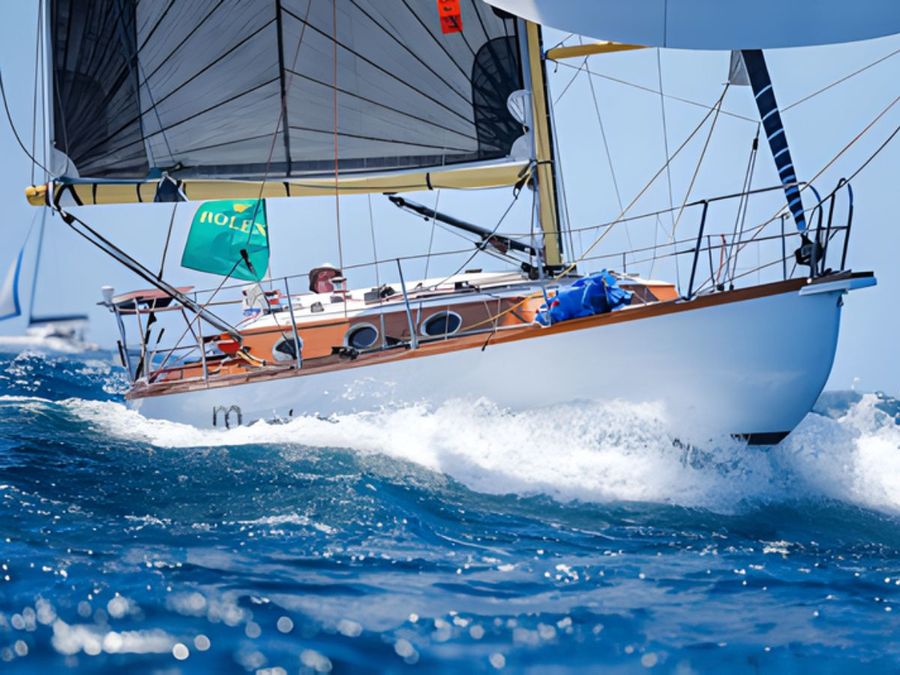
Katwinchar offers nothing in the way of comfort. She rewards attention, restraint, and physical commitment, and in doing so she makes visible how sailors actually respond once conditions worsen and fatigue begins to accumulate. The lessons she delivers are direct and personal. Watch systems are short. Sleep comes in fragments. Every sail handling decision produces an immediate result. Knowing when to ease off and protect the boat matters just as much as knowing when to push harder.
Maritimo 100 represents a different stage of the same thinking. Bill Barry-Cotter still wanted to race offshore, but on a yacht that did not require unnecessary hardship to do so effectively. On Maritimo 100, comfort is not an indulgence. It is about staying sharp and capable for longer periods at sea.
Maritimo 100 carries the modern side of the programme. She is a yacht Barry-Cotter genuinely enjoys sailing, but she also functions as a practical reference for the Maritimo factory. Many of her onboard systems mirror those found across the company's luxury motor yacht range, including electrical layouts, plumbing, air conditioning, and broader engineering arrangements.
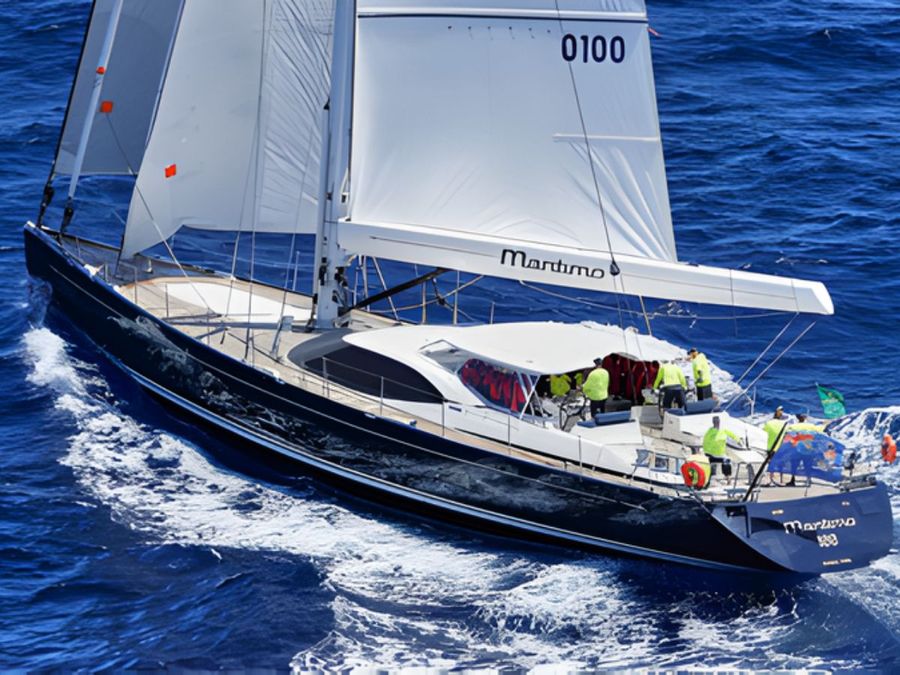
Running those systems offshore for extended periods exposes weaknesses that ordinary cruising use never reveals. Questions of access, redundancy, and layout are stress-tested repeatedly, generating lessons that are concrete and hard to replicate in any other setting. The learning aboard Maritimo 100 is largely technical. Systems are pushed hard, often in conditions that go well beyond anything encountered in normal service. Efficiency improvements, including those produced by repowering, are measured under sustained load rather than assessed in controlled circumstances. Position on the water matters, but so do reliability, crew condition, and system performance. Finishing the race with everything intact and functioning is built into the objective.
Offshore racing remains relevant to Maritimo because it reflects the real environments the company's boats are ultimately designed to operate in. Motor yachts do not race to Hobart, but they travel the same waters, encounter the same weather systems, and rely on the same mechanical realities. Understanding how systems behave under pressure, and how people perform when they are tired, feeds directly back into better design and better outcomes for the people who use those boats.
Katwinchar grounds that thinking in lived experience. Maritimo 100 applies it to a modern context. Two boats, two paths through the same race, and a programme built on learning rather than on appearances.