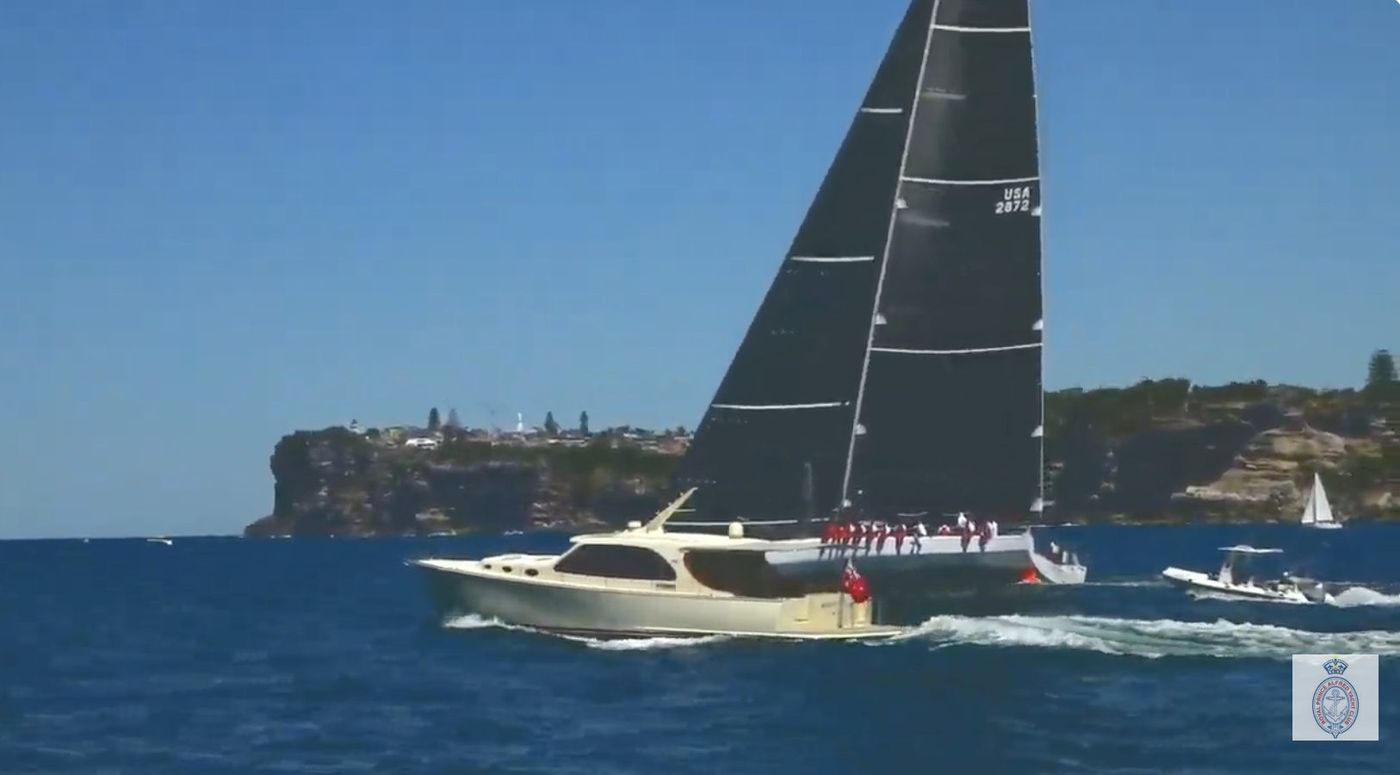
Blue sky and breeze greeted the five-boat fleet at the start of the 2025 Sydney to Auckland Ocean Race, with crisp sunshine overhead and a steady 10–12 knots funnelling through Sydney Heads. A late swing to the east-north-east filled the harbour just before the gun, white and grey sails blazing against cobalt water as spectators packed the headlands and roared their approval.
Race organisers had positioned the start line further up the harbour toward South Head this year, placing the boats squarely in the developing pressure and giving each crew room to find speed early without pinching for clear air.
The lineup was compact but rich in variety. Lucky, the 27-metre Juan K-designed maxi, carried the weight of line-honours expectation at the head of the fleet. The elegant Santa Cruz 72 Antipodes combined raw power with deep ocean-racing heritage, and the 52-foot Frantic contributed local expertise and youthful pace. Cooloola and Wings completed a five-boat field that drew from every corner of Australasian offshore sailing, blending grand-prix sophistication with Corinthian spirit. All five shared a single objective: 1,250 nautical miles to Auckland.
Frantic made the sharpest impression when the horn sounded, timing the start perfectly to hit the line at full pace with clean air to leeward. The committee boat responded with an approving shout, recognition of the kind of precision that only comes from sustained harbour practice. Lucky held slightly off the pace initially, sidestepping the congestion before surging as open water appeared. Antipodes slotted in neatly behind, while Cooloola and Wings were pressed higher toward the committee boat before settling into their respective grooves.
The opening leg up the harbour proved tight and demanding. The breeze oscillated constantly, sending crews scrambling through tacks to cover every shift, and the fleet stayed compressed within sight of one another as they charged for the Heads. By the final tack past Middle Head, Lucky's towering black sails had drawn level and the big boat was beginning to extend, stretching her legs for the first time.
Beyond the harbour walls, the fleet fractured into two distinct strategies. Lucky and Antipodes cracked sheets and tacked early for deeper water, backing steadier offshore pressure. Frantic and Wings elected to hug the shoreline, chasing the stronger inshore breeze and a favourable ebb tide.
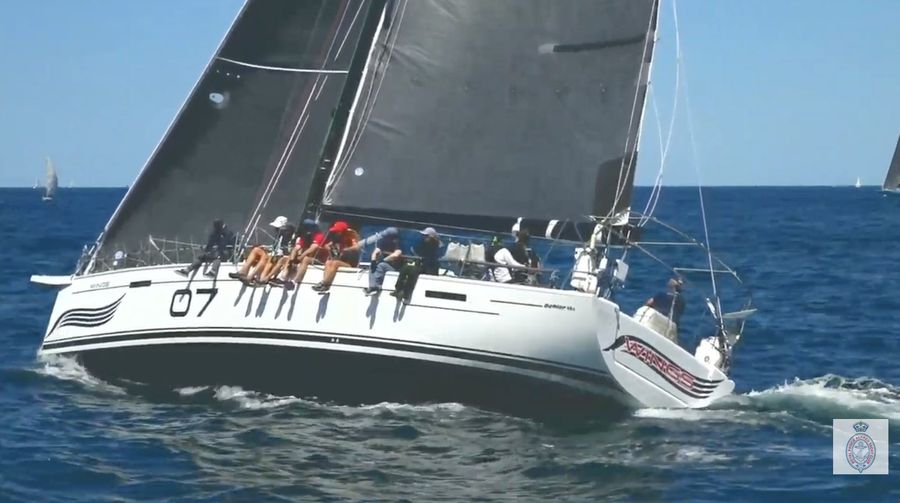
For the first hour at least, the inshore call looked inspired. Skipper Mick Martin and his crew of Royal Prince Alfred YC youth sailors pushed Frantic hard along the headlands, feeding off every puff and clawing back distance on the larger boats. At one point they had closed to within a few minutes of Antipodes, a textbook demonstration of local knowledge turned to tactical advantage.
Once the fleet cleared the coast, however, the bigger boats began to impose themselves. Lucky found her rhythm and locked in at roughly 14 knots, her lead lengthening on every tack. Antipodes maintained second on the water, sailing cleanly and driving downrange in search of the next shift. Frantic held third overall and remained the fastest of the smaller entries, the inshore track still delivering a return on its investment.
After the first hour of racing:
- Lucky had stretched past Long Reef, carbon sails carving through the coastal haze. - Antipodes remained within visual range, still hunting the next oscillation. - Frantic sat in third overall, the coastal strategy continuing to pay dividends. - Cooloola and Wings followed in good order, sailing measured and tidy.
The fleet had spread itself across the horizon, each boat fully committed to its chosen corridor, with no middle ground on offer between the offshore and coastal routes.
Sydney delivered a proper send-off. Between gusts the water lay glassy, the sky stayed bright, and a flotilla of spectator craft stretched from Watsons Bay to North Head. Down on deck it was all business: crews calling time to the next puff, main trimmers crouched low, navigators already parsing screens for the next shift line. From shore it was pure spectacle, a trans-Tasman fleet slipping through the Heads under full sail. As the yachts turned north and disappeared, conditions offshore remained moderate with the breeze building gently toward 15 knots, ideal for a fast early run.
Race meteorologist Dr Roger Badham is forecasting strong westerlies to carry the fleet through the opening stages, with a frontal system expected mid-Tasman and lighter high-pressure conditions on the approaches to New Zealand. The pattern calls for aggression when the breeze is up and patience when it softens. Race Director Nick Elliott captured the spirit of it at the morning briefing: "This is a proper Tasman race — fast, tactical, and full of decisions."
The 2025 Sydney to Auckland Ocean Race is now underway, a clean start behind the fleet and a demanding weather window ahead. For the crews pointing north into a long blue horizon, the race has only just begun.