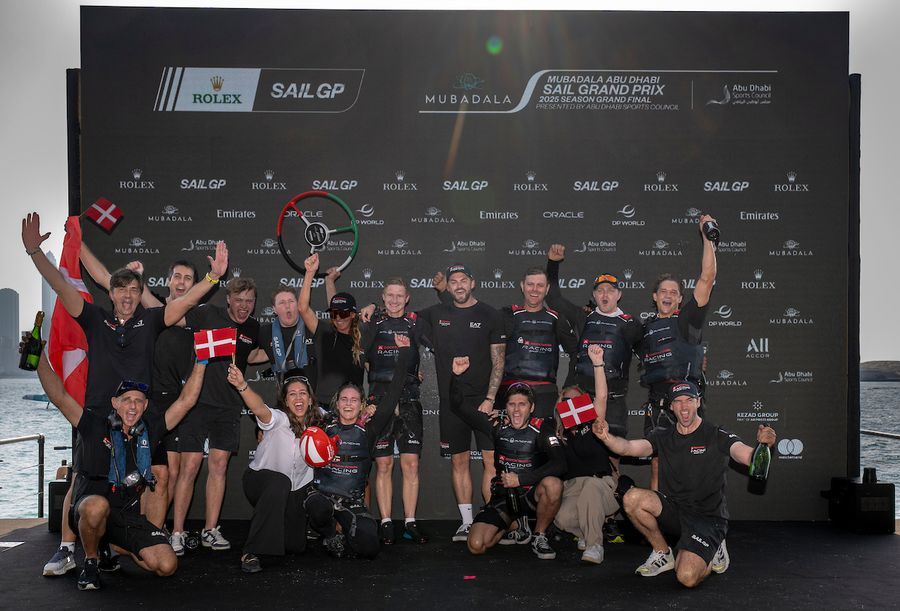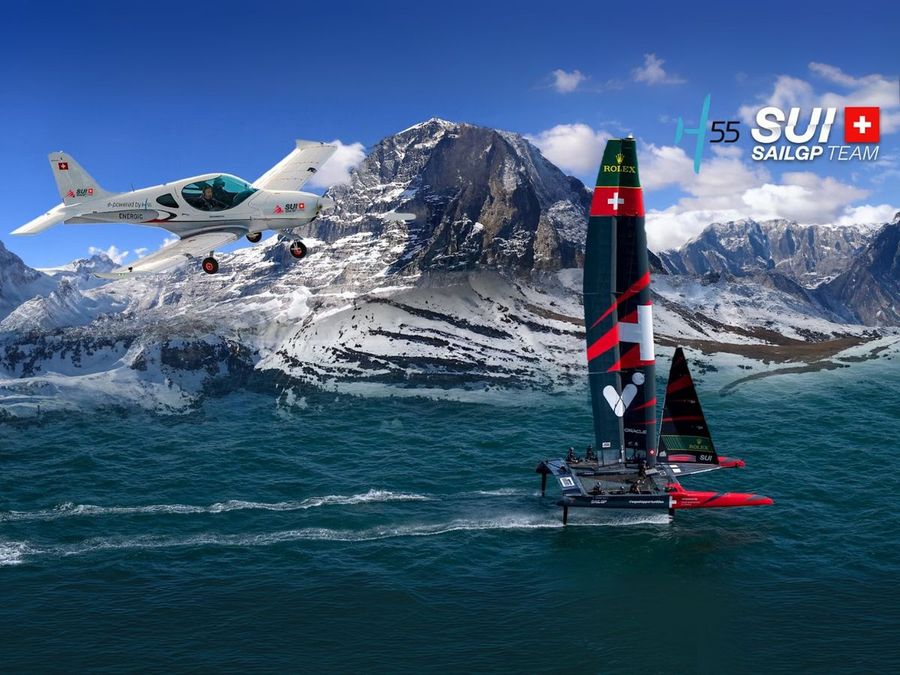
Two of Switzerland's most forward-thinking organisations have joined forces in a partnership that bridges high-performance sailing and the future of electric aviation. The Switzerland SailGP Team and H55 are combining their respective expertise to explore knowledge exchange and technology collaboration centred on clean energy and efficiency innovations, positioning Switzerland as a genuine leader in next-generation clean technology.
SailGP, the global foiling catamaran league known for its stadium-style racing format and identical high-speed boats, has treated sustainability as a founding principle from the outset. Events are powered by clean energy, and the league actively positions itself as a testbed for climate innovation in sport. H55 comes to this partnership with an equally serious commitment to clean technology, having established itself as a pioneer in certified electric aviation propulsion systems.
The story of H55 begins with one of the most remarkable flights in history. Co-founded by aviation pioneer André Borschberg as a spin-off from Solar Impulse, the first electric plane to fly around the world, H55 carries that legacy of ambition into commercial development. With more than 20 years of experience and five electric aircraft flown, the Swiss company has built a world-leading portfolio of modular Energy Storage Systems and Electric Propulsion Units engineered to be lightweight, certifiable, and adaptable across aircraft types, from short take-off and landing planes through to eVTOLs.
On the water, the Switzerland SailGP Team competes under the leadership of three-time Olympian Sébastien Schneiter in one of the world's fastest-growing international sailing leagues. The team has long embraced SailGP's sustainability values while using the global stage to highlight Swiss innovation, and the new alliance with H55 deepens that commitment considerably.
The logic underpinning the collaboration is straightforward. Sailing and aviation share a surprisingly similar set of engineering challenges: how to extract maximum performance from minimal energy, how to keep structures as light as possible without sacrificing safety, and how to translate marginal gains in one area into broader breakthroughs for entire industries. Bringing together insights from elite racing and advanced electric propulsion creates fertile ground for solutions that could reduce emissions well beyond either field alone.
Borschberg articulated the shared vision clearly: "SailGP, along with its teams such as the Swiss boat, and H55 share the same ambition: to make our respective worlds cleaner and more efficient by advancing technological solutions that maximise the use of renewable energies in mobility. Switzerland offers an exceptional foundation for this mission, with its outstanding technical universities, cutting-edge research laboratories, and strong network of innovative companies."
Schneiter sees the fit as instinctive rather than opportunistic. "Just as SailGP pushes boundaries in sustainable sport and technology, H55 is redefining what's possible in aviation. Together, we aim to inspire new ways of thinking about performance, innovation, and a cleaner future."
The partnership is still in its early stages, and both parties acknowledge this is the opening chapter of what they expect to be a longer journey. Further details of specific projects and collaborative programmes are expected to take shape over the coming months. The common thread connecting a racing team pushing the limits of wind-powered speed and a company reimagining how aircraft are powered is a genuine and shared drive to demonstrate that high performance and environmental responsibility are not competing goals, but complementary ones.