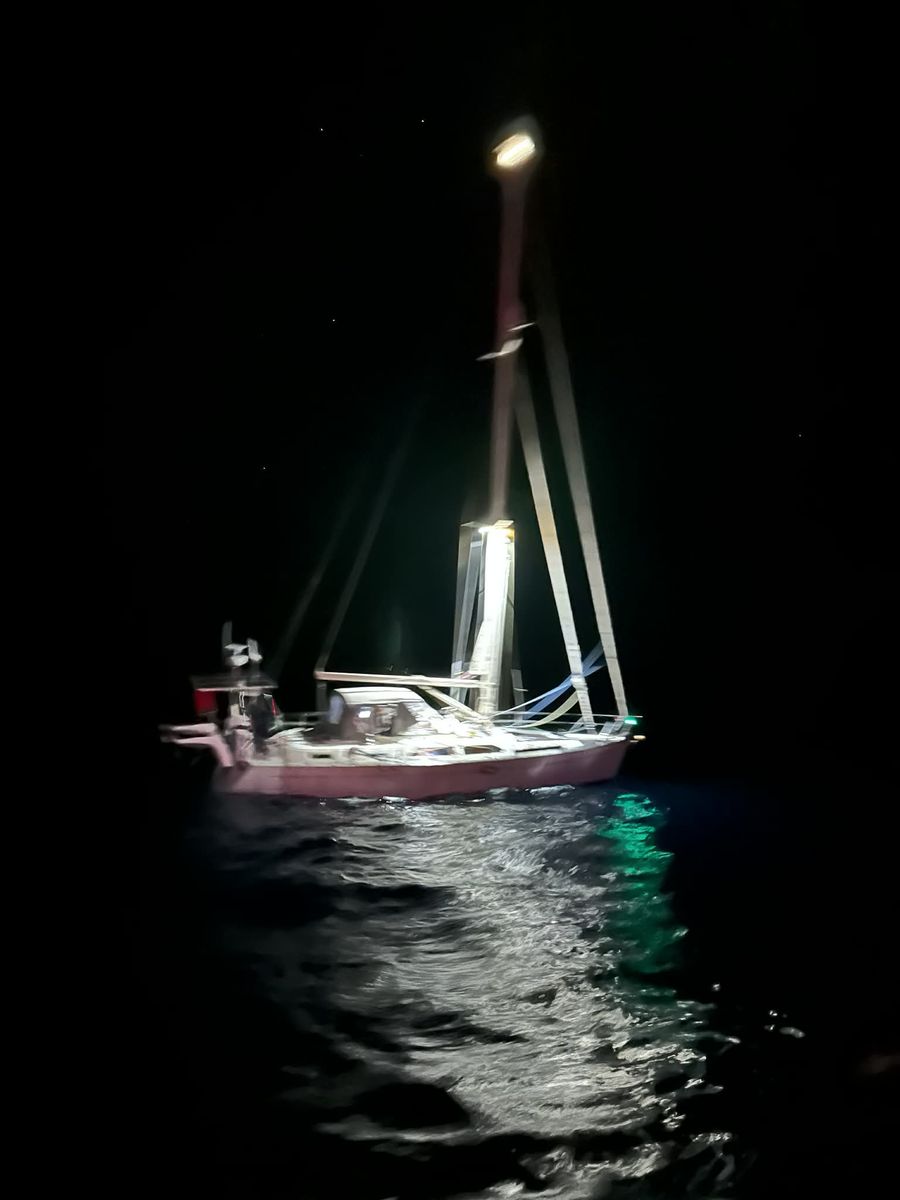
A dramatic rescue unfolded at the Raglan Bar yesterday morning when four people were brought to safety after their vessel capsized in one of New Zealand's most notorious stretches of coastal water.
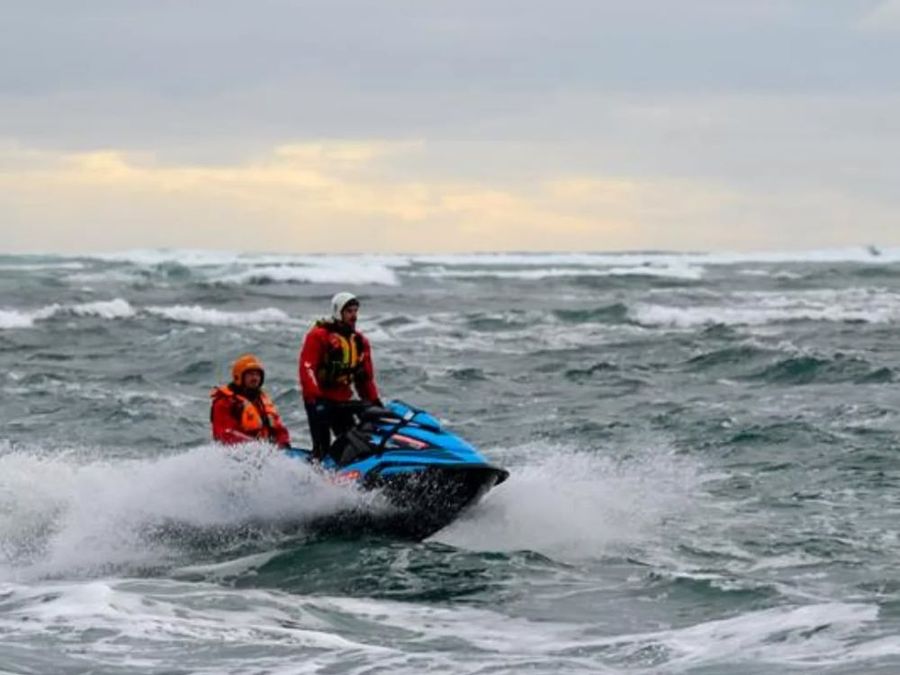
The callout came through at 10:12am, with Raglan Volunteer Coastguard immediately dispatching crews aboard Rylock Waikato Ski Rescue 1 and Rylock Waikato Ski Rescue 2, a pair of Yamaha VX 1800 Waverunners capable of rapid deployment within a 2NM range from shore. Suited to fast response, scene assessment, and initial treatment, the two craft were on scene quickly. They were joined by Gallagher Rescue, an 11-metre aluminium catamaran of Scott Robson design, built by West Coast Boats Ltd and powered by twin 500hp Yanmar diesel engines producing 748kW and driving 292 Hamilton waterjets. With a maximum speed of 42 knots, a cruising speed of 25 knots, a fuel burn of 80 litres per hour, and a range of 229NM, Gallagher Rescue is purpose-built for exactly this kind of work.
None of these vessels came easily. They represent years of dedicated fundraising and the backing of sponsors including Gallagher Engineering and Rylock Waikato, whose support has been central to giving the Raglan community a coastguard operation capable of working in genuinely demanding conditions. That kind of grassroots effort quietly underpins the safety of boating across coastal New Zealand.
The search required careful coordination. Working the surf zone along the north spit, Rylock Waikato Ski Rescue 2 conducted a systematic search alongside a Raglan Surf Lifesaving IRB, while nearby boaties on the water played a valuable role by pointing rescuers toward the vessel's last known position. Rylock Waikato Ski Rescue 1 eventually located the upturned boat and all four people, further north in the direction of Mussel Rock.
From there, the response unfolded efficiently. Two of the casualties were brought ashore by surf lifeguards, while Coastguard crews retrieved the remaining two. Volunteers and Surf Lifesaving personnel administered first aid before Hato Hone St John paramedics assessed all four individuals at the Coastguard base. Two were reported in moderate condition and two in minor condition.
What made the outcome as good as it was had much to do with the choices the group had made before they ever reached the bar. They had logged their crossing, they were wearing lifejackets, and they had activated their personal locator beacon when things went wrong. Each of those steps directly contributed to the speed and success of the rescue. Even when the sea overwhelms the best-laid plans, those precautions can be the difference between a difficult situation and a catastrophic one.
Raglan Volunteer Coastguard acknowledged the wider community response in their statement, singling out the local boating community for their quick thinking and communication during the incident. Combined with the work of Surf Lifesaving and Hato Hone St John, the coordinated effort produced what the coastguard described as an excellent outcome.
As the unit noted, "It's great to see the boating community looking out for one another and putting safety first."
Raglan Volunteer Coastguard crews stand ready around the clock, every day of the year, providing a constant presence on one of the country's more challenging stretches of coastline.
The unit is currently working toward a significant upgrade. After 25 years of service, its current rescue vessel is due for replacement, and a campaign is underway to fund a new boat fitted with modern technology and improved efficiency. The goal is $2 million, and $600,000 has already been raised. Donations of any size contribute directly to faster response times and greater safety for both crews and those they rescue.