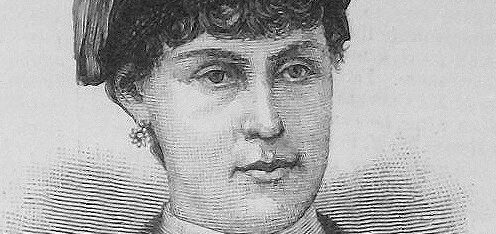
When Susan Matilda Cunninghame-Graham Henn stepped aboard the 102-foot steel cutter Galatea in 1886, there were no diversity policies to protect her, no inclusion mandates to open doors, and certainly no media campaigns proclaiming the significance of what she was about to do. There was simply a formidable Scottish woman, a storm-tossed yacht, and a race that would define her legacy.
According to the America's Cup Hall of Fame, her husband, Lieutenant William Henn RN, was too ill to steer when Galatea lined up against Mayflower in the America's Cup challenge off New York. Victorian propriety would have pointed Susan firmly toward the companionway. She ignored it entirely, taking the helm with a composure and confidence that left the American press reaching for superlatives. They praised her "enthusiasm and skill as a masterful helmswoman," a tribute that carried considerable weight in an era that barely acknowledged women as passengers, let alone competitors.
She was not making a statement. She was not campaigning for anything. She simply did what the situation required, and she did it with a capability that most of her male contemporaries would have struggled to match.
{{MEDIA_1}}
Nearly 140 years later, the symmetry is striking. In 2025, Susan Henn was inducted into the America's Cup Hall of Fame, the very same year the event introduced a requirement that every AC75 crew include at least one woman. History rarely arranges itself so neatly, and the symbolism is difficult to ignore.
The sport has long grappled with the distinction between genuine representation and token gestures, and that tension has not disappeared simply because a rule now exists. Henn's story cuts through the debate with unusual clarity. She sought no invitation and required no regulation. She was competent, an opportunity presented itself, and she took it without waiting for permission.
Jo Aleh's selection for Emirates Team New Zealand brings that same question into sharp contemporary focus. Aleh has spoken candidly about the awkwardness of quotas, acknowledging them as necessary but imperfect instruments for shifting deeply ingrained habits. What Henn confronted was harder still: a culture that had not even conceived of a woman at the wheel of a racing yacht, let alone begun to argue about whether one should be permitted there.
One reached the helm out of urgent necessity, the other through the mechanism of policy. Both were, and are, more than capable, having earned their place through skill alone.
When the AC75 fleet lifts onto its foils in Naples in 2027, at least one woman will be aboard each boat. In an ideal world, that number would be higher, supported by structures that cultivate genuine equity rather than simply satisfying a minimum requirement, not because women are permitted to compete, but because they belong there on merit. That is the real weight of Susan Henn's legacy: clear evidence, drawn from a race in 1886, that talent carries no gender, only the need for opportunity.