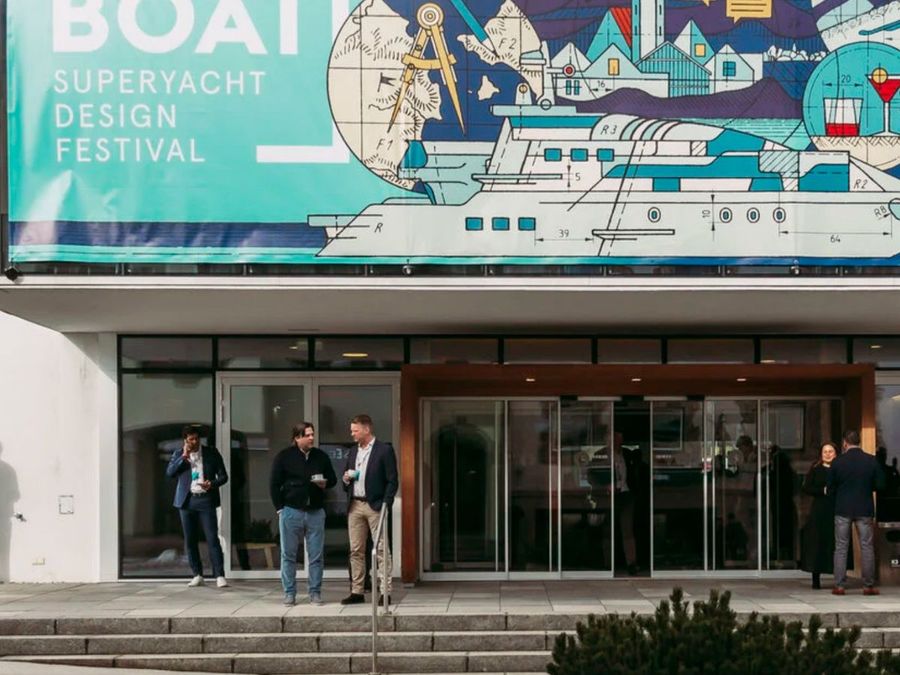
Three days in the Austrian Alps might seem an unlikely setting for a conversation about the future of superyacht design, yet Kitzbühel has become precisely that. The Superyacht Design Festival returns to the mountain town from 1 to 3 February 2026, drawing together influential designers, builders, naval architects and creative thinkers in the global superyacht world. Far from the ocean, surrounded by ski runs rather than shipyards, the alpine setting encourages the kind of fresh thinking the event is built around.
No vessels are on display and no sales are being made. The festival is three concentrated days of ideas, dialogue and inspiration, bringing together owners, interior stylists, materials specialists and the people who ultimately decide how yachts look, feel and perform.
New Zealand has a strong stake in this conversation. The country's superyacht sector is well established, with local builders, designers and fabricators contributing to projects at the highest levels of the industry. The trends and directions that emerge from Kitzbühel tend to filter outward across the global marine sector, shaping everything from custom interior fit-outs to performance-oriented hull design.
The themes driving this year's programme reflect the pressures and possibilities reshaping the superyacht world. One major focus is the evolution of power systems, with sessions exploring safer, smarter and greener approaches to yacht propulsion and energy management. Advances in battery technology, solid-state energy storage and integrated management systems feature prominently, pointing toward significant shifts in how superyachts will operate across the coming decade.
A second strand of the programme examines what organisers describe as human-centred design. Speakers from the fields of neuroscience, wellbeing science and spatial psychology will explore how the physical environment of a yacht affects the people aboard. The challenge posed to designers goes well beyond aesthetics, asking how an interior can actively support calm, comfort and genuine connection rather than simply presenting a polished surface.
Running alongside these forward-looking discussions is a question that has long occupied the superyacht world: whether a yacht is best understood as a private sanctuary or as an expression of personality meant to be seen and admired. The tension between these two impulses is not resolved but rather examined, with owners and designers encouraged to consider how privacy, individual character and visual impact can be balanced in a modern vessel.
Three awards programmes give the festival a competitive dimension. The Design and Innovation Awards recognise outstanding achievement across naval architecture, exterior design, interiors, sustainability and engineering. Taken together, the winners offer a reliable indication of where superyacht design is heading next.
The Young Designer of the Year Award directs the spotlight toward designers under 28, many of whom are expected to become significant voices in yacht design over the years ahead. For students and emerging design professionals in New Zealand, the award serves as a useful benchmark. It demonstrates that the industry is actively looking beyond established names, and that talent from any corner of the world can earn recognition at this level.
The third awards platform, the Boat Artistry and Craft Awards, celebrates the kind of work that distinguishes the finest superyachts from the merely expensive. Sculptural elements, fine joinery, handworked surfaces and custom furniture all fall within its scope. New Zealand's marine industry has built a considerable reputation for exactly this kind of precision craftsmanship and artisanal fit-out, and the awards affirm that hands-on excellence remains central to the superyacht world rather than peripheral to it.
The geographic distance between Kitzbühel and New Zealand does nothing to diminish the festival's relevance to local industry. Design directions established at events like this one ripple outward through the global marine sector, eventually influencing the performance boats, custom launches and specialist refits that New Zealand yards produce. For interior specialists, the festival's emphasis on neuroscience, tactile materials and personalised spaces aligns with a broader client shift away from formulaic luxury toward environments that feel genuinely considered. For younger designers, it offers both a standard to measure themselves against and a visible route toward international recognition.
The conversations that take place in Kitzbühel each year carry weight well beyond the event itself. Craft, innovation and design that places human experience at its centre are the values the festival keeps returning to, and they are values that New Zealand's boatbuilding culture understands well.