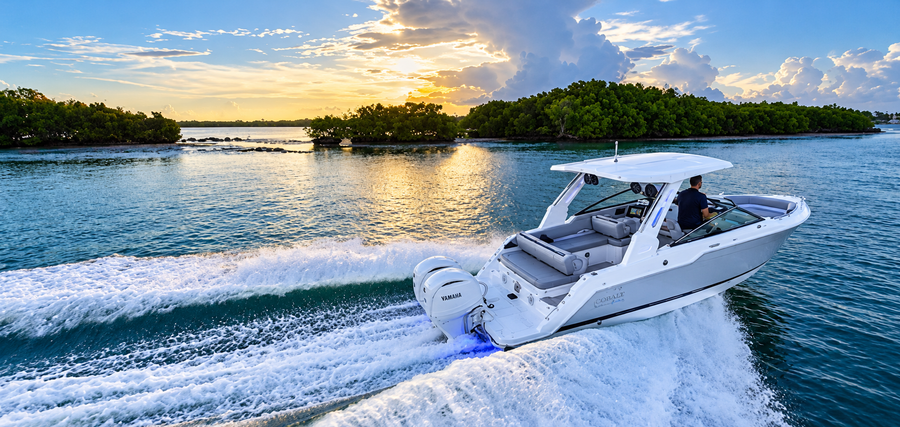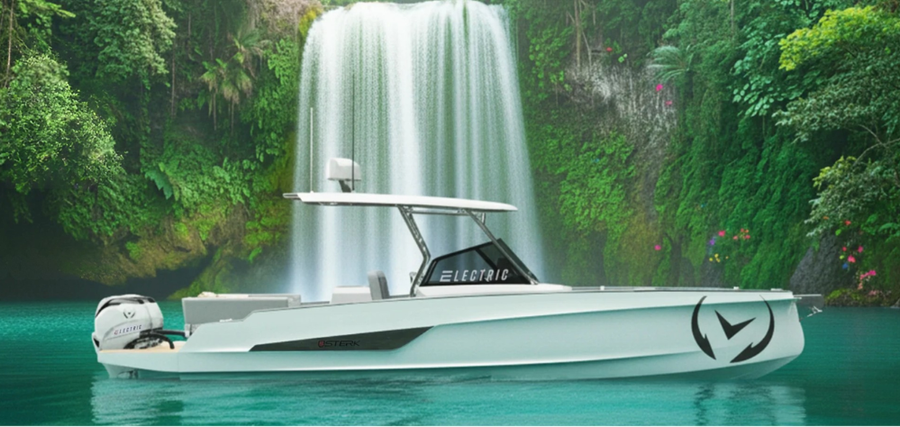
Vision Marine is showcasing its STERK 31E at the 2026 Fort Lauderdale International Boat Show, combining twin electric outboards with Avikus navigation and assisted docking technology.
Vision Marine Technologies has brought its STERK 31E electric centre console to the 2026 Fort Lauderdale International Boat Show, combining twin E-Motion 180E electric outboards with intelligent navigation and assisted docking technology developed by Avikus. The 31 foot boat brings together two increasingly important areas of recreational boating, electric propulsion and electronic systems designed to assist skippers with navigation and close quarters manoeuvring.
The STERK 31E is based on a German designed centre console platform, with two Vision Marine electric outboards providing propulsion. For this year's Fort Lauderdale display, the company has added technology from Avikus, an HD Hyundai subsidiary specialising in navigation and vessel control assistance. The show runs from 28 October to 1 November 2026.
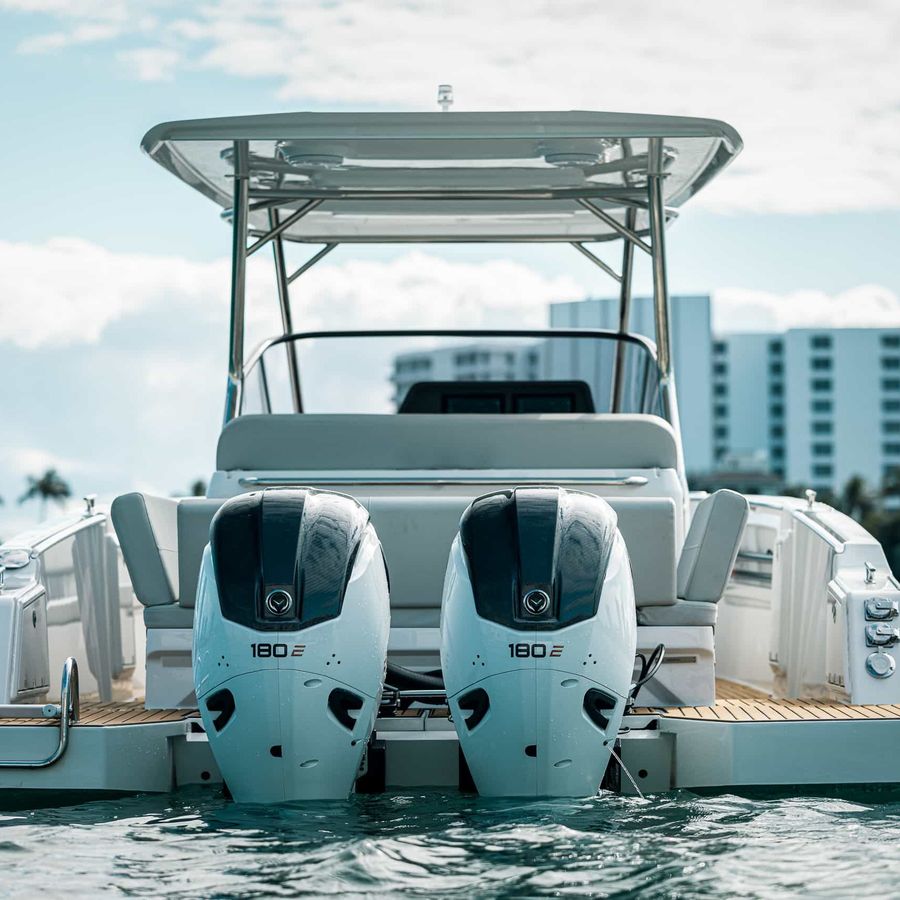
STERK 31E brings propulsion and navigation together
Vision Marine announced its partnership with Avikus in August 2026, selecting the STERK 31E as the first platform for integrating the company's NEUBOAT navigation and operator assistance technology. The programme connects propulsion, steering and helm controls with sensors capable of detecting surrounding objects and supporting navigation decisions.
The electric STERK project predates the collaboration. Vision Marine announced the twin E-Motion 180E installation in September 2025, describing a battery system exceeding 170 kWh. Go Boating has previously covered the company's E-Motion 180e inboard development, another application of its electric propulsion technology.
The latest partnership extends that development beyond propulsion alone. Connecting the motors and steering with navigation electronics could allow the boat to respond to information gathered by onboard sensors, particularly when manoeuvring in confined spaces.
How the STERK 31E docking assistance works
Avikus's NEUBOAT technology uses cameras and LiDAR sensors to detect objects and assess their position around a vessel. LiDAR uses laser measurements to help identify nearby obstacles, providing information that can support navigation and close quarters boat handling.
The planned integration includes object recognition, route planning, smart autopilot, adaptive cruise, collision avoidance assistance and automatic docking assistance. These functions remain subject to successful integration and validation, rather than representing a confirmed list of customer features.
For recreational skippers, assisted docking is particularly interesting. Bringing a boat alongside a pontoon requires careful management of momentum, steering and clearance, often with wind or current complicating the approach. Integrating sensors with propulsion and steering could help the skipper manage those movements, although the STERK installation's capabilities have yet to be independently demonstrated.
Other manufacturers are exploring similar connections between helm controls and propulsion. Go Boating recently examined Nanni's NOVA docking system, which integrates the control lever, joystick and digital dashboard into a coordinated helm arrangement.
Importantly, NEUBOAT remains an operator assistance system. A qualified skipper must remain at the helm and retain responsibility for navigation and safe operation.
Electric boating continues to develop
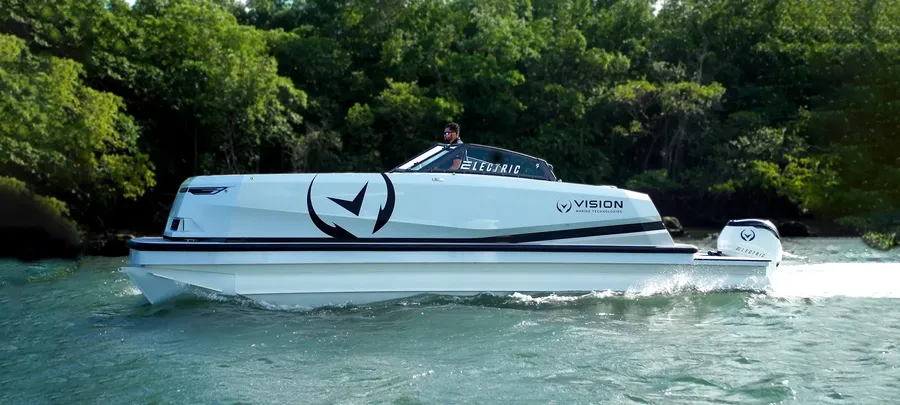
Alongside the STERK 31E, Vision Marine is displaying its SPECTR 26E electric pontoon, demonstrating another recreational application for its propulsion technology.
Electric outboard development is also progressing closer to home. Go Boating recently covered the ProtectorE 310 Chase powered by Naut's Kaha electric outboard, showing how New Zealand companies are exploring high powered electric propulsion.
For prospective owners, however, practical questions remain. Vision Marine's has yet to formally establish independently verified cruising range, charging times or handling performance for the STERK 31E configuration displayed at Fort Lauderdale.
Nonetheless, the STERK 31E represents an interesting development, bringing electric propulsion, navigation sensors and assisted manoeuvring into one integrated system could influence how future recreational boats are equipped and handled. Its practical value will become clearer as Vision Marine and Avikus complete further validation and publish results from testing on the water.
The STERK 31E and SPECTR 26E are on display at Bahia Mar Yachting Center, G Dock, stand G276, until 1 November 2026.