From integrated helm systems to digital inventory tracking, three technology start-ups at the Leisure Boating and Superyacht Start-Up areas at Metstrade are offering a glimpse of where marine electronics and onboard management are heading.
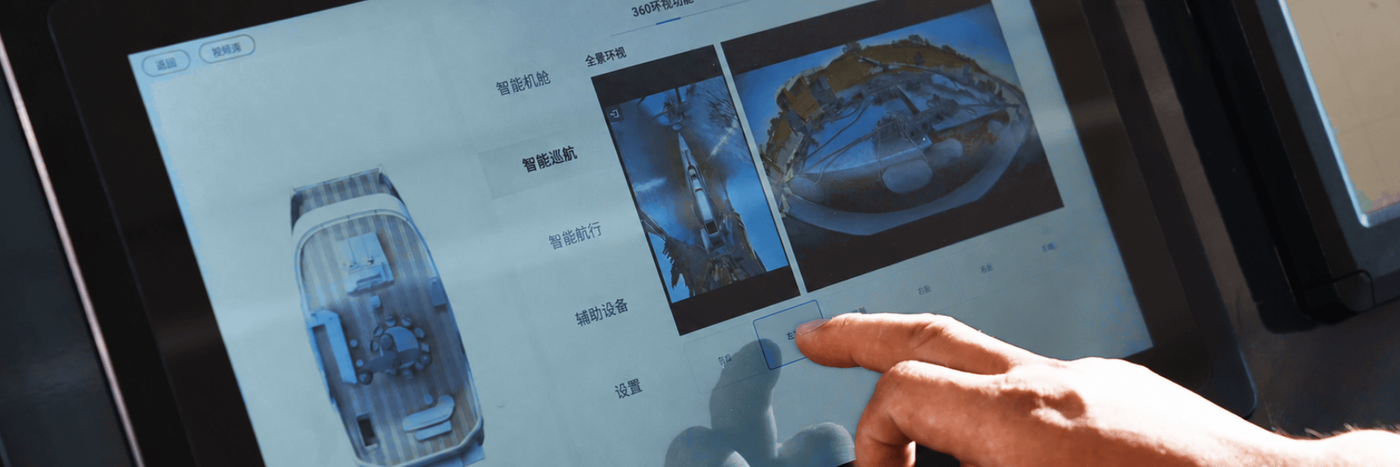
Chinese company Tonjo, founded in 2025, has built what it calls an Intelligent Helm and Assisted Navigation system designed to bring navigation electronics, engine data, lighting, climate control and entertainment into one interface. Boat owners currently have to juggle multiple displays and apps from different suppliers, and boatbuilders have to make those systems work together. That's exactly what Tonjo wants to change.
Sherry Zhang says the integration is meant to make boating safer, simpler and smarter. "One central view of key vessel information helps skippers to monitor the status of engine, electronics and more on board without having to piece together information from separate displays," she says. The system's AI also offers assisted navigation to support situational awareness and decision-making, she says, and having only one interface at the helm station reduces the number of separate screens, apps and switch panels a boater needs to learn.
Tonjo arrived at Metstrade with specific goals. "We have two priorities: finding European distribution and service partners, and securing a first factory-fit project with a production boatbuilder. We are particularly interested in builders looking for an integrated helm solution," Zhang says. A successful Metstrade, in her words, would mean agreeing on a first factory-fit project and establishing distribution and service coverage in a European market.
Dutch outfit Sway, founded by Amsterdam sailors Erwin Marges and Eric van der Velde, takes a different tack. Their Sway box connects with all the NMEA instruments and equipment on board and automatically logs every trip, course, distance, speed, weather, wind force and direction, and, if connected to the NMEA, fuel consumption, engine hours and AIS.
The product went commercial in 2025 after two and a half years of development, placed in stores with a selected group of retailers in leisure boating in the Netherlands. Marges says the company has built an active group of ambassadors, mostly long-distance sailors on sailing yachts, though Sway suits any boat with NMEA instruments, including motor yachts. At Metstrade the company is introducing the latest software update, V3. "We hope to expand our network throughout Europe at the show," he says.
Sway visited the Start-Up Pavilion last year before deciding to exhibit themselves this time round. "We presented ourselves to Gabbi of Yachting Ventures because we knew participating here could be good launching of Sway at an international level," Marges says.
Then there's Sea-it, aimed squarely at the superyacht sector. Built by Blake Smidt, a technician, and his partner Roxy, a chief stewardess, it tackles a problem crew know well: inventory management eating into time that should go toward owners and guests.
"Sea-it gives the interior team one live view of everything on board, from the cellar to crew uniform. Crew log things as they go, like a bottle opened at lunch, a broken glass or a polo issued to a new deckhand," Smidt says. It takes a few seconds on a phone or iPad to keep the inventory current, he says, rather than losing hours to a spreadsheet that's out of date the next day.
Uptake has been quick. Three boats had started using the app with their inventories already loaded within the first two weeks of launch, with around a dozen more signing up or showing interest within the first month. The app is free during its launch period, with pricing planned to go live around mid to late November, alongside a continuing free trial.
Gabbi Richardson of Yachting Ventures, which runs the Start-Up areas, says trust still has to be earned the old-fashioned way. "Newcomers from other industries bring valuable expertise, but they need opportunities to demonstrate that their products work in a marine environment and understand how customers actually operate. A successful pilot with a respected shipyard or operator can make a significant difference in building that trust," she says.
Growth timelines vary widely between software and hardware ventures, Richardson adds. "Securing those first customers, followed by repeat orders or wider adoption, is a more meaningful indicator of progress than the age of the company," she says, adding that face-to-face relationships built at shows like Metstrade are a key part of how start-ups grow.