Seven boats called in as Friday's sun lifted over the water, and taken together their reports painted the picture of a fleet that had found its rhythm somewhere in the dark hours between the start and dawn. Crews sounded tired in the best possible way: alert, satisfied, and with plenty of race still ahead of them.
The defining quality of that first night at sea was, by common agreement, glamour. Not the dressed-up kind. The kind that shows up unannounced far offshore, when the boat is moving well beneath a sky full of stars and the most complicated decision facing anyone on watch is what to eat when the next shift comes up.
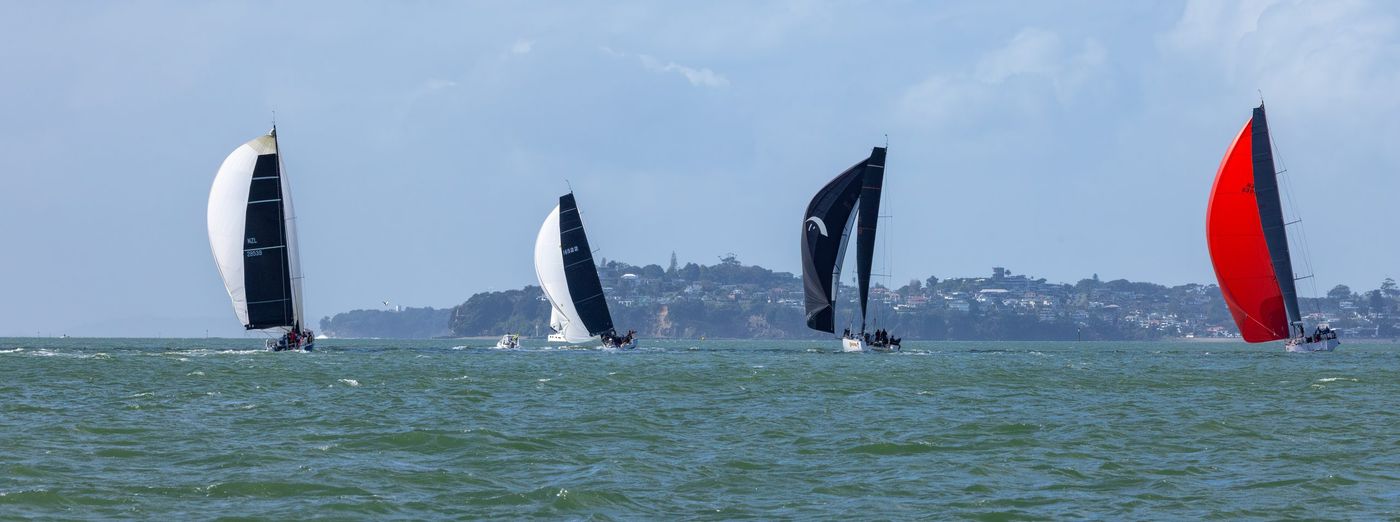
The race start, for those who missed it:
At the front of the fleet, Clockwork checked in with the composed tone of a crew that knows exactly where it stands. "Champagne sailing overnight, though a bit slower, making our way across to the Kings as the sun rises. Could be plenty of waiting today." Steve Mair's crew will have one eye on the light air patch that typically sits near the Three Kings Islands. Getting through it before the boats behind can close the gap is the key challenge facing Clockwork as the race enters its second phase.
Nathan Williams' Cape 40, Mr Kite II, sitting second on line honours and third on handicap, offered something rather more economical. "Glamour night. All happy." Three words covering the same ground as a full paragraph, and hard to argue with any of them.
Equilibrium produced the most data-rich report of the morning. Graham Matthews logged a course of 303 degrees over ground at 6.5 knots, with the wind easing back to 4-6 knots from 220 degrees. He described a very pleasant night passage, with kind seas and clear skies, and confirmed that all personnel on board are well and enjoying the challenge. The next six hours in negligible breeze are where Equilibrium's race will be shaped. Carrying the heaviest handicap in the fleet, any prolonged spell of very light air is an uncomfortable proposition for Matthews and his crew.
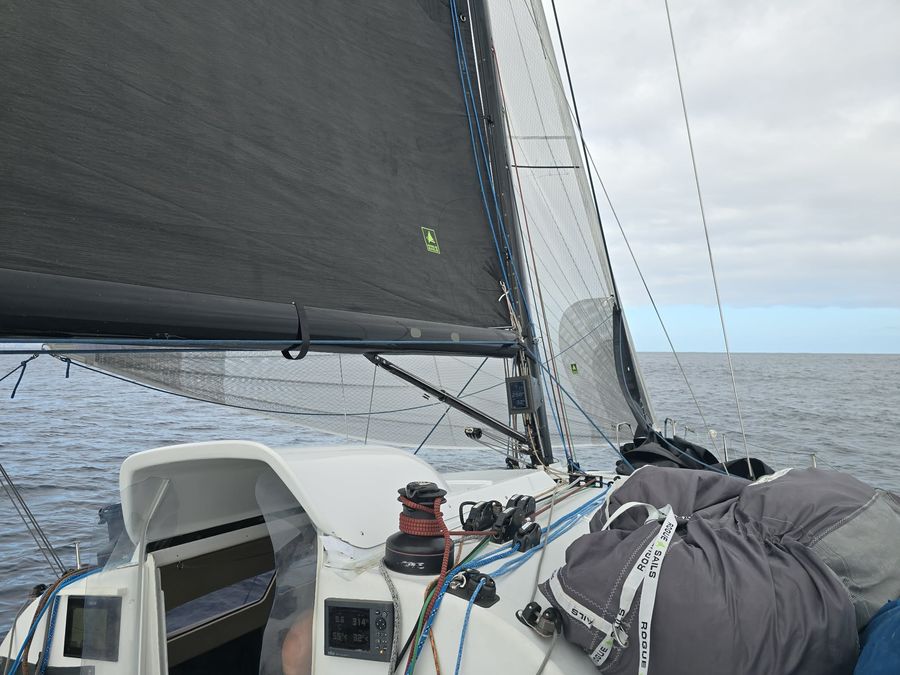
Somewhere in the middle of the pack, Motorboat III matched Mr Kite II's enthusiasm and added a little more colour. "Absolute glamour of a night for a sail. Dark as anything but the stars were epic." The photo that came with the report told the rest: four crew in full offshore kit, mugs raised to the camera somewhere out in the dark over the Hauraki Gulf. By Friday morning, Damon Jolliffe had been up the mast, the Rogue Sails inventory was back in full working order, and the crew appeared to be having considerably more fun than the situation strictly required.
Higher Ground took a different line entirely. John Seely's Ross 1066 crew seem to be running a parallel operation out on the water. "Getting the game rods ready. Big gear rigged up for big fish and big sails for big wipeouts." Whether anything took the bait was not reported. The big sails, based on the race photo, clearly delivered.
At the back of the fleet, Carpe Diem dealt with the tracker question head-on and without drama. "Calm uneventful night. Bit slower now. Not as slow as what our tracker is showing." Rowan Smith's crew are plainly aware that their position on the YB Tracker has been drawing attention. The Elliott 1060 is moving, its 0.778 handicap is doing meaningful work on corrected time, and the people sailing it sound entirely unbothered by whatever conclusions others may be drawing.
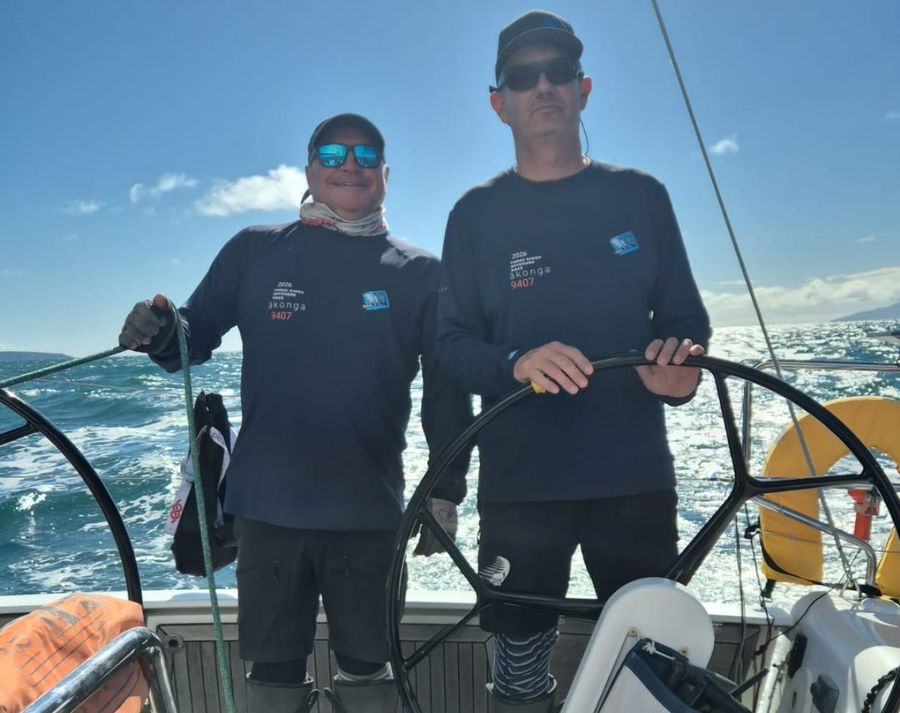
And then there is Ākonga. Nick Roberts' Dehler 41 has been filing the most evocative dispatches in the fleet from the very start. "Stunning starlit night. Lighter breeze overnight with a calm sea. Occasional dolphin escort. All well on board and we are off Doubtless Bay." Friday breakfast on Ākonga was coffee, muesli, yoghurt and blueberries. The day before it had been beef and mozzarella pies. By any reasonable measure, the galley on Ākonga is the best-managed department in the entire race.
Plenty of miles remain. But from every report that came through on Friday morning, the first night out there had been a very fine one to be at sea.