Isaac Burrough grew up exploring the Marlborough Sounds, spending every spare hour fishing, water-skiing, and tinkering with anything mechanical. After a decade designing for leading superyacht studios across Europe, he returned to New Zealand in 2020 with a clear ambition: to create a Kiwi alloy boat that matched the refinement of a European day cruiser while handling the demands of a southerly rolling up the Sounds.
"I've always started with how a boat should feel and look, then worked out how to build it," he told Boating New Zealand. "I didn't want to design to the limitations of fabrication."
That thinking gave rise to EightySix Boats, a name drawn from Burrough's birth year and a brand defined by clean, purposeful design.
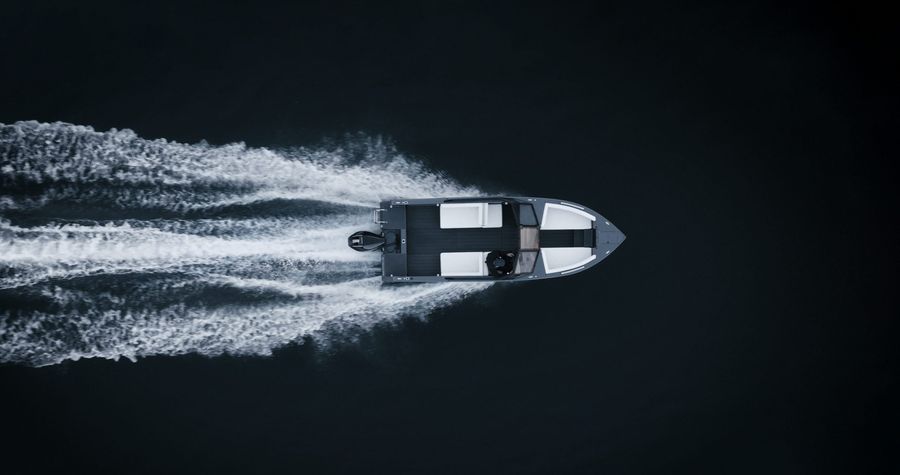
Most alloy boats begin life on a welder's jig, shaped by what fabrication makes easy. EightySix Boats takes the opposite approach, starting with the designer's pencil and letting the build process follow. The result is a hull with crisp, confident lines, a near-vertical bow, and an overall stance that would look at home in fibreglass or carbon, with nothing about it that reads as tinny.
“I wanted a boat that didn’t scream ‘tinny’,” says Burrough. “It had to be rugged but refined.”
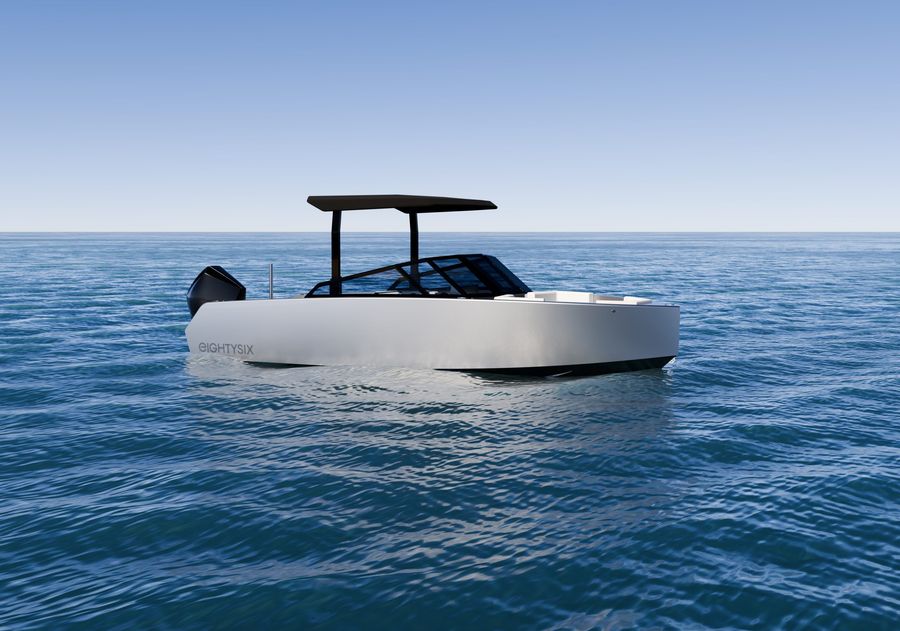
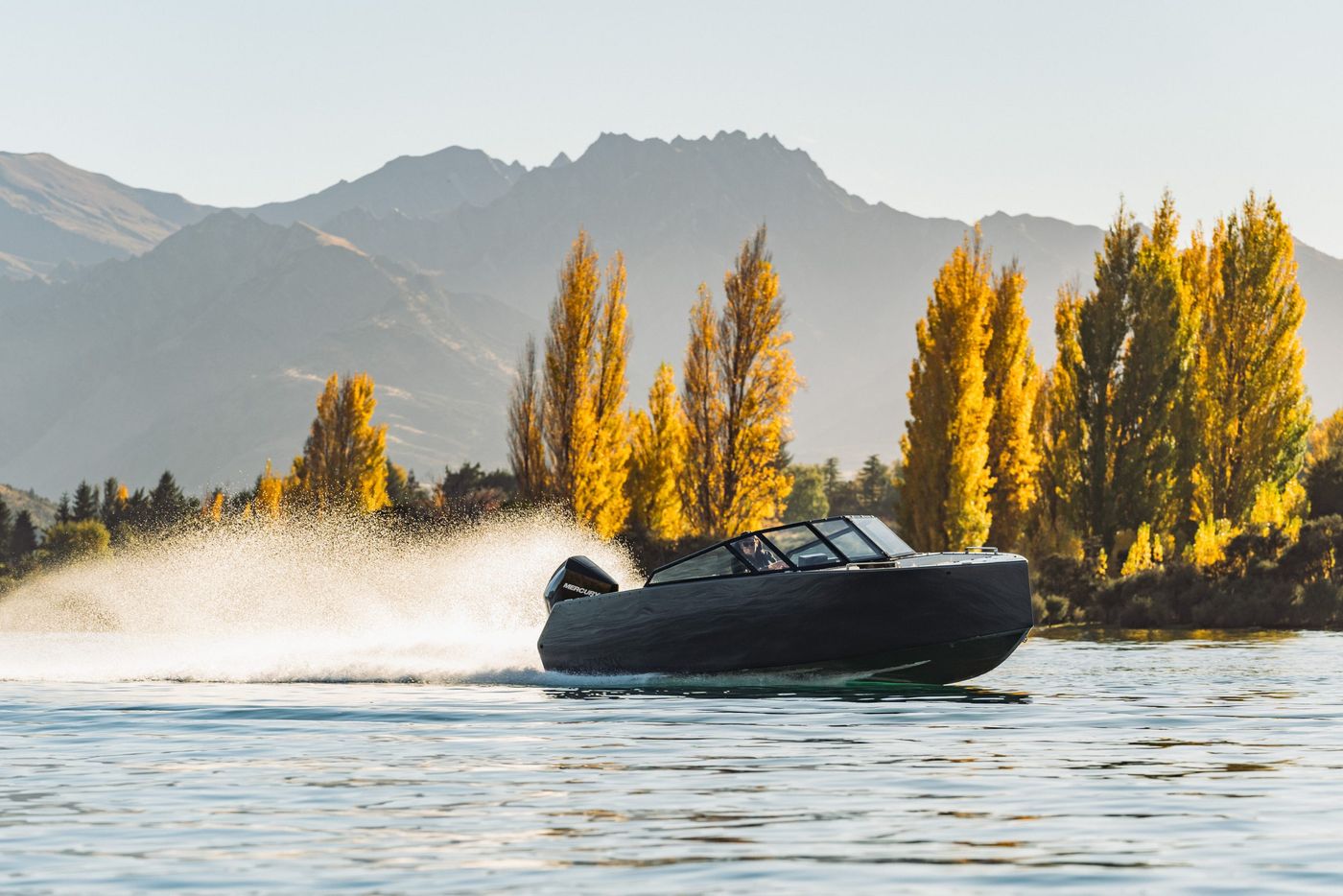
Hull One proved the concept was more than aesthetic ambition. Based full-time in the Marlborough Sounds and used nearly every day, the boat tracks cleanly through chop and delivers a soft, dry ride. Twenty-one degrees of deadrise and a long waterline keep it settled in rough water while retaining a playful edge at speed. Owners have pushed it to close to 90 km/h behind a single Mercury V8, a figure that speaks as much to the quality of the hull form as to the engine behind it.
Hull Two is currently under construction, with refinements across almost every area. The floor sits lower, the profile leaner, and the structure has been simplified throughout, with fewer components, fewer welds, and a measurable reduction in weight. Forward, the bow seating has been redesigned as a full U-lounge, giving the front of the boat genuine social appeal. At the stern, additional space has been freed up for dive gear or fishing tackle.
The standout feature on Hull Two is an electric targa top. Left open, it lets the cockpit breathe; at the touch of a button it lowers to meet the windscreen, creating a sheltered space when conditions deteriorate.
[gallery td_select_gallery_slide="slide" ids="159434,159432,159431,159430,159429,159428,159427"]
The helm layout reflects Burrough's superyacht background, stripped back yet fully capable. A single 12-inch Simrad display handles navigation and integrates Mercury SmartCraft data, with options for joystick docking control and a bow thruster. Zipwake or Humphree interceptors, underwater lighting, and further upgrades are available, each engineered into the build from the outset rather than added as an afterthought.
Business partner Sam Watts puts it plainly: "Plenty of alloy builders try to make boats look flash with deck foam and cupholders. We'd rather everything on board earn its place."
EightySix Boats is not chasing the dedicated tournament angler or the long-range cruiser market. The target is families and groups of friends who want to make the most of a day on the water, fishing in the morning, towing a skier after lunch, and dropping into a dive spot in the afternoon. The boat is built to handle a punishing Sounds crossing and tidy enough to draw attention at the jetty.
[gallery td_select_gallery_slide="slide" ids="159426,159425,159423,159422,159421"]
The team has grown to include Watts and Matt Frost, both bringing substantial marine industry experience. Fabrication has moved south to draw on the well-established alloy-boat manufacturing network in Otago and Southland. Hull Two is targeted for completion in early 2026, with its public debut planned for the Auckland Boat Show.
Burrough sums it up simply:
“We’re building a boat that fits the way New Zealanders actually use the coast; practical, good-looking, and built to last.”