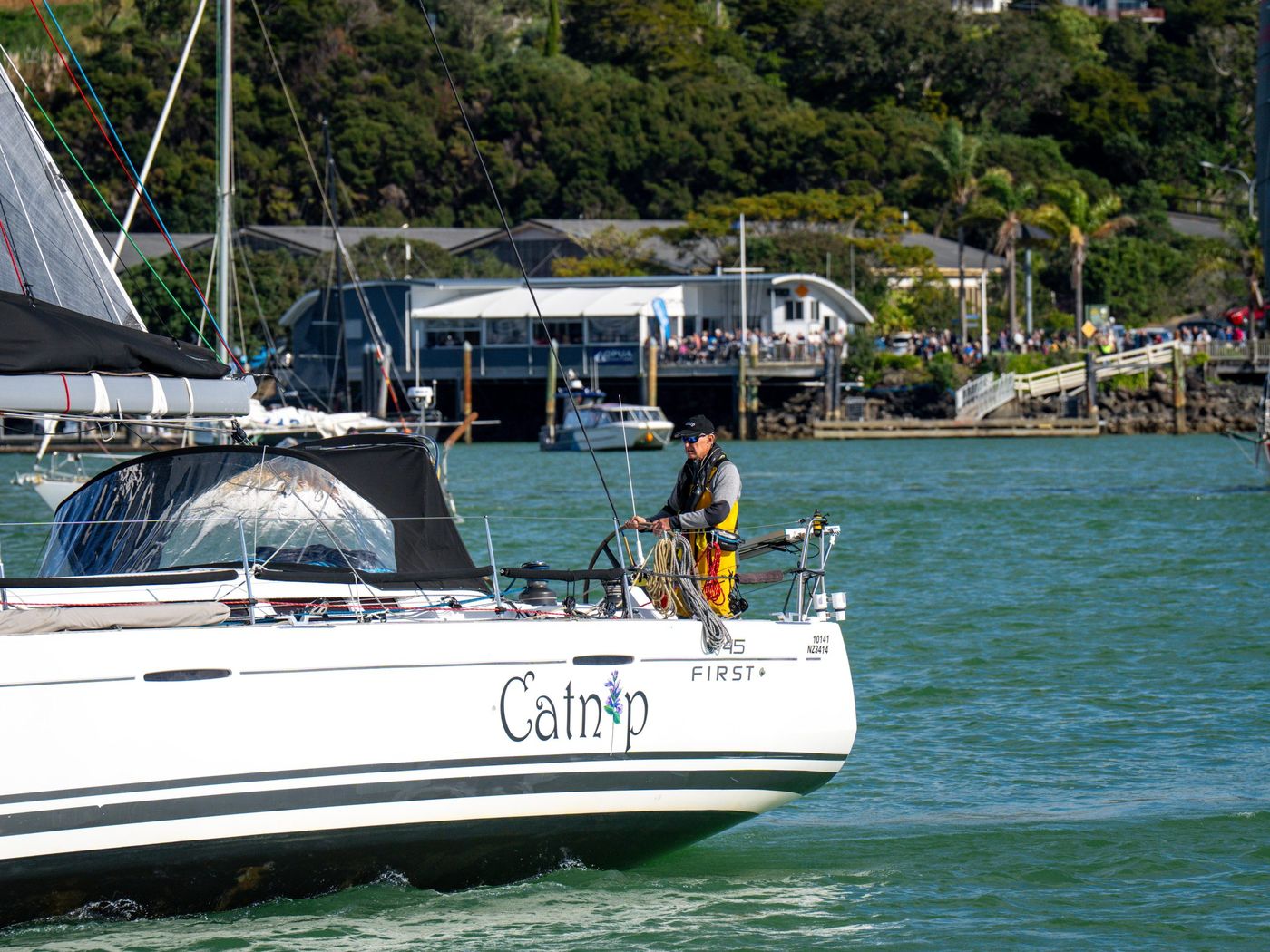
Six boats are across the finish line, four have retired, and five competitors remain out on the water. Closest to home is Geoff Thorn's Beneteau First 45 Catnip, just 17 nautical miles short of the Southport finish with a projected crossing time of 22:20 NZST tonight.
The day's standout moment came early. Ben Ball's 1976 Cavalier 36 Camellia crossed the line at 14:43 NZST, completing the 2026 Solo Trans-Tasman Yacht Challenge in 9 days 2 hours 37 minutes and 36 seconds and finishing sixth across the line overall. On PHRF corrected time, Camellia currently holds second in the monohull fleet at 6 days 10 hours 21 minutes and 2 seconds, behind Malcolm Dickson's Sarau in first, with several boats still racing and the final order yet to be confirmed.
Among those still at sea, Peter Bourke's Diablo warrants close attention. An S&S 8.7-metre vessel, she is both the smallest boat in the fleet and its only wooden one. She has absorbed everything this race has thrown at her, and her 0.660 handicap means that, depending on how the remaining miles unfold, she could yet work her way into the conversation around the current PHRF top three.
| Pos | Boat | Handicap | DTF | Dist Sailed | 24h DMG | Est / Actual Finish | Corrected Elapsed |
|---|---|---|---|---|---|---|---|
| 1 | Sarau ✓ | 0.798 | — | 1329 NM | 0 NM | 7 Jun 06:38 | 6d 4h 56m 35s |
| 2 | Camellia ✓ ↑ | 0.706 | — | 1284 NM | 129 NM | 8 Jun 14:43 | 6d 10h 21m 2s |
| 3 | Pacman ✓ ↓ | 0.840 | — | 1330 NM | 0 NM | 7 Jun 07:09 | 6d 13h 7m 24s |
| 4 | Vixen Racing ✓ | 0.941 | — | 1415 NM | 0 NM | 6 Jun 12:15 | 6d 14h 13m 49s |
| 5 | Diablo | 0.660 | 202 NM | 1094 NM | 131 NM | 10 Jun 18:01 | 7d 10h 8m 55s |
| 6 | Catnip | 0.851 | 17 NM | 1286 NM | 177 NM | 8 Jun 22:20 | 8d 0h 31m 44s |
| 7 | Nautilass | 0.824 | 71 NM | 1287 NM | 167 NM | 9 Jun 09:38 | 8d 3h 44m 6s |
| 8 | Smoko | 0.685 | 263 NM | 990 NM | 113 NM | 11 Jun 12:26 | 8d 5h 30m 46s |
| 9 | Fair Seasons | 0.696 | 361 NM | 983 NM | 128 NM | 13 Jun 00:00 | 9d 9h 26m 43s |
Provisional results. Last position update: 8 Jun 19:00 NZST. All times NZST. ↑ moved up, ↓ moved down. Full fleet results pending.
Terry Dunn checked in from his Beneteau First 36 Nautilass with 130 NM still to run and the Southport bar firmly in his thoughts. "Should be going over the bar and into the bar," he said, projecting arrival for tomorrow. The defining frustration of his passage has been the gap between Nautilass and Catnip, a margin that has refused to close no matter what conditions have offered. "He's 40 miles in front, and every day I think I'll be able to make that up. This boat's good downwind, it should be perfect for me. Last night we were doing tens and twelves. I'm thinking we're going to catch up. Geoff's going to look out his hatch in the morning and there's going to be Nautilass right behind him. But every day, same thing, he's 40 miles in front."
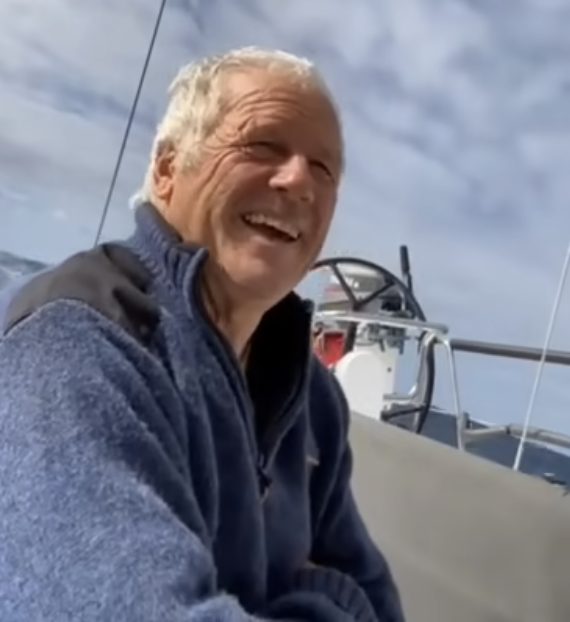
The previous day had been a hard one. His autopilot suffered what Dunn called a "brain fart," leaving him hand steering for hours. The AIS failed at the same time, poorly timed given he was approaching the Australian coast at night with shipping in the area. "There seemed to be electronic problems all day. It was a long, tiring day. I was running out of enthusiasm at night." A solid sleep and a boat that came right again have him charging hard for the finish.
Passing Middleton Reef two nights earlier brought Bill Belcher to mind: the sailor who wrecked on that reef in the early years of this race, spent three weeks drifting in a life raft, and was eventually found carrying a bag containing his suit. His explanation: "I want to be dressed properly for the prize giving." Dunn pointed listeners toward the book Trial by Tasman by Leslie Wright, which covers those earlier race stories, and drew a direct line between those accounts and what this fleet has endured. "The chaos of what's happened: Kevin with his forestay, Graeme Francis at the start with his boat taking on water, Billy Kidman, Wave, and now Doug Esterman hand steering the last 400 miles with his autopilot gone. This race has certainly matched up to all those trials."
Asked how a sailor knows the Australian coast is drawing close, Dunn offered a dry observation: "Polynesian navigators could tell by the birds. In Australia, you know you're close when you get the flies and the crocodiles. No flies yet."
Kevin Le Poideven's Open 40 Roaring Forty remains at Lord Howe Island, and the full sequence of events that put her there deserves telling properly.
After the forestay shackle sheared, Le Poideven made for Lord Howe Island. The first six hours in the island's lee were manageable enough, but the wind then clocked around early, well ahead of the shift the whole fleet had been counting on to carry them toward Southport. It arrived far too soon for him. What followed was 36 hours without sleep. Unable to anchor safely in the conditions, he developed a survival routine: motor up behind the mountain close to the cliff face in the dark using charts alone, shut the engine off, lash the helm, and drift out to sea. Sleep for an hour. Start the engine. Repeat. "Rinse repeat," he said. On the worst of those nights, the gaff mainsail was still up and he could not get it down against 45 to 50 knot katabatic gusts pouring over the mountain top, with Roaring Forty drifting at 7.5 knots. There was no sleep that night.
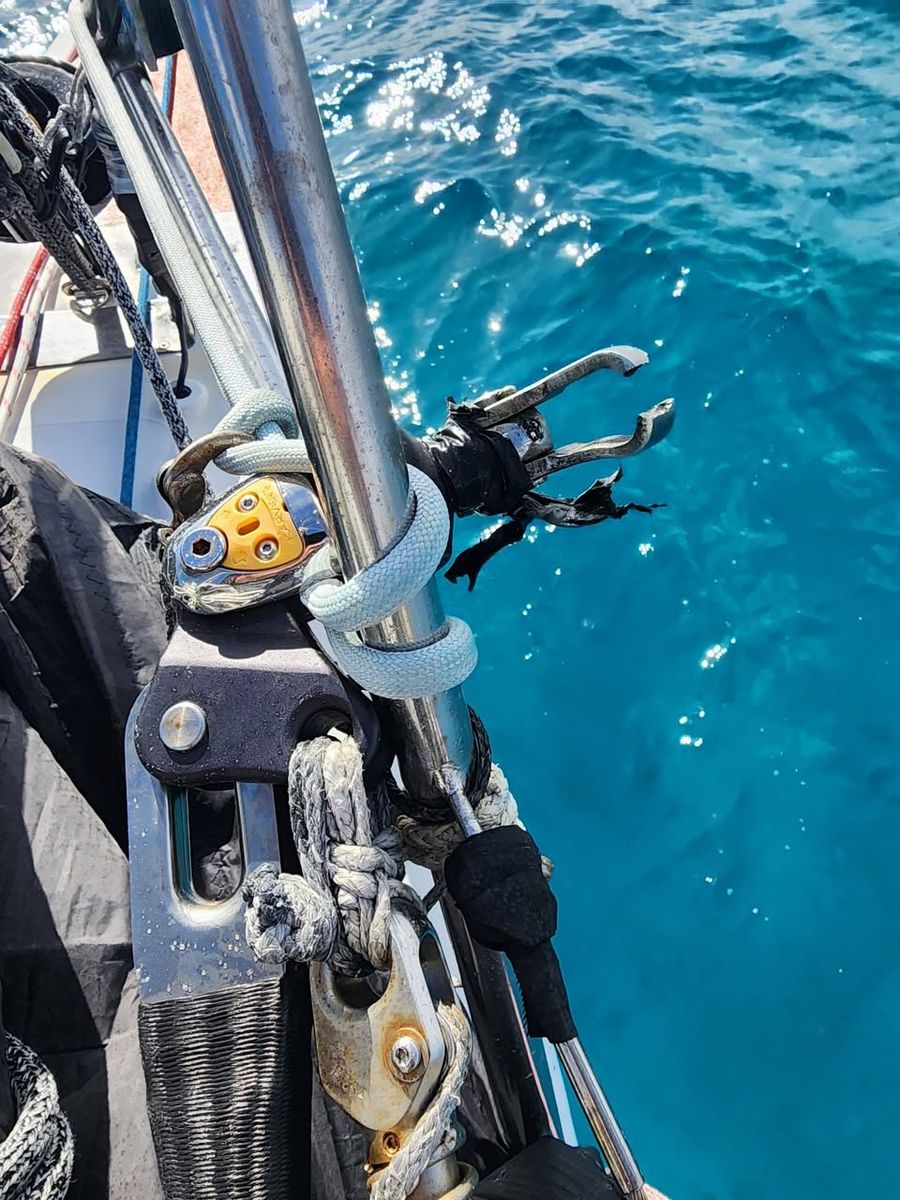
When conditions eased enough to allow a bay anchorage, he deployed his big Danforth anchor off the stern, set an alarm, took transits, photographed the landmarks, and went to sleep. The anchor alarm woke him. He checked the transit mark and it was not where it should have been. He grabbed the anchor rode and pulled. Nothing at the other end. Something had parted close to the chain. He already had a compass bearing exit plan ready: two minutes forward, turn right, open ocean. He executed it in the dark.
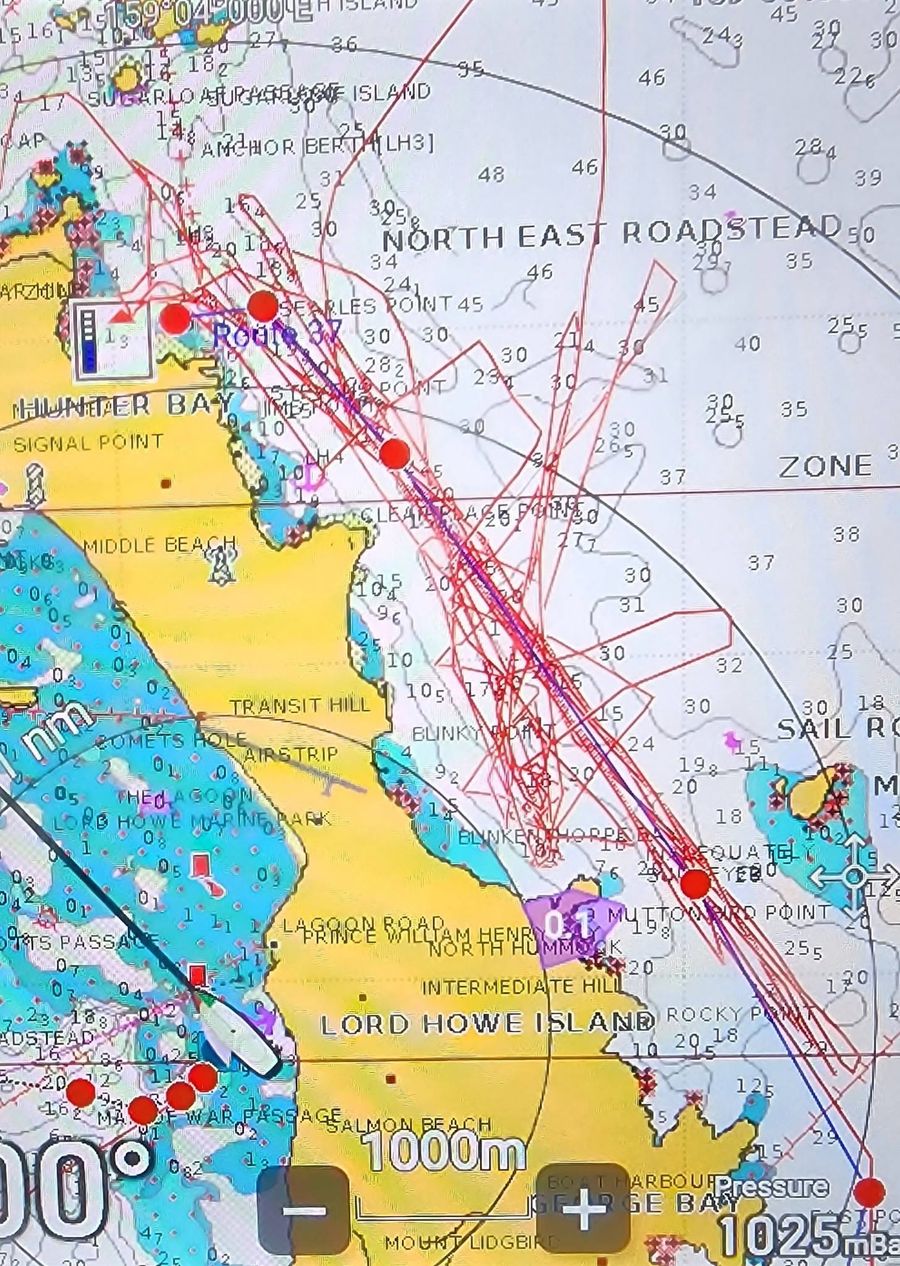
Then came the Man-O-War mooring incident. Happily moored at last, Le Poideven received a visit from biosecurity officers. Lord Howe Island has had a complete rat eradication and takes no chances. The officers left him rat traps baited with peanut butter. Shortly afterwards, the anchor alarm went off again, followed by the sound he had least wanted to hear: "bump bump bump bump — us bouncing across the bottom." Seven metres of water, bow pointing at the beach, the hull bouncing in the swell. He could practically walk ashore.
He scrambled below, got the engine running, unlashed the rudder, and hit reverse. Each passing swell lifted the hull enough to drag her back a little, though the wind kept pushing the stern toward shallower water. "I was running up to about 150 percent adrenaline." He eventually found deeper water, used a prop-against-rudder trick to kick the bow around, and made it back to the mooring patch. The culprit was a massive shackle on the mooring buoy with no pin through it. Joel and Macca from Marine Rescue Lord Howe Island came out in their tinny and helped him onto a solid mooring.
Sleep followed. Then the fuel arrived, and he repaired the forestay with a Dyneema replacement. Watching the race tracker from Lord Howe Island, he was philosophical about what might have been. "I can't believe there's only like a mile between Pacman and Sarau. I was part of that little tussle and I was gaining on them when we were near Lord Howe Island and then all my race fell in a poo pile." He was generous about both former rivals: "Hats off to Peter, he sailed the socks off that Pacman," and of Malcolm Dickson, "the cunning fox Malcolm, on his fourth at the age of 80." He is hoping to fly to Southport in time for the prize-giving.
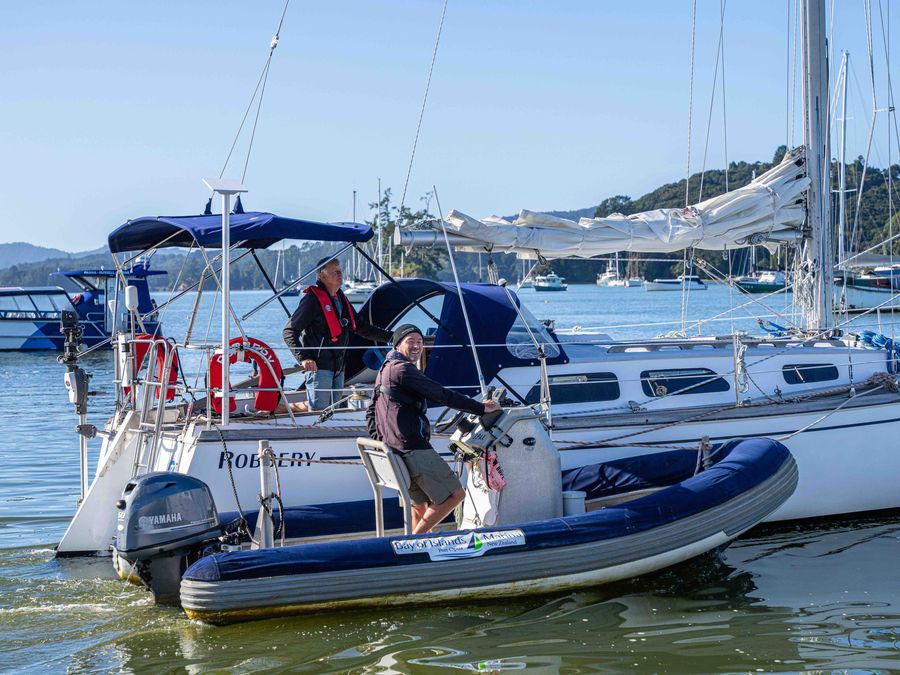
Graeme Francis and Robbery have arrived back in Opua from Mangōnui.
Camellia's finish has reshuffled the PHRF standings, though the final order must wait until every remaining boat has crossed the line. Peter Elkington's Pacman currently sits third on corrected time at 6 days 13 hours 7 minutes, with Sharon Ferris-Choat's Vixen Racing fourth at 6 days 14 hours 13 minutes. Peter Bourke's Diablo holds fifth at 7 days 10 hours 8 minutes, with 202 NM still to cover.
Doug Esterman's Cavalier 39 Fair Seasons has covered 128 NM in the past 24 hours and sits 361 NM out, projecting a finish of 13 June at midnight, a full day and a half faster than the projection from 24 hours earlier.
| Pos | Boat | Class | DTF | Dist Sailed | VMG | 24h DMG | Est / Actual Finish | Est / Actual Elapsed |
|---|---|---|---|---|---|---|---|---|
| 1 | Oceans Tribute ✓ | Trimaran | — | 1463 NM | — | — | 5 Jun 19:34 | 6d 7h 34m 36s |
| 2 | Vixen Racing ✓ | Monohull | — | 1415 NM | — | — | 6 Jun 12:15 | 7d 0h 9m 4s |
| 3 | Electron ✓ | Catamaran | — | 1415 NM | — | — | 6 Jun 22:43 | 7d 10h 43m 58s |
| 4 | Sarau ✓ | Monohull | — | 1329 NM | — | — | 7 Jun 06:38 | 7d 18h 38m 44s |
| 5 | Pacman ✓ | Monohull | — | 1330 NM | — | — | 7 Jun 07:09 | 7d 19h 3m 6s |
| 6 | Camellia ✓ | Monohull | — | 1284 NM | — | 129 NM | 8 Jun 14:43 | 9d 2h 37m 36s |
| 7 | Catnip | Monohull | 17 NM | 1286 NM | 5.1 kts | 177 NM | 8 Jun 22:20 | 9d 10h 14m 18s |
| 8 | Nautilass | Monohull | 71 NM | 1287 NM | 4.9 kts | 167 NM | 9 Jun 09:38 | 9d 21h 32m 33s |
| 9 | Diablo | Monohull | 202 NM | 1094 NM | 4.3 kts | 131 NM | 10 Jun 18:01 | 11d 5h 55m 20s |
| 10 | Smoko | Monohull | 263 NM | 990 NM | 4.0 kts | 113 NM | 11 Jun 12:26 | 12d 0h 20m 24s |
| 11 | Fair Seasons | Monohull | 361 NM | 983 NM | 3.6 kts | 128 NM | 13 Jun 00:00 | 13d 11h 54m 56s |
| — | Roaring Forty (retired — reached Port Stephens) | Monohull | — | |||||
| — | Wave (retired — returned to Opua) | Monohull | — | |||||
| — | Pretty Boy Floyd (retired — safely back in Opua) | Monohull | — | |||||
| — | Robbery (retired — safely in Mangōnui) | Monohull | — | |||||
Provisional results. Last position update: 8 Jun 19:00 NZST. All times NZST. Multihulls shaded blue.
Conditions for the boats still sailing have turned benign. Winds are sitting in the mid-to-late teens with gusts in the low-to-mid twenties, direction westerly, pushing every remaining competitor straight toward Southport. Some rain is about and temperatures are in the high teens. After the punishment the fleet absorbed through the opening week, it is a gentle way to finish a hard race.